Um El Faroud Wreck Dive – Malta’s Flagship Shore Wreck
Overview
The Um El Faroud is widely regarded as Malta’s most iconic wreck dive and one of the finest shore-accessible wreck dives in the Mediterranean. Lying off the south coast near Wied iż-Żurrieq, this former tanker offers scale, depth, and atmosphere rarely matched by a shore dive anywhere in Europe.
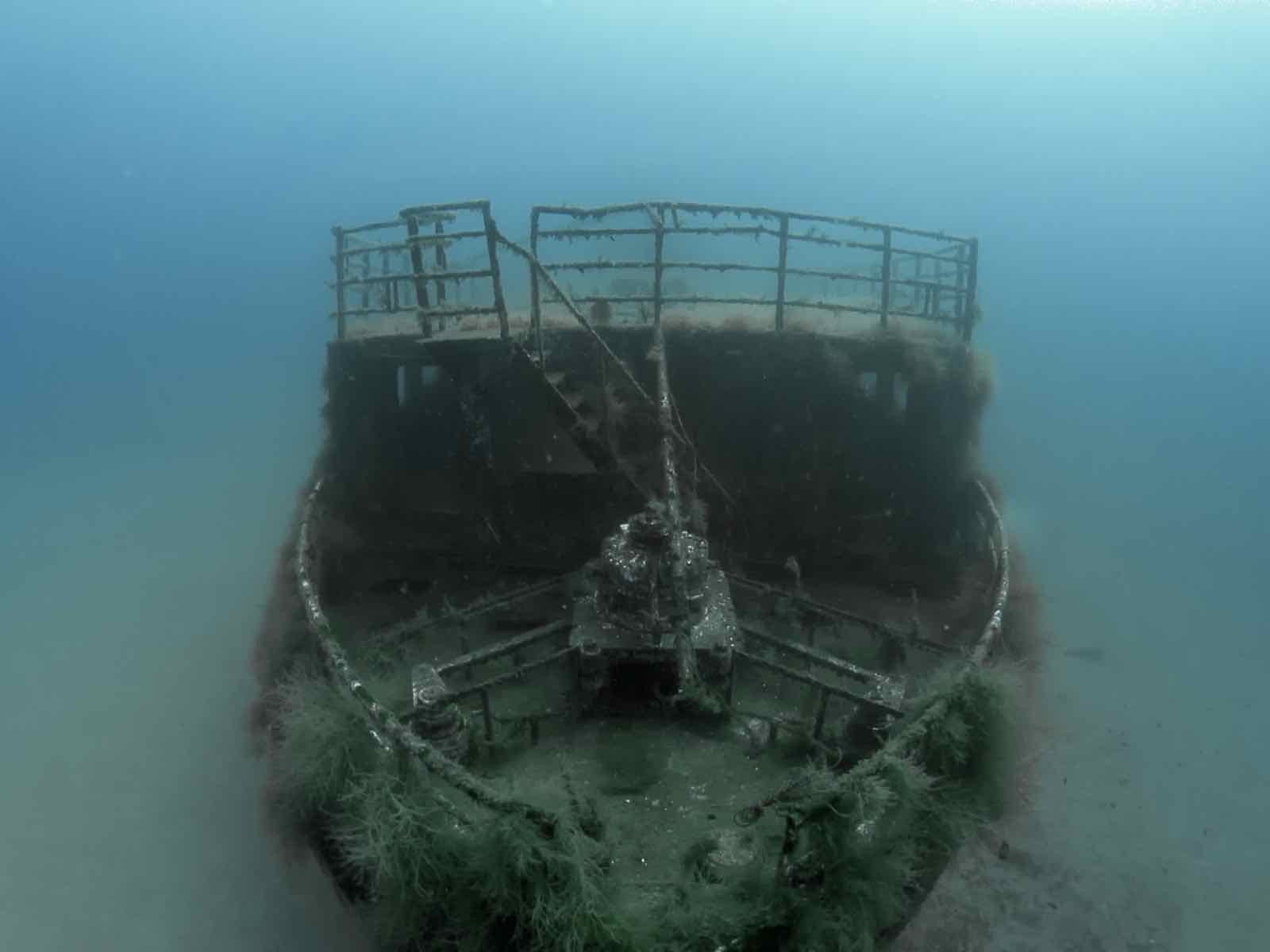
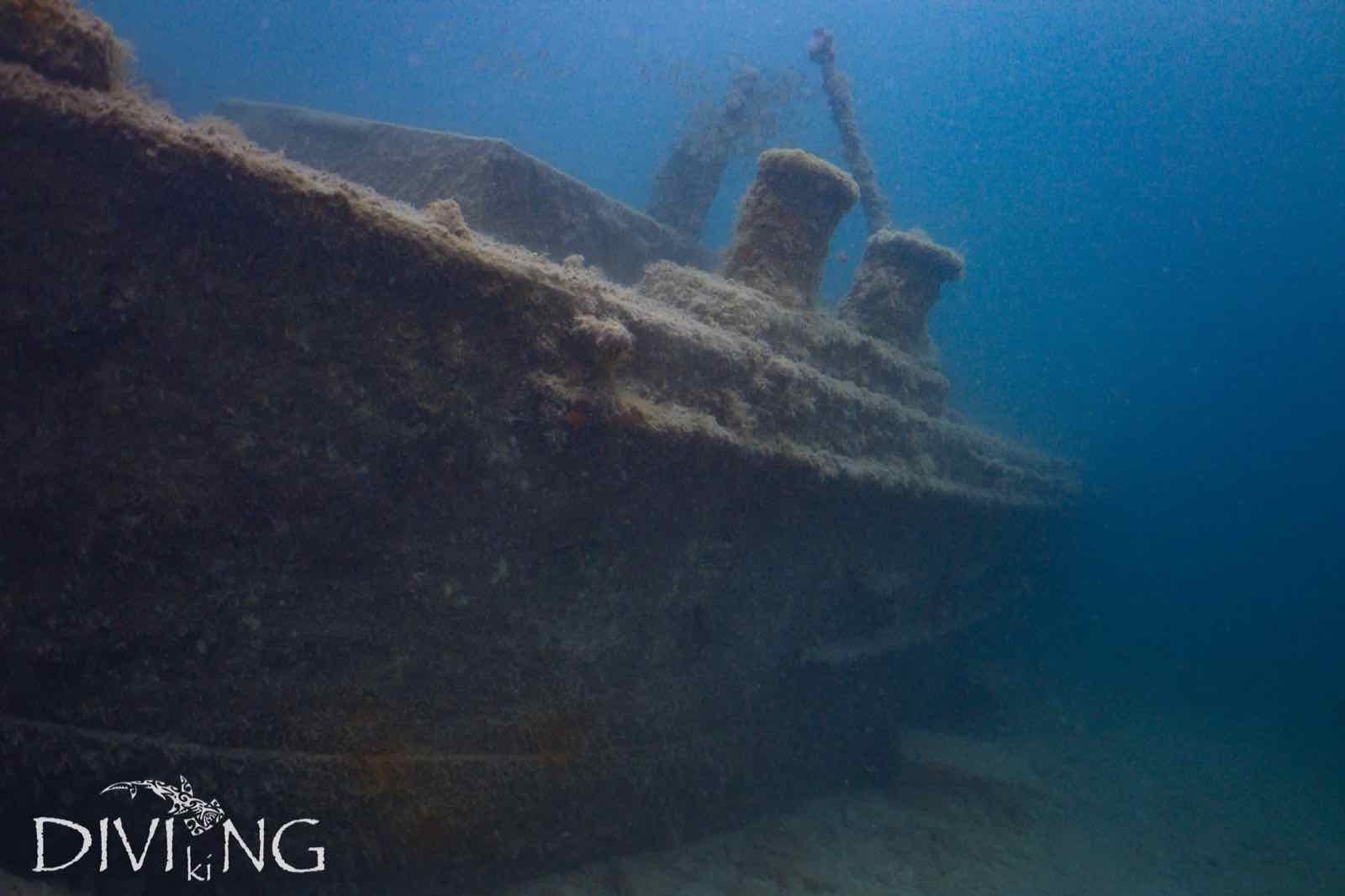
At roughly 115 metres long, the Um El Faroud isn’t just a wreck — it’s an underwater landmark. Its size, upright position, and dramatic profile make it a must-dive for experienced recreational divers visiting Malta, while also serving as a strong bridge toward deeper wreck environments before moving into technical diving.
What sets this site apart is the combination of shore access, typically excellent visibility, and serious depth, allowing divers to experience a true “big wreck” without relying on a boat schedule.
Dive Summary
Access: Shore
Depth Range: 15–36m
Recommended Level: AOW / Deep (or equivalent experience)
Dive Type: Wreck
Typical Visibility: 20–35m
Experience Level: Advanced recreational (depth + planning required)
History of the Um El Faroud
The Um El Faroud was a Libyan oil tanker built in 1969 and operated for decades across the Mediterranean. In 1995, while docked in Malta for maintenance, a catastrophic explosion occurred during works onboard, tragically killing nine Maltese shipyard workers.
After the incident, the vessel was eventually scuttled in 1998 to create an artificial reef and a major dive attraction. Over time, severe storms contributed to the wreck splitting into two main sections, now lying a short distance apart. This separation has added interest and variation to the dive, but also reinforces the importance of good planning, depth control, and situational awareness.
Wreck Layout & Dive Profile
The Um El Faroud lies upright on a sloping seabed, with upper structure typically around 15–18 metres and the seabed reaching approximately 36 metres at the deepest points. The two main sections are commonly described as:
-
Forward section (bow area): Large deck lines, open structures, and strong visual presence
-
Aft section (stern area): Deeper contours, stronger “big wreck” feeling, and the most depth-sensitive portion
Most recreational dives focus on external exploration: following the wreck’s length, observing deck features, swim-around routes, and the sheer scale of the hull and superstructure. Because depth and overhead risk compound quickly here, penetration is not recommended for recreational divers unless properly trained, equipped, and operating within an appropriate technical plan.
Even with conservative no-decompression limits, many divers discover that one dive rarely feels like enough — the wreck’s size encourages return visits.
Underwater Topography & Visual Impact
The Um El Faroud is particularly striking because it rises dramatically from the seabed. In good visibility you can often appreciate sections of the wreck from a distance, giving a “shipwreck silhouette” effect that’s rare on shore dives.
The surrounding seabed and reef features are secondary to the wreck itself, but they help frame the site and make it ideal for wide-angle photography — especially when divers maintain good buoyancy and position to preserve the wreck’s scale in the shot.
Marine Life & Visibility
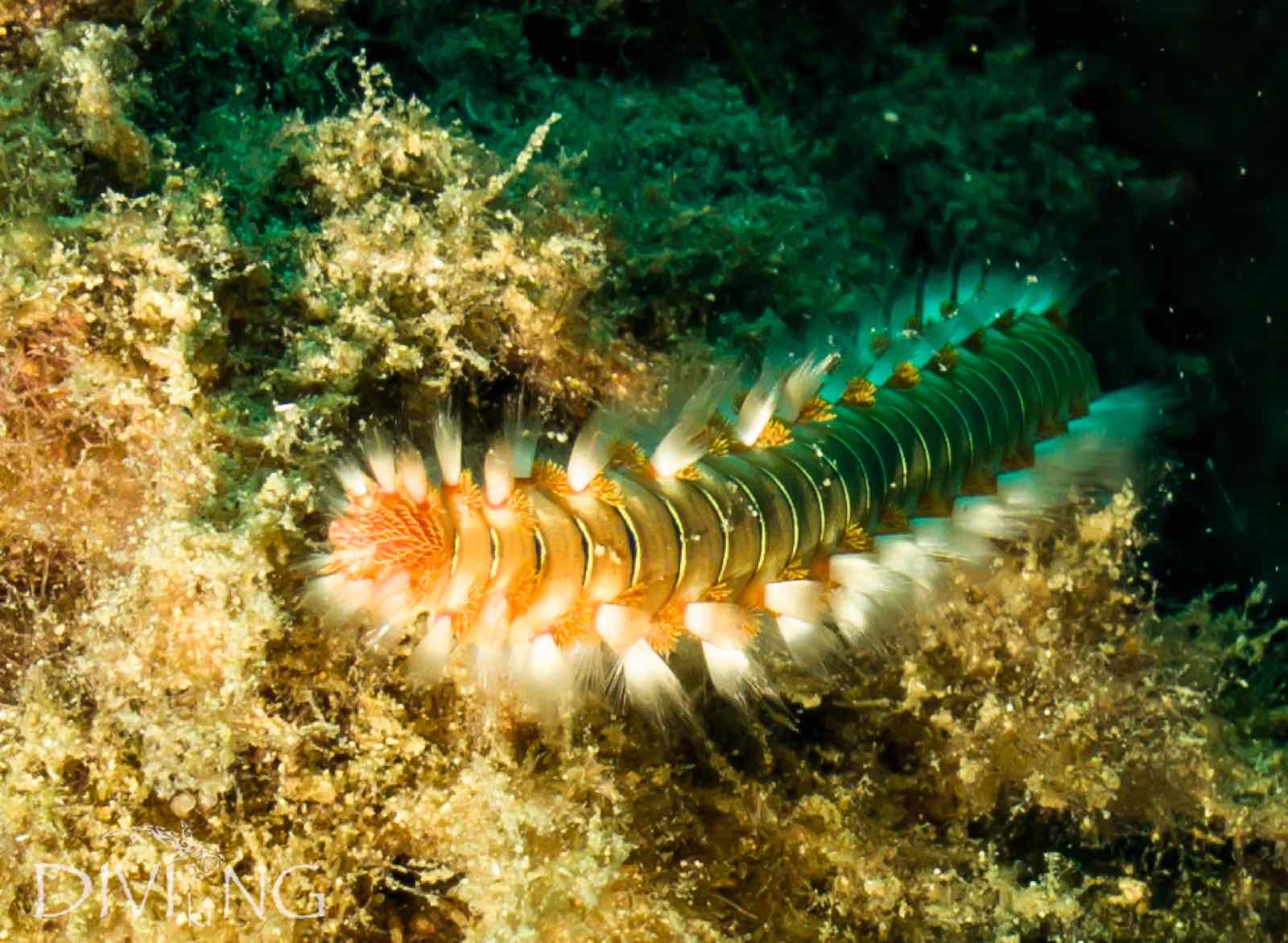
Over time the Um El Faroud has become a thriving artificial reef. Divers commonly see:
-
Shoals of damselfish and bream
-
Groupers around deeper sections and structure edges
-
Moray eels and octopus within openings and recesses
-
Occasional barracuda or amberjack in blue water conditions
Visibility often ranges 20–35 metres, and on clear days the wreck’s size becomes even more impressive. Depth does reduce ambient colour, so lights (even compact ones) can improve detail and photo outcomes.
Conditions, Weather & Planning
This site is exposed to certain wind directions and swell, and conditions can change the character of the dive significantly. The key operational reality is that entry/exit and the surface swim are the limiting factors on many days — not the underwater portion.
Because the wreck is deep and time-sensitive, dive planning matters more here than at many Maltese shore sites. Divers should be comfortable with:
-
Controlled descents and ascents
-
Stable buoyancy at depth
-
Conservative gas management
-
Clear buddy positioning (to avoid depth creep)
If the sea state is marginal, a more sheltered site is often the right call.

OLYMPUS DIGITAL CAMERA
Entry, Exit & Shore Logistics
The dive is accessed from the Wied iż-Żurrieq area, typically involving a shore entry and a surface swim to the descent point. While the route is well established, entry and exit can become physically demanding depending on swell and equipment load.
Practical considerations include:
-
Solid footwear for shore movement
-
Conservative planning for the return swim
-
Awareness of surface conditions before committing
The site rewards effort — but it’s not a “lazy logistics” dive.
Training & Experience Value
The Um El Faroud is commonly used as a milestone dive because it supports:
-
Deep specialty training dives
-
A logical bridge into technical progression for those moving that direction
For many divers, this is the dive that highlights the value of deeper training — not because the wreck is “hard,” but because depth reduces margin and demands better habits.
Who This Dive Is Best Suited For
Ideal for:
-
Advanced Open Water divers (or equivalent experience)
-
Confident recreational divers with solid buoyancy control
-
Wreck enthusiasts and photographers
-
Divers preparing for deeper or technical pathways
Not ideal for:
-
Newly certified divers
-
Anyone uncomfortable with depth exposure
-
Divers lacking gas discipline at depth
Safety, Depth Awareness & Dive Planning Considerations
While the Um El Faroud is often described as an “easy” wreck due to its shore access and clear layout, divers should not underestimate the compounding effect of depth, scale, and time at this site.
The wreck’s profile makes depth creep a common issue. Divers frequently start in the mid-teens, become absorbed in the wreck’s size and features, and gradually descend toward the deeper stern section without realising how quickly no-decompression limits and gas reserves are being consumed. Maintaining regular depth checks and clear positional awareness is essential.
Because of its size, the Um El Faroud rewards slow, deliberate exploration rather than attempting to “see everything” in one dive. Conservative dive planning, disciplined gas management, and clearly agreed turn points significantly improve both safety and enjoyment.
For many divers, this wreck highlights the value of additional training — not because the dive is inherently difficult, but because reduced margins at depth demand better habits.Local Knowledge & Tips
-
Treat this as a single high-quality dive, not a rushed “tick box”
-
Depth awareness matters: it’s easy to drift deeper than planned
-
Many divers enjoy pairing it with a shallower second dive elsewhere rather than trying to force two demanding dives in the same area
-
Bring a small light: it improves awareness and photo results even in daylight
Local Knowledge & Tips
-
Treat this as a single high-quality dive, not a rushed “tick box”
-
Depth awareness matters: it’s easy to drift deeper than planned
-
Many divers enjoy pairing it with a shallower second dive elsewhere rather than trying to force two demanding dives in the same area
-
Bring a small light: it improves awareness and photo results even in daylight
Photography & Videography on the Um El Faroud

The Um El Faroud is one of Malta’s most photogenic wrecks, particularly for wide-angle photography. Its length, upright posture, and clear lines create strong visual opportunities, especially when combined with good visibility.
Wide-angle lenses are best suited to capture the wreck’s scale, while careful diver positioning helps provide context and proportion. Shooting slightly upward along the wreck’s hull or superstructure often produces the most dramatic images, particularly when ambient light is strong.
Because depth reduces colour saturation, even compact video or photo lights can significantly enhance detail, especially when focusing on deck features or marine life within shadowed areas. Photographers should also be mindful of buoyancy and finning technique, as silting near the seabed can quickly affect image quality.
Patience pays dividends here — waiting for divers to move into position or for marine life to settle often results in far stronger compositions.
Environmental Role & Artificial Reef Development
Since being scuttled, the Um El Faroud has evolved into a thriving artificial reef, demonstrating how carefully placed wrecks can support marine ecosystems when managed responsibly.
The wreck’s surfaces are now colonised by a range of marine organisms, providing shelter and feeding opportunities for fish and invertebrates. Over time, this has helped integrate the structure into the surrounding reef environment, increasing biodiversity in the area.
Responsible diving practices play an important role in preserving this balance. Avoiding unnecessary contact with the wreck, maintaining good buoyancy, and respecting marine life help ensure that the Um El Faroud remains both an outstanding dive site and a healthy underwater habitat for years to come.
Related Dive Sites
-
Imperial Eagle – progression into deeper wreck diving
-
Rozi Tugboat – excellent contrast: simple, photogenic, reliable
-
P29 Patrol Boat – classic advanced recreational wreck
-
Wied iż-Żurrieq West Reef – alternative option nearby in mixed conditions