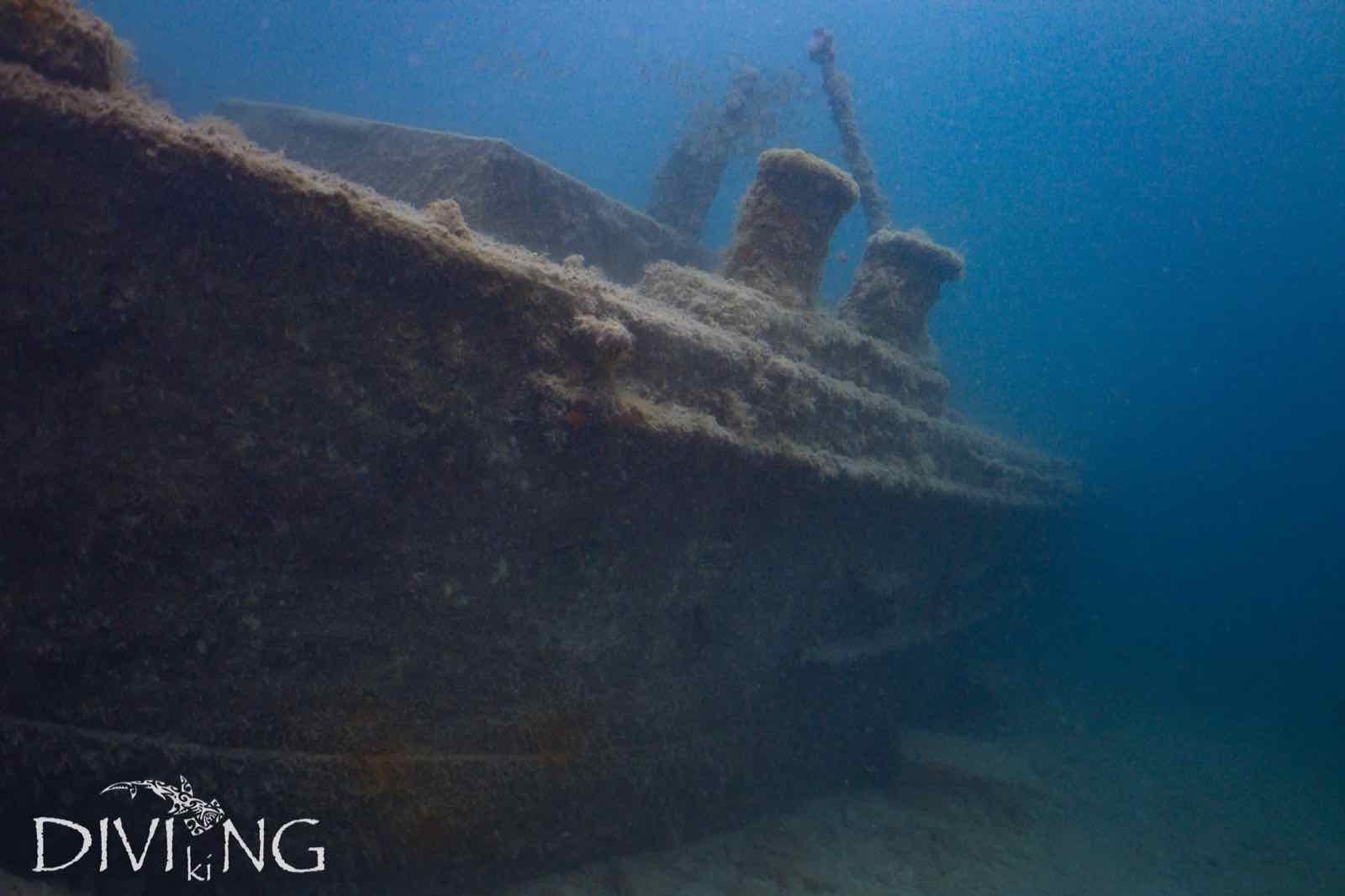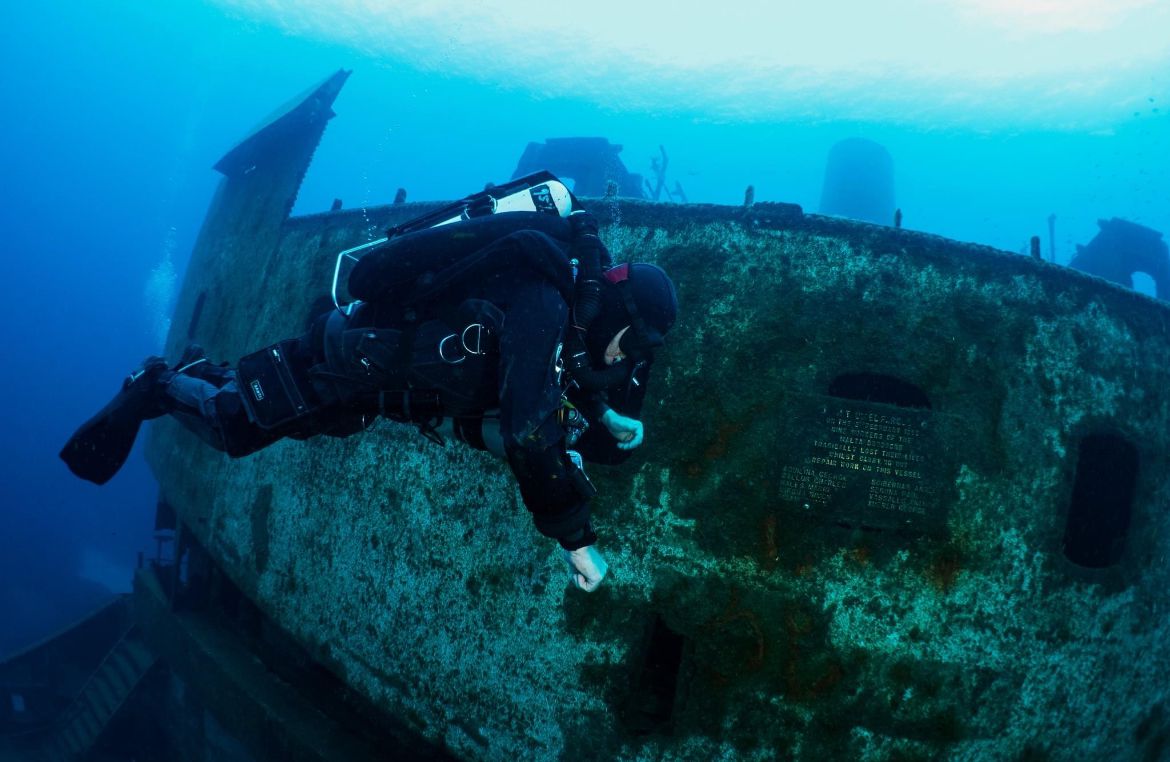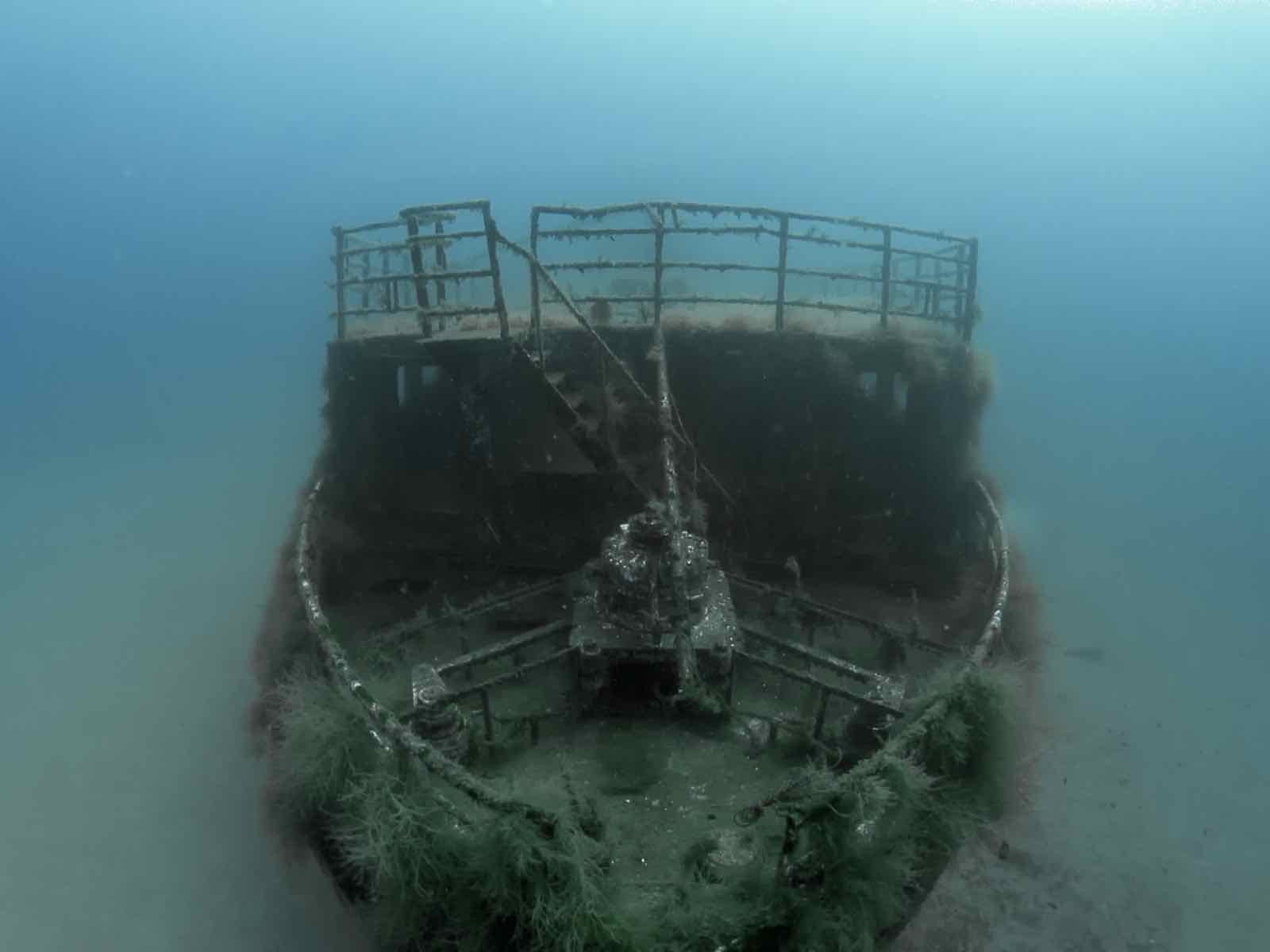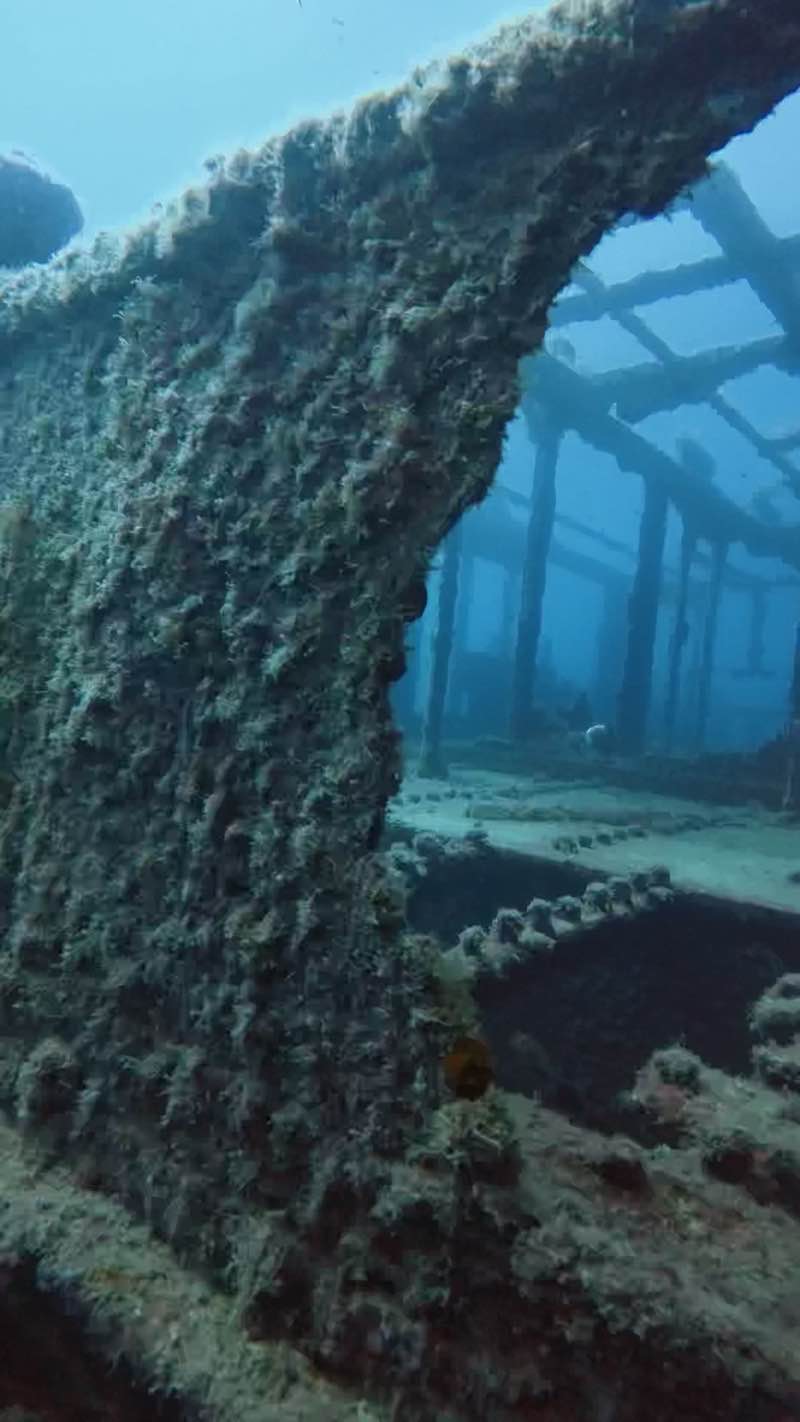
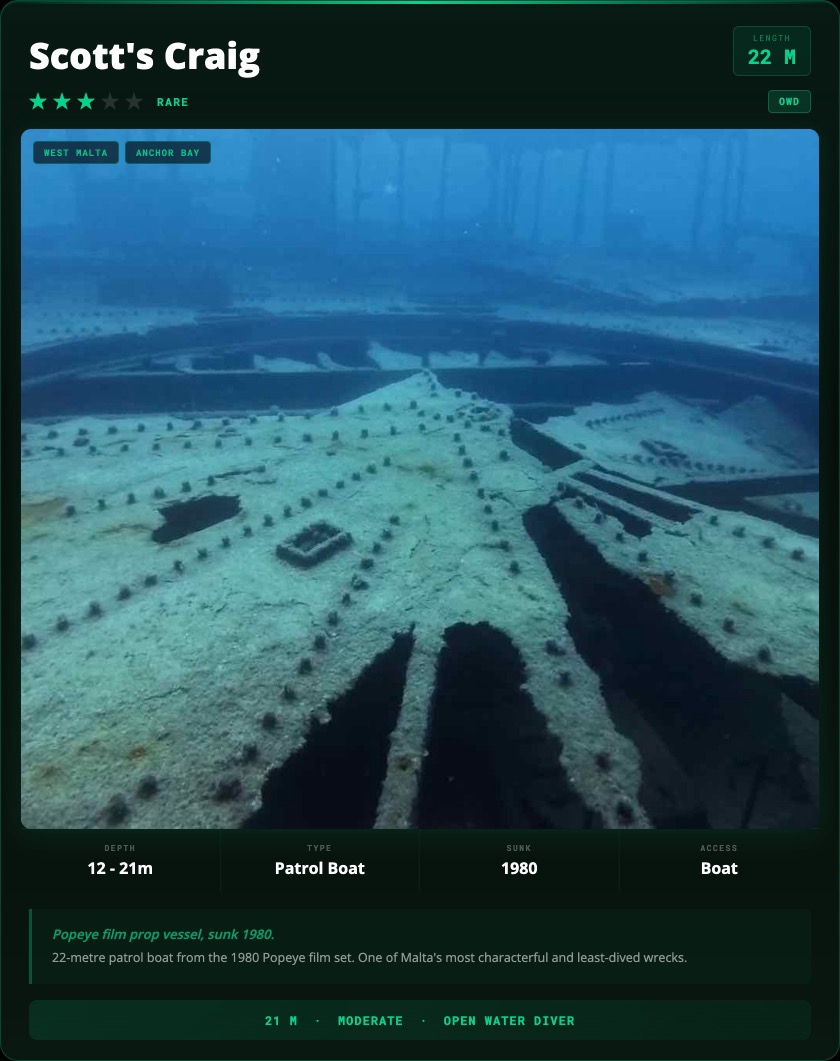
The MV Scotscraig: a 25-metre river ferry resting upright in the sheltered waters of Ic-Cumnija inlet, approximately 500 metres from Anchor Bay, Mellieha. One of Malta's most characterful and least-dived wrecks.
35°57′51″N · 14°19′60″E | Anchor Bay, Mellieha, Malta
The Scotscraig sits at 12 to 21 metres, with the main deck accessible from around 12 metres and the keel touching the seabed at 21 metres. At 25 metres in length, the entire wreck can be covered comfortably within a single dive and within Open Water no-decompression limits. The vehicle deck is accessible for guided penetration. Above the main deck, the superstructure offers swim-throughs and shelter for marine life. The site sits in a sheltered inlet, which provides good conditions for most of the year, though visibility can drop after rough weather stirs up seabed sediment. The shallow depth and sheltered position make this one of Malta's most reliably accessible wreck dives.
The interior vehicle deck is open for guided penetration. Spacious for a 22-metre vessel, with natural light filtering in through openings. A torch is essential. Moray eels and conger eels occupy every corner and recess of the hold. One of the most rewarding sections of the dive.
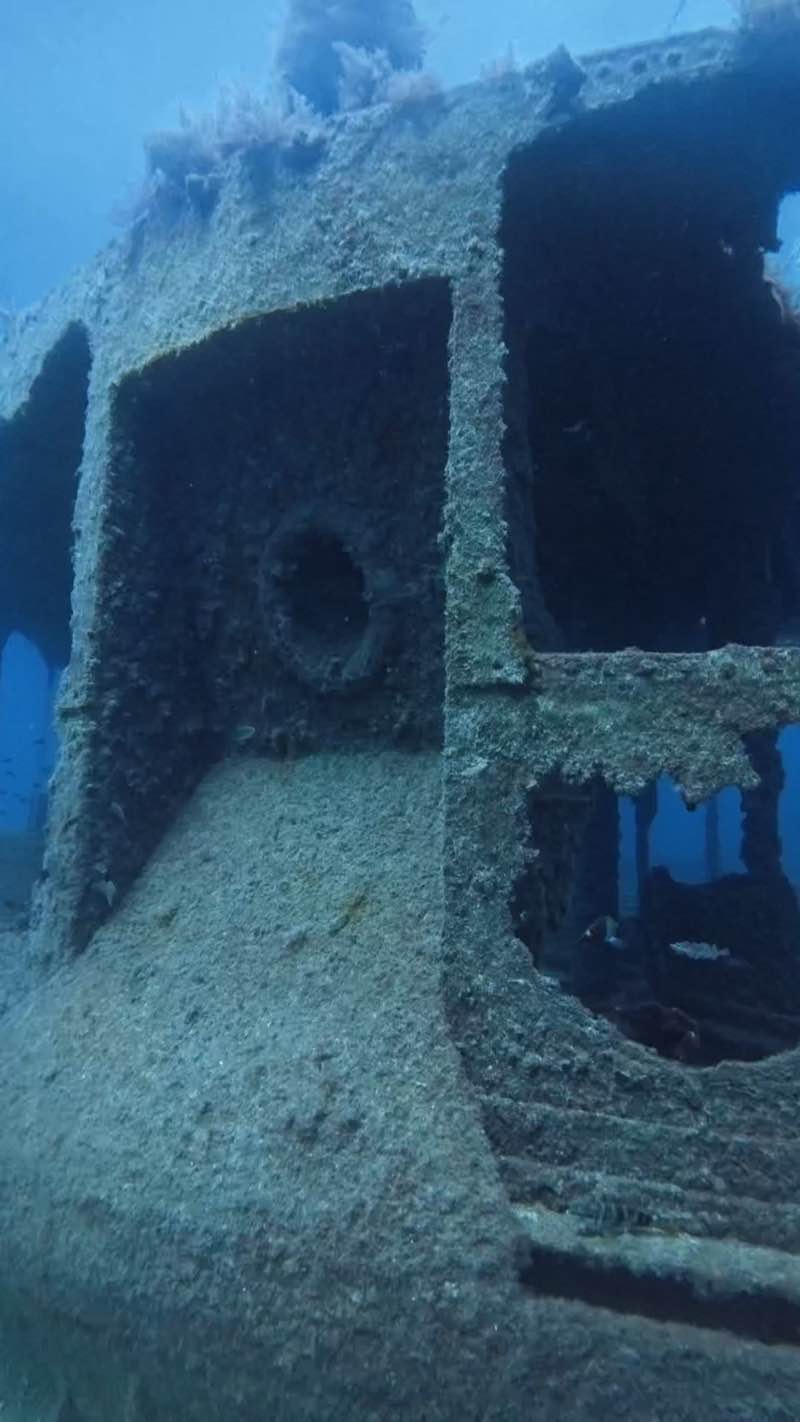
The bow rises to around 12 metres at the top of the superstructure, making it the shallowest part of the dive. The wheelhouse, railings, deck fittings, and companionways are intact enough to swim around and through. Resident grouper patrol the structure continuously.
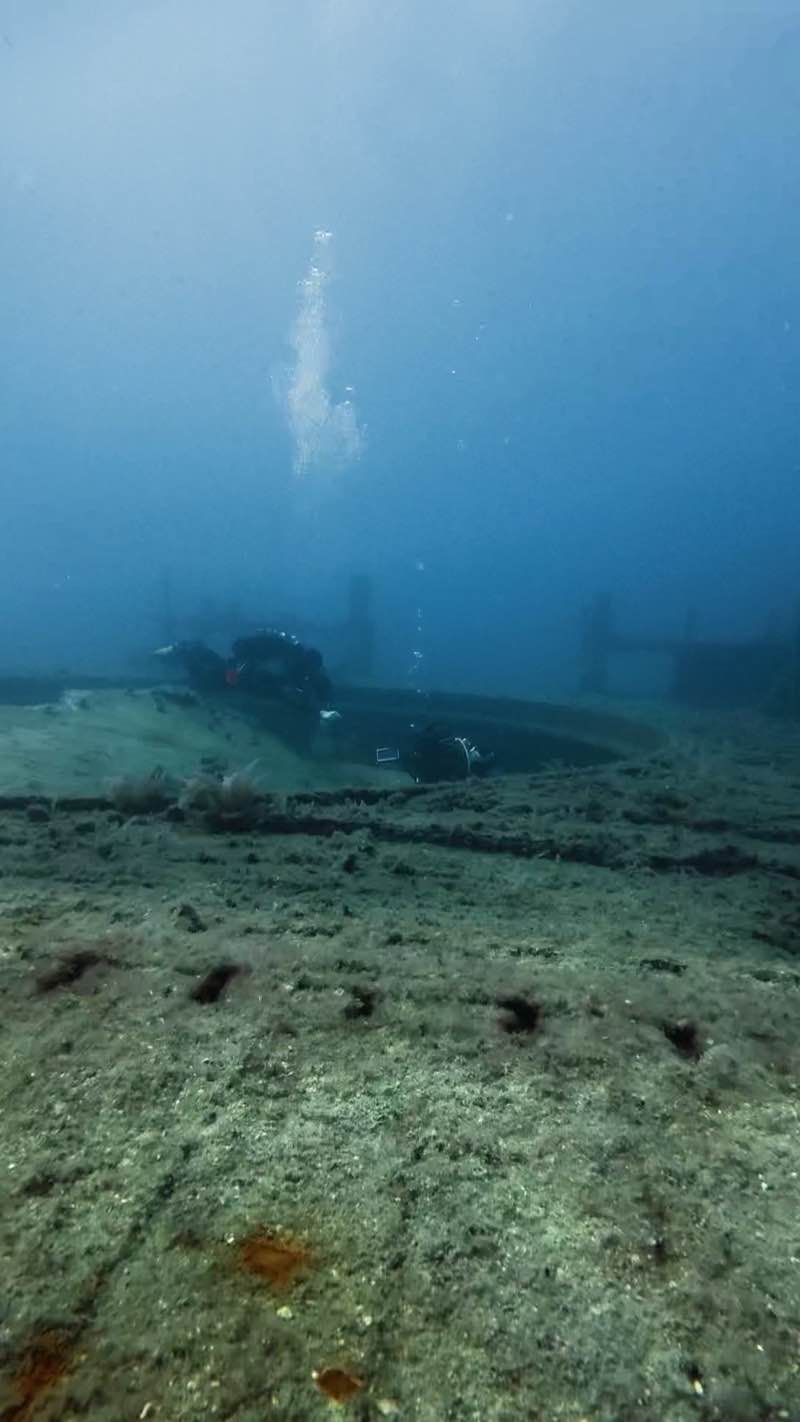
The base of the hull meets a seabed of sea grass, shingle, and sand at 21 metres. Octopus are common here, using the gap between hull and seabed as cover. Stingrays rest occasionally on the sandy patches alongside the wreck. Spend the first part of the dive here and ascend progressively.
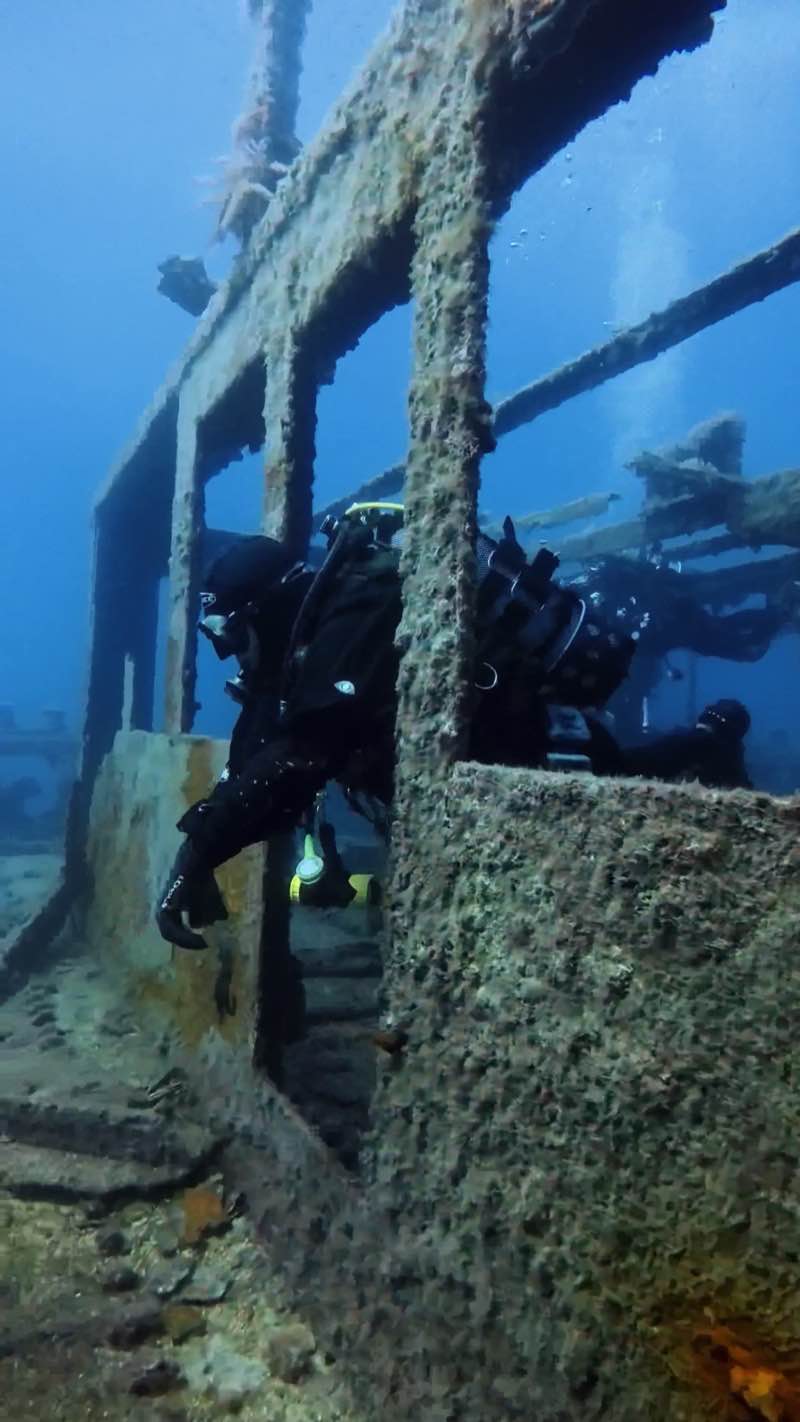
The stern section and propeller sit at the deepest point of the dive. At 21 metres on air, no-decompression limits are generous at around 40 minutes, giving ample time to explore the whole wreck. Visit the stern first, then ascend through the vehicle deck to the shallower bow and superstructure.
| Season | Conditions | Temp | Rating |
|---|---|---|---|
| Jan–Mar | Sheltered inlet, cold water. Visibility highly weather-dependent, can drop after swell. Avoid in northerly weather. | 16–17°C | Fair |
| Apr–Jun | Calmer conditions, visibility improving as weather stabilises. Typically 10–15m. Good from May onward. | 18–22°C | Good |
| Jul–Sep | Best season. Flat seas, clearest water. 15–25m visibility typical. Ideal for wreck photography. | 24–27°C | Peak |
| Oct–Dec | Cooling water, occasional NW weather. Good visibility early, can deteriorate later in the season. | 19–23°C | Good |
Scott's Craig sits in the sheltered inlet at Anchor Bay, which provides protection from the open sea for most of the year. The main variable is visibility, which is this site's most weather-dependent characteristic. The sheltered position traps sediment stirred up by northerly swell, so visibility can drop to 5 metres after rough weather. In settled summer conditions, 15–25 metres is typical. There is no significant current at this site. Entry is by boat only, with diveshack providing RIB transfer from Anchor Bay. The shallow maximum depth of 21 metres and calm conditions in season make this an ideal wreck for newly certified Open Water divers.
Boat access only. The wreck is approximately 500 metres from Anchor Bay, too distant to swim from shore in full dive gear. diveshack provides RIB transfer from Anchor Bay. Giant stride entry. Descent to the wreck directly from the surface. Transport from Sliema available on request.
Visibility is the most variable factor at this site. The sheltered inlet traps sediment after rough weather and visibility can drop to 5 metres. In calm summer conditions 15–25 metres is typical. diveshack checks conditions before departure and will reschedule if visibility is below 5 metres.
Open Water divers are welcome on supervised guided dives. The 21-metre maximum depth is well within OW limits. Low diving pressure means marine life encounters are notably undisturbed: conger eels, moray eels, grouper, and octopus are almost guaranteed.
The Scotscraig is suitable for Open Water certified divers on a supervised guided dive. The maximum depth of 21 metres sits within the OW certification limit. No solo diving. Newer divers should confirm their certification level with diveshack before booking.
The vehicle deck is open for guided penetration only. A primary torch and backup are mandatory for interior sections. Do not penetrate beyond the guide's designated limit. The interior is not silted but restricted visibility can result if the seabed is disturbed.
Visibility can deteriorate rapidly after rough weather. diveshack assesses conditions before departure and will reschedule if visibility falls below 5 metres. Pre-booking with a guide who knows current site conditions is strongly recommended.
This is a boat-only site. Do not attempt to swim from Anchor Bay shore independently. The open-water transit to the wreck is too long for an unsupported surface swim in full dive gear. All dives depart by RIB with diveshack.
At 21 metres, no-decompression time on air is approximately 35–40 minutes. The entire wreck can be covered comfortably within that limit. Nitrox 32% is available and recommended for extended bottom time. Carry a DSMB for open-water ascent on completion.
Mater Dei Hospital hyperbaric chamber, Msida, approximately 35 minutes from Mellieha by road. Emergency services: 112. DAN Europe: +39 06 4211 5685. Nearest A&E: Mater Dei Hospital, Msida.
One of Malta's most characterful wrecks and one of its least-dived. We run guided RIB transfers to the Scotscraig from Anchor Bay. Transport from Sliema is also available on request. Suitable for newly certified divers looking for their first wreck dive.
Include this site in a package: