Dive Site Card
Collect the card.
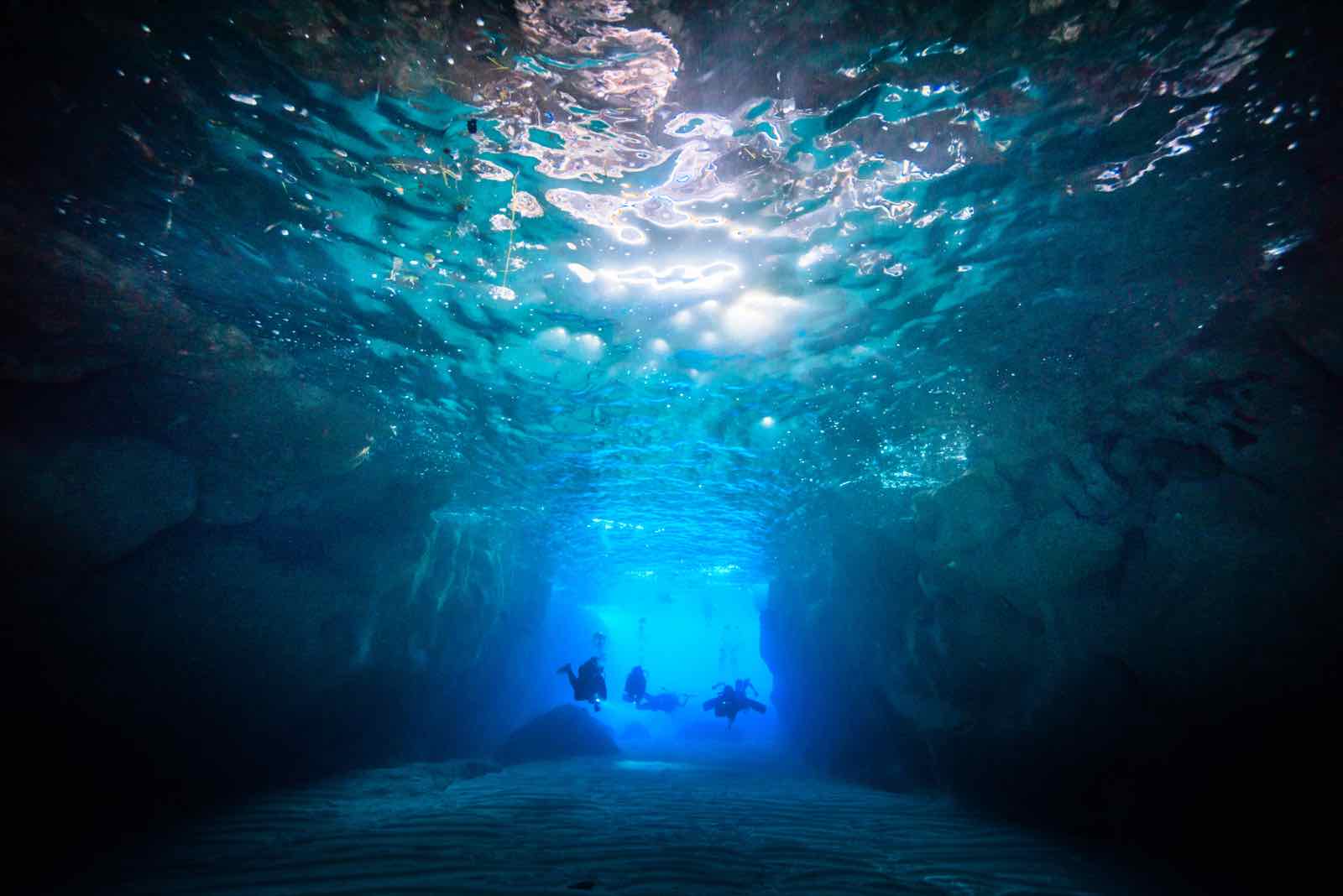
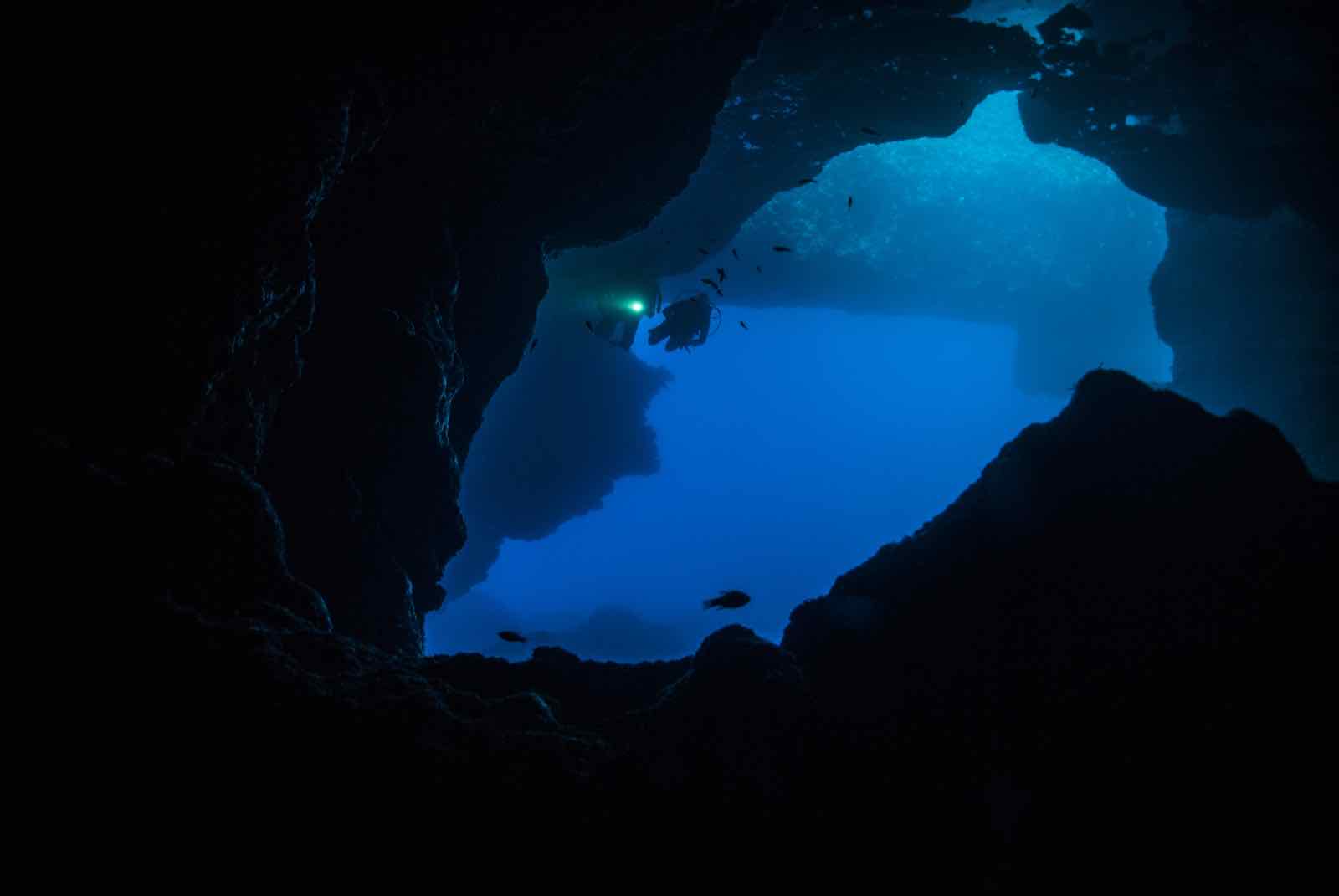
The south wall of Xlendi Bay. A vertical limestone cliff starting at 10 metres and dropping beyond 60 metres into open Gozo water. Overhangs, crevices, and resident grouper at every depth band. One of Gozo's finest wall dives.
36°01'N · 14°12'E | Xlendi Bay, SW Gozo
Xlendi Reef is a benchmark Gozo wall dive. The limestone topography is dramatic and rewards divers who slow down and look into the rock rather than straight down. Visibility in Gozo waters is reliably excellent, and the descent along the full wall profile is a genuinely spectacular experience. diveshack runs guided dives here year-round, frequently pairing this site with Xlendi Tunnel for a full two-dive day in the bay.
Xlendi Reef delivers a distinct experience at every depth band. The wall rewards divers who slow down and look into the rock rather than rushing straight down.
The dive begins on a broad limestone shelf at around 10 metres. The rock is broken into low ridges and gullies, with sea grass and encrusting invertebrates filling the gaps. Damselfish are everywhere. Sea bream cruise in loose groups just above the rock. Octopus are common in the shallow crevices, often flushed out of hiding by divers passing through. This zone doubles as the ideal final phase of a deep dive: shallow, rich in life, and perfect for off-gassing on the ascent.
The richest section of the reef. Multiple overhangs and ledges jut from the wall between 20 and 30 metres, creating sheltered pockets where grouper wait in ambush and moray eels are almost guaranteed. Scorpionfish press flat against the rock, invisible until you are very close. The limestone is streaked with natural colour: ochre, rust, and pale grey. This is where most guided dives spend the bulk of their bottom time, and for good reason. Slow, methodical exploration of each overhang pays dividends.
Below 30 metres the wall becomes quieter and the scale of the drop reveals itself fully. Large grouper hold station in deep crevices, untroubled by divers who approach without haste. The rock face here is cleaner and less heavily colonised than the mid-wall section, but the drama is in the vertical geometry and the visibility. This is the recreational guide cap on Advanced dives. At 40 metres on air, bottom time is strictly limited, so the descent is planned in advance and the turn point executed on time.
Xlendi Reef supports a rich and consistent mix of Mediterranean species across all depth bands. Grouper are the signature fish: large, confident individuals that hold ground in crevices at every level. Moray eels are abundant throughout, both the Mediterranean moray and the smaller geometric moray. Octopus are found from the reef top down. Schools of sea bream and damselfish work the mid-water. Scorpionfish are present across the wall but require a careful eye. Nudibranchs reward patient, shallow exploration of the reef top. There are no predatory currents here, so marine life is consistently approachable.
Xlendi Reef is diveable year-round. Summer and autumn offer the best visibility and warmest water. The rocky shore entry is considerably easier in calm conditions.
| Season | Visibility | Temp | Rating |
|---|---|---|---|
| Jan – Mar | 15–20m | 15–16°C | Good |
| Apr – Jun | 20–25m | 17–22°C | Good |
| Jul – Sep | 25–30m | 25–27°C | Peak |
| Oct – Dec | 22–28m | 20–24°C | Peak |
Gozo water is reliably clear. The open ocean exposure of Xlendi Bay means there is no harbour or river silt to cloud the water column. Summer visibility of 25 metres or more is the norm at this site. The wall dive becomes a genuine spectacle in high-vis conditions: you can look down the full extent of the drop while still reading the fine detail of the rock face directly ahead. Winter visibility is lower but 15 metres-plus is expected even in the coldest months.
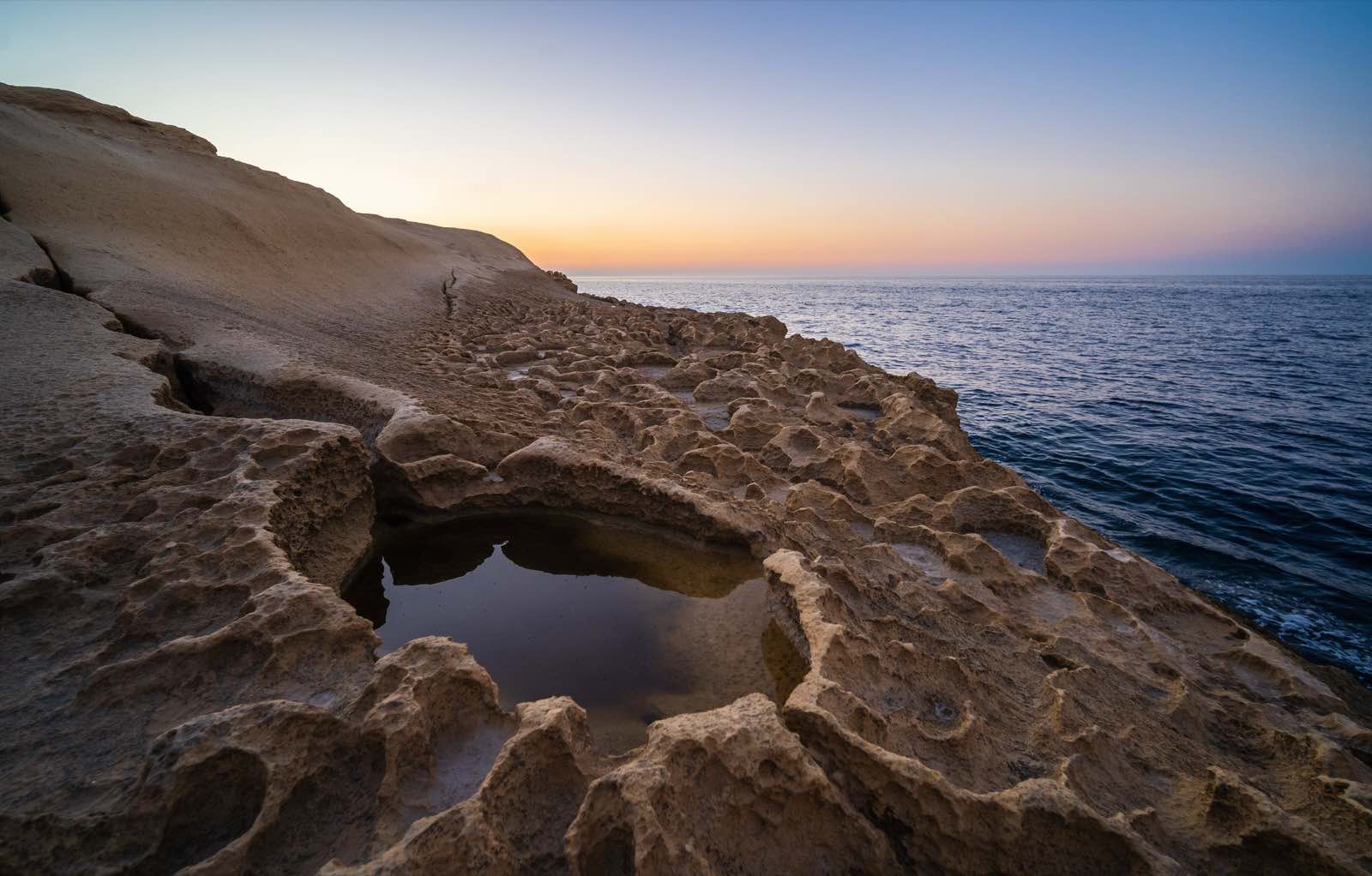
Shore entry from the south wall of Xlendi Bay. The foreshore is steep and rocky. Grip-soled dive boots are essential for the approach and the entry. Entry is via a controlled stride from a low ledge when conditions allow. This is a hard-rated shore entry suitable for experienced divers only. In calm summer conditions the entry eases considerably. Avoid the site in strong southerly swell, which pushes directly into the bay and onto the entry rocks.
Xlendi Bay is generally sheltered from the prevailing northwest wind, but southerly weather can generate swell at the entry point. Current on the wall is typically light to negligible throughout summer. A gentle flow may run along the wall in winter months. The steep rocky shore is the primary hazard at this site: poor footing on wet limestone is the leading cause of pre-dive incidents. diveshack guides assess conditions on arrival and will postpone the dive if the entry is not safe.
All diveshack Xlendi Reef dives are guided. Maximum five divers per guide. A full site briefing is given at the entry point before every dive.
Advanced Open Water (or equivalent) is the minimum certification for this site. The recreational guide limit is 40 metres on this wall. Divers new to wall diving, or who have not dived to 30 metres recently, should complete a refresher dive before attempting Xlendi Reef. Technical certification is required for dives beyond 40 metres on this wall.
At 40 metres on air, NDL is approximately 9 minutes. Plan the deepest point first and ascend on schedule. A 3-minute safety stop at 5 metres is mandatory on all diveshack guided dives. Nitrox EAN32 is available on request and meaningfully extends bottom time at 30 to 40 metres. Nitrox certification is required to dive nitrox.
The rocky shore entry at Xlendi Reef is the most demanding element of this dive. The foreshore is steep, wet limestone. Divers must wear proper dive boots with grip soles. Do not attempt the entry in bare feet or light shoes. The guide will assess conditions on arrival and will postpone the dive if the entry is unsafe. Southerly swell makes the entry significantly more difficult and the site will not run in those conditions.
Dive computer mandatory on all diveshack dives. Torch strongly recommended for exploring overhangs and crevices. SMB required for ascent away from the wall. Dive boots with grip soles are essential for the entry. Wide-angle camera recommended for wall and marine life photography. Full equipment hire is available from diveshack.
Minimum start pressure 200 bar. Rule of thirds applies on all diveshack guided dives. Nitrox EAN32 is the recommended gas mix for the 30 to 40 metre depth band and is available from diveshack in advance of departure. All cylinders are inspected and filled on site. Book nitrox at the same time as the dive to guarantee availability.
Nearest hyperbaric chamber at Gozo General Hospital, Victoria. DAN dive accident insurance is strongly recommended and is available through diveshack. Emergency oxygen is on site at all times. Every diveshack guide is first-aid trained. Emergency services: 112. DAN Europe: +39 06 4211 5685. Gozo General Hospital: +356 2156 1600.
Guided dives run on Wednesday and Sunday mornings from Xlendi Bay, Gozo. Departure at 09:00. Transport from St. Julian's or Sliema to the Gozo ferry can be arranged on request. Xlendi Reef is frequently paired with Xlendi Tunnel as a full two-dive day in the bay. Private charters are available on any day of the week.
Include this site in a package: