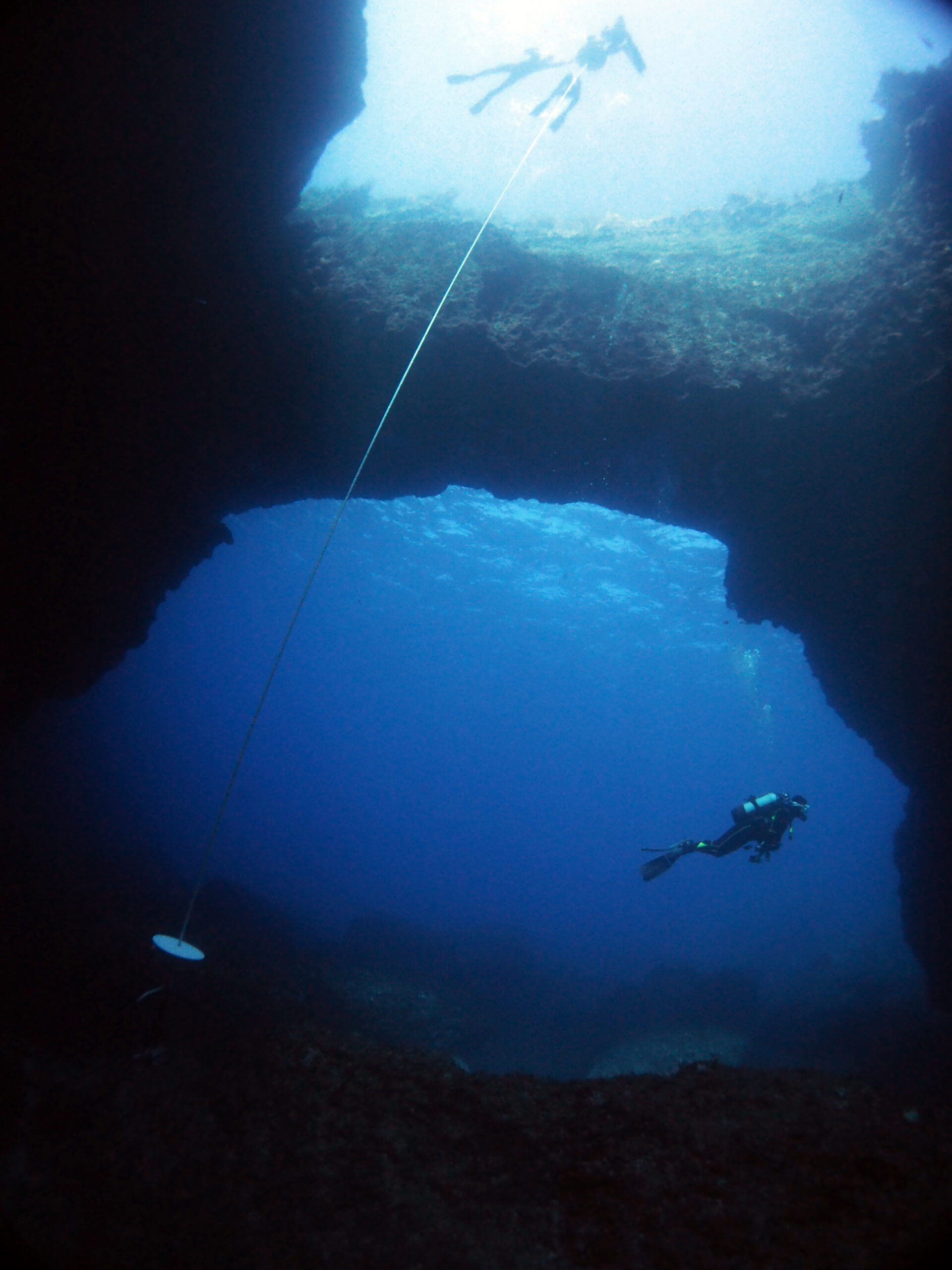
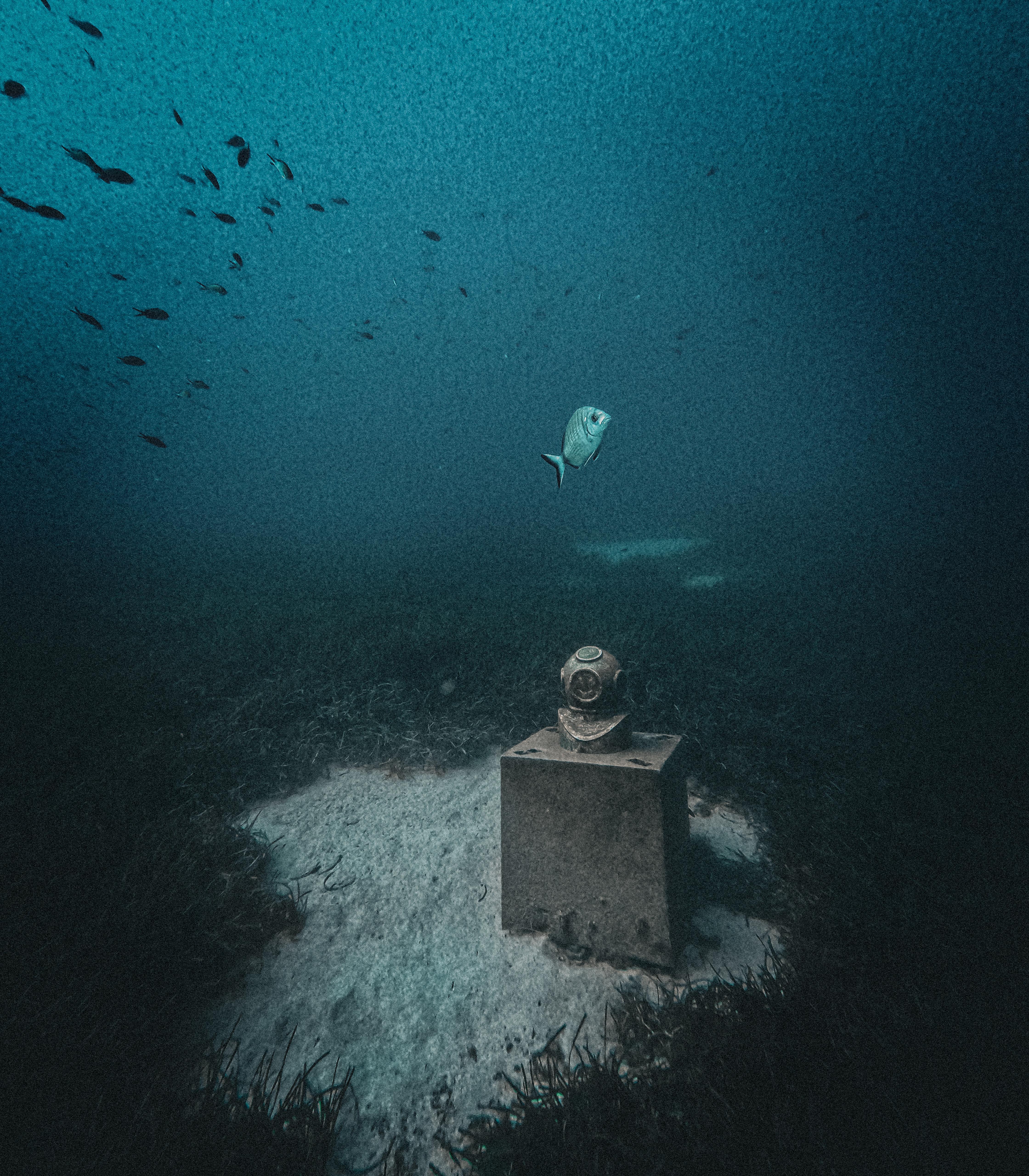
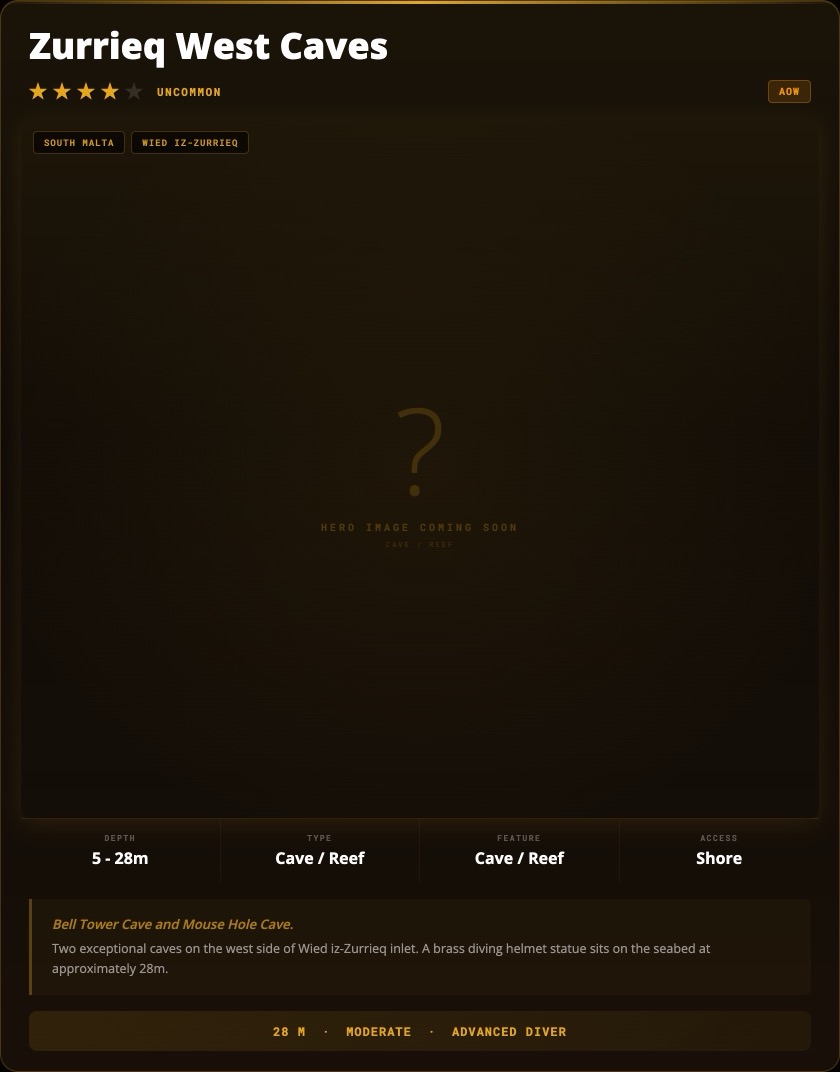
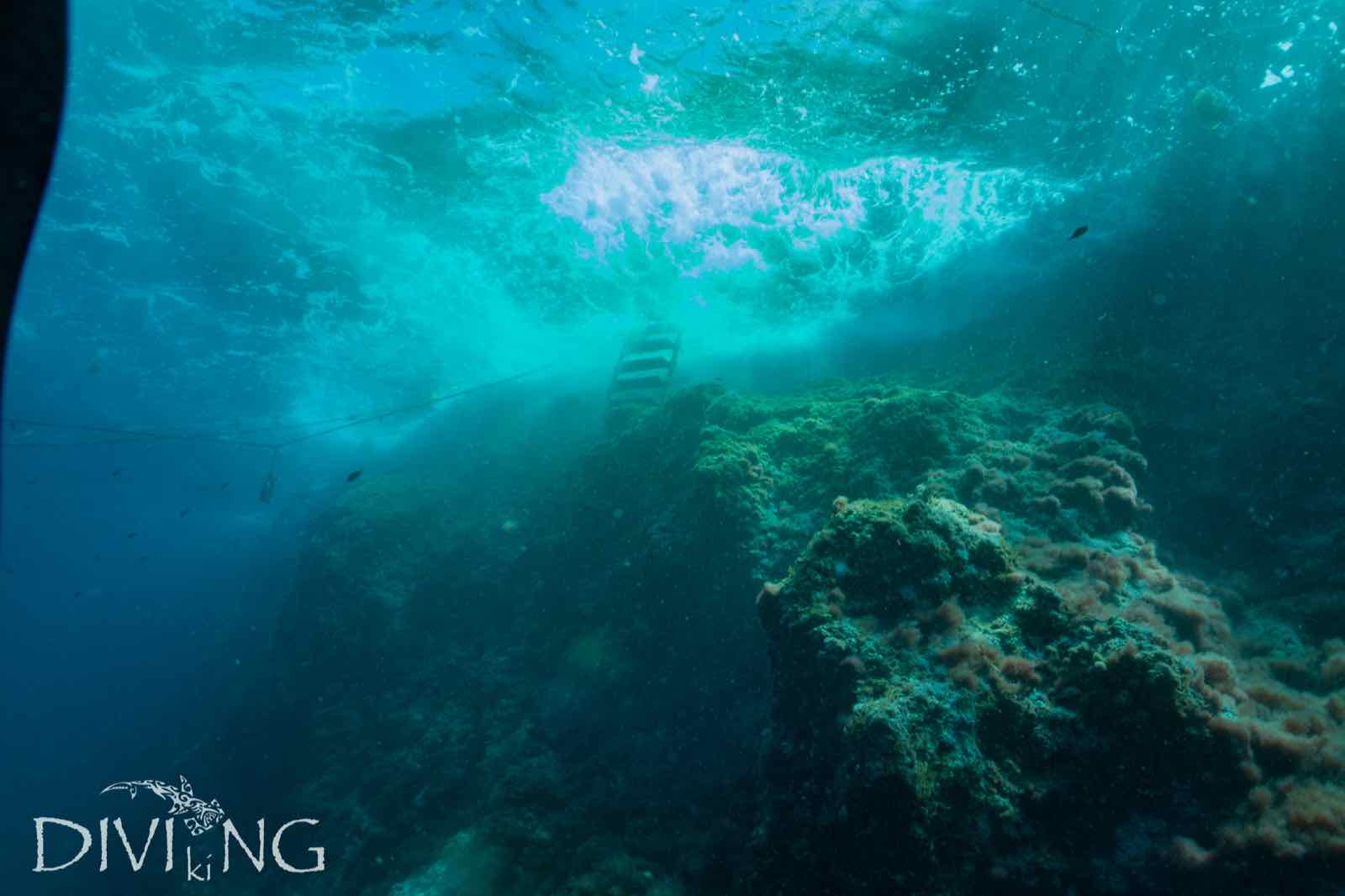
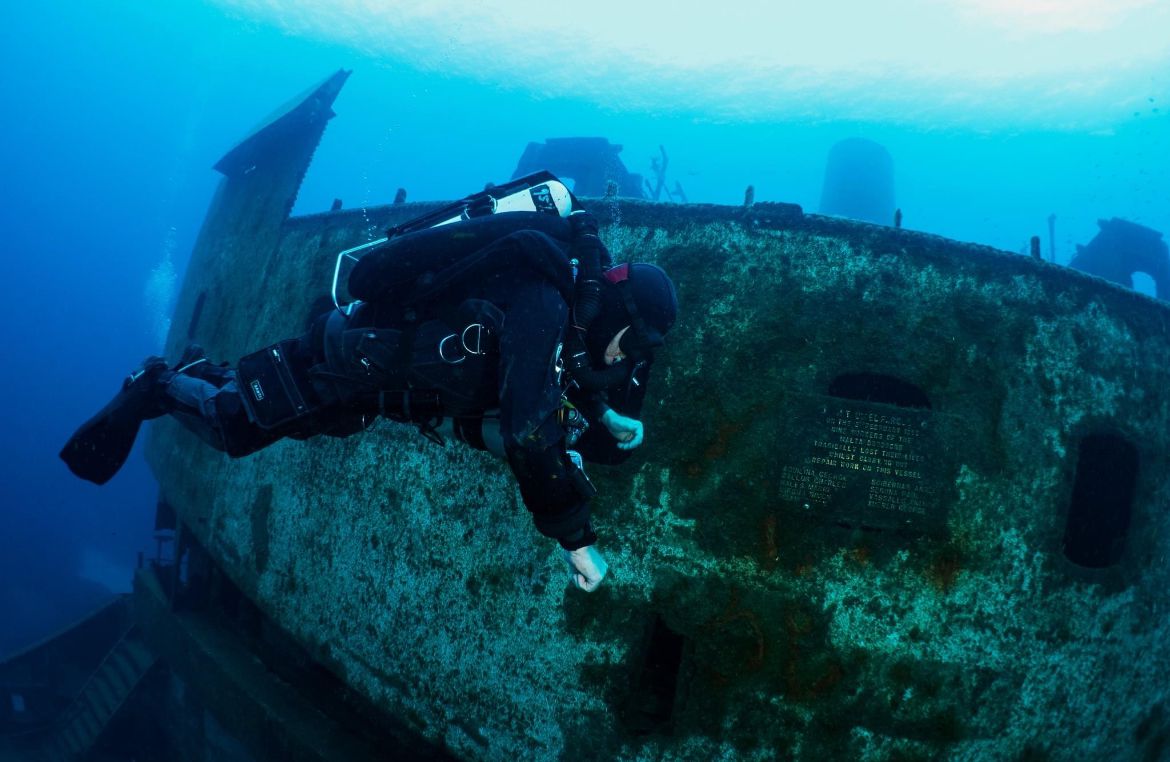
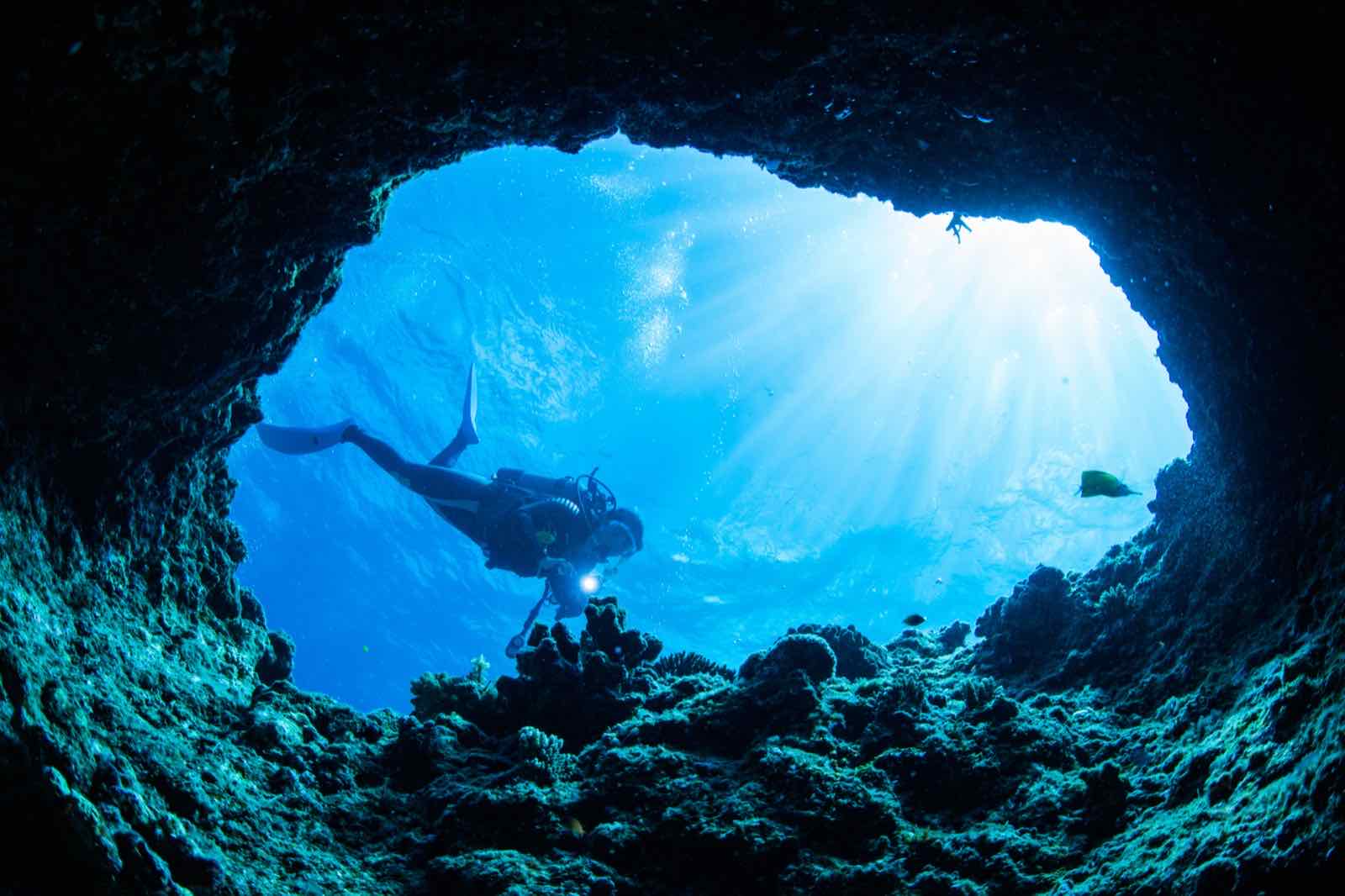
The west side of Wied iz-Zurrieq inlet hides two exceptional caves in the cliff face. Bell Tower Cave drops to 27m with a dramatic bell-shaped chamber. Mouse Hole Cave opens through a tight squeeze into a wider room at 25m. A brass diving helmet statue on the seabed, placed in July 2005, marks one of Malta's most personal underwater memorials.
35°49.18'N · 14°27.01'E | Wied iz-Zurrieq, South Malta
This is the west side of the Wied iz-Zurrieq inlet, the right-hand wall as you enter the water. It is a completely different dive profile to Zurrieq East Reef (Left Wall) across the inlet. Divers who know only one side consistently describe the other as a revelation. diveshack guides both walls and can combine them on a two-dive day for visitors with the time and gas to do both justice.
Species commonly encountered at this site, based on depth and habitat. Click any card to read the full species guide.
5–150m
Serranus scriba
0–50m
Corynactis viridis
0–40m
Apogon imberbis
0–100m
Octopus vulgaris
0–100m
Sabella pavonina
3–80m
Dardanus arrosor
0–80m
Halocynthia papillosa
0–120m
Sabella spallanzanii
Zurrieq West Reef is diveable year-round. The cave diving is most rewarding in summer when visibility is at its peak and water temperature allows longer, more comfortable bottom time inside the caves.
| Season | Visibility | Temp | Rating |
|---|---|---|---|
| Jan – Mar | 15–20m | 15–17°C | Good |
| Apr – Jun | 20–25m | 18–22°C | Good |
| Jul – Sep | 25–30m | 25–27°C | Peak |
| Oct – Dec | 20–28m | 21–25°C | Peak |
Open Mediterranean water flows into Wied iz-Zurrieq from the south, keeping visibility consistently strong. Summer and autumn regularly produce 25–30m in the open water sections. Inside Bell Tower Cave and Mouse Hole Cave, visibility is largely unaffected by surface conditions and remains clear year-round, provided entry is made carefully without disturbing sediment on the cave floor.
Shore entry from the Wied iz-Zurrieq inlet. Rock steps on the west side of the inlet provide a straightforward entry and exit point. The surface swim to the start of the reef wall is approximately 30–50 metres. The site is accessible with standard recreational dive gear and no boat is required. A car park is available nearby. The inlet can be busy in summer with snorkellers and day-trippers, so early morning entry is recommended for space on the steps and the best light quality inside the caves.
The inlet provides natural shelter from westerly swell. In strong southerly weather a low surge can develop inside the inlet mouth, but the west cliff itself is protected by the headland above it. On most days the site is accessible. In heavy northerly or southerly storms, surface conditions at the entry point should be assessed before committing. diveshack guides assess conditions each morning and will advise if the site is unsuitable on a given day.
All diveshack Zurrieq West cave dives are guided. Maximum five divers per guide. A full site briefing including cave-specific protocols is given at the entry point before every dive.
Advanced Open Water (or equivalent) is the minimum certification for this site. Both caves are within recreational diving limits, but the cave entries require solid buoyancy control and spatial awareness that come with Advanced-level experience. Divers holding a Cavern or Cave specialty will find the environment particularly rewarding, and diveshack guides can tailor the dive plan to suit that level of experience.
At 27m on air, NDL is approximately 20–22 minutes. Planning the deepest point first (Bell Tower Cave at 27m) and working progressively shallower through Mouse Hole Cave at 25m and the helmet statue optimises bottom time. A 3-minute safety stop at 5 metres is mandatory on all diveshack guided dives. Nitrox EAN32 extends NDL significantly at these depths and is recommended for divers who want more time inside the caves.
Maximum five divers per guide on all Zurrieq West cave dives. Mouse Hole Cave entries are managed one diver at a time due to the narrow squeeze at the entrance. Pre-dive briefing covers cave entry protocol, buoyancy requirements inside the chambers, turn-around points, gas management, emergency signals, and the ascent plan. Divers new to cave environments receive additional guidance on sediment avoidance and controlled buoyancy in confined spaces.
A primary torch is essential for both caves. Bell Tower Cave has ambient light from its entrance, but the lower reaches and Mouse Hole Cave require a torch to reveal the full interior. Dive computer mandatory. SMB for ascent. Buoyancy control must be precise for the Mouse Hole entry. A wide-angle camera lens is recommended for the bell chamber where the full sweep of the interior is the main photographic target. All equipment including torches is available for hire from diveshack before departure.
Minimum start pressure 200 bar. The rule of thirds applies: one third into the dive, one third back, one third reserve. For divers visiting both caves on a single dive, gas planning must allow reserves sufficient for a controlled exit from the deeper cave if conditions change. Nitrox EAN32 is available at the shop before departure and must be booked in advance. All cylinders are inspected and filled on site each morning.
Nearest hyperbaric chamber at Mater Dei Hospital, Msida. DAN dive accident insurance is strongly recommended and available through diveshack. Emergency oxygen is on site at all times. All guides are first-aid trained. Emergency: 112. DAN Europe: +39 06 4211 5685.
Guided dives to Zurrieq West Reef and Caves run on Wednesday and Sunday mornings. Departure from Wied iz-Zurrieq at 09:00. Transport from Sliema can be arranged on request. Private charters and two-dive days combining Zurrieq West and East Reef are available any day of the week.