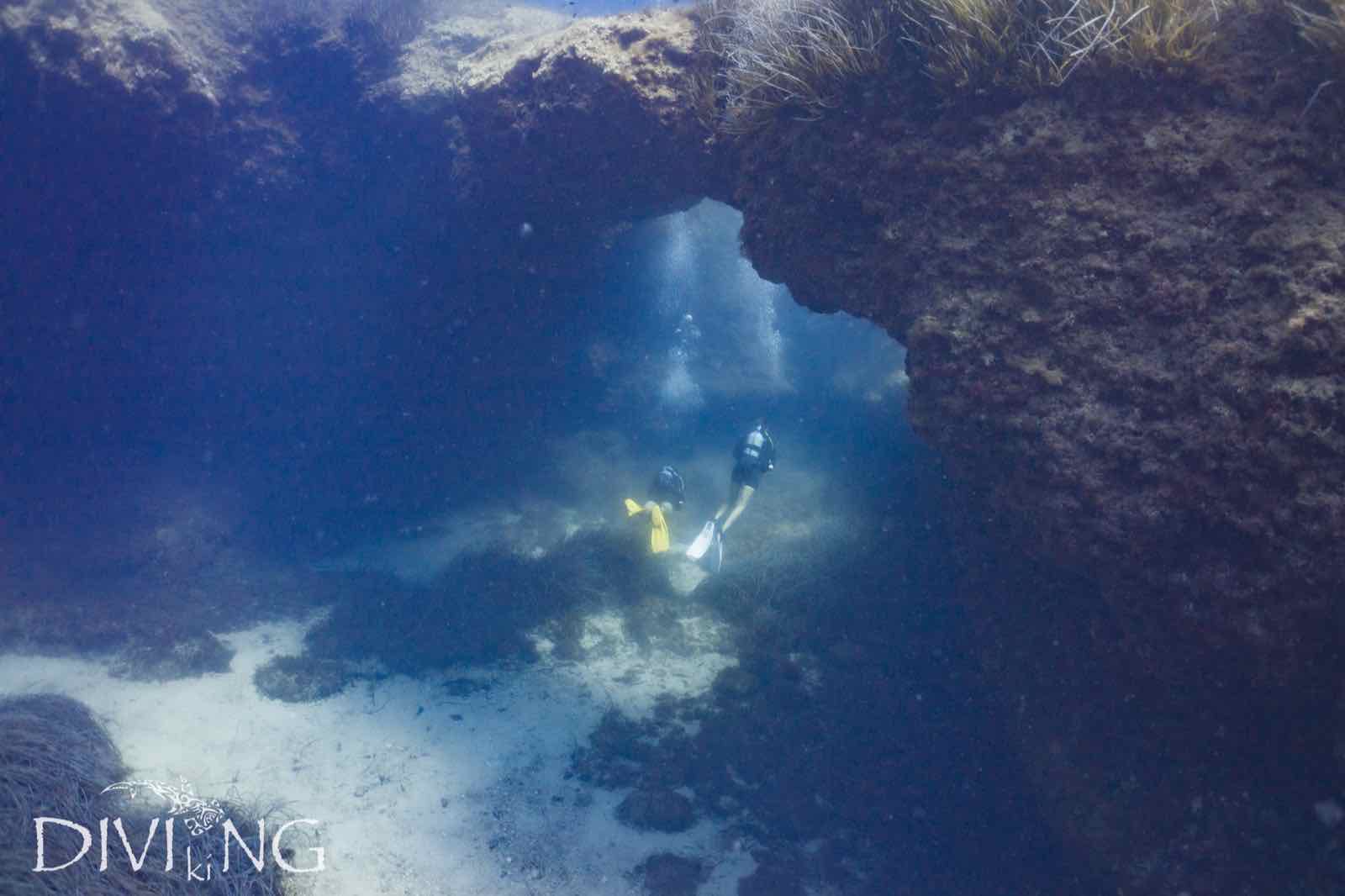
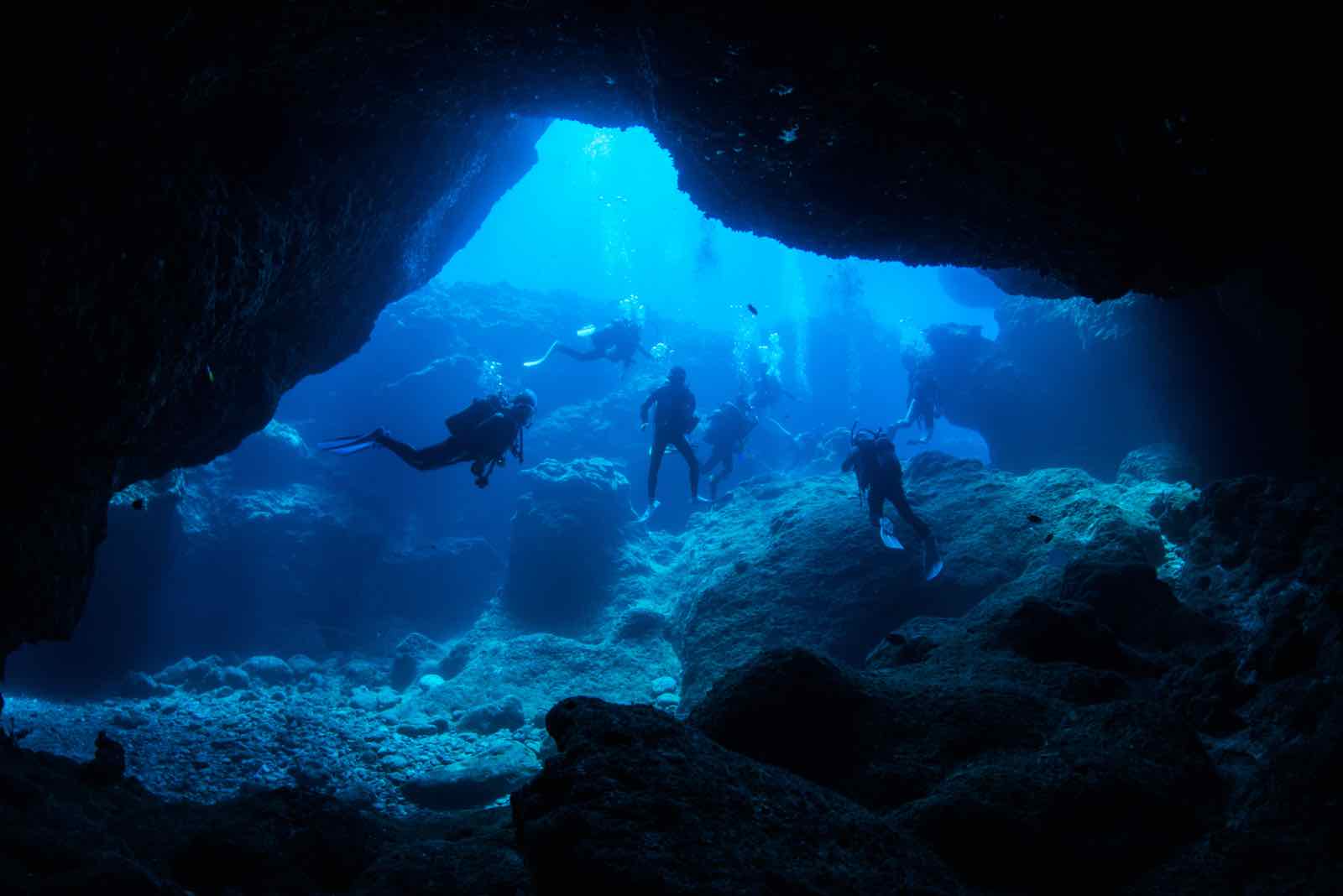
Malta's northernmost headland. One entry point opens three completely different dives: a cavern with a natural air pocket, a long reef wall falling to 30 metres, and a tunnel that connects to a small inland sea. No other site on the island offers this range from a single descent.
35°59'N · 14°35'E | Mellieha, NW Malta
Because the three options share the same entry point, diveshack guides brief each group on conditions before selecting the route. On a calm summer morning with good visibility, the North Reef is the standout choice. When northerly swell builds, the cave and tunnel offer protected alternatives that remain excellent dives in their own right.
The cave, the North Reef wall, and the tunnel each deliver a distinct experience from the same entry. Conditions and the morning briefing determine which route suits the day.
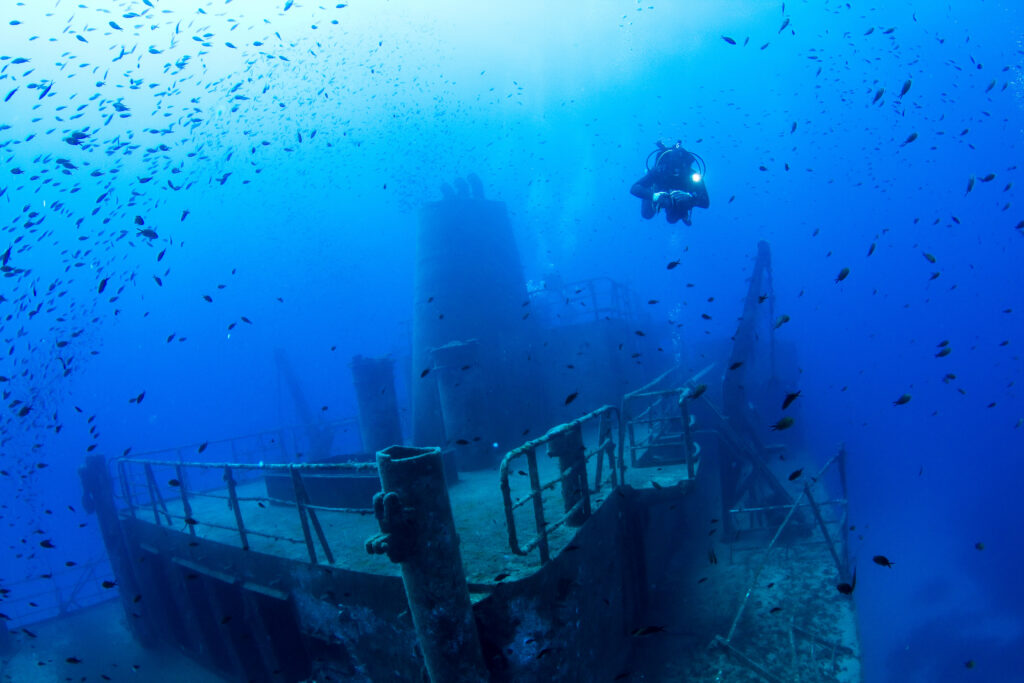
An impressive cavern penetrates deep into the limestone headland, starting at just 7 metres and dropping to 18 metres at its deepest point. Shafts of light filter through the entrance on calm days, illuminating stalactite formations left over from when this chamber was dry land. The highlight is the natural air pocket at the back of the cave, where divers can surface, remove regulators briefly, and hear the resonant acoustics of the chamber. Large grouper hold station near the cavern floor. A torch is essential; ambient light fades quickly once past the entrance arch.
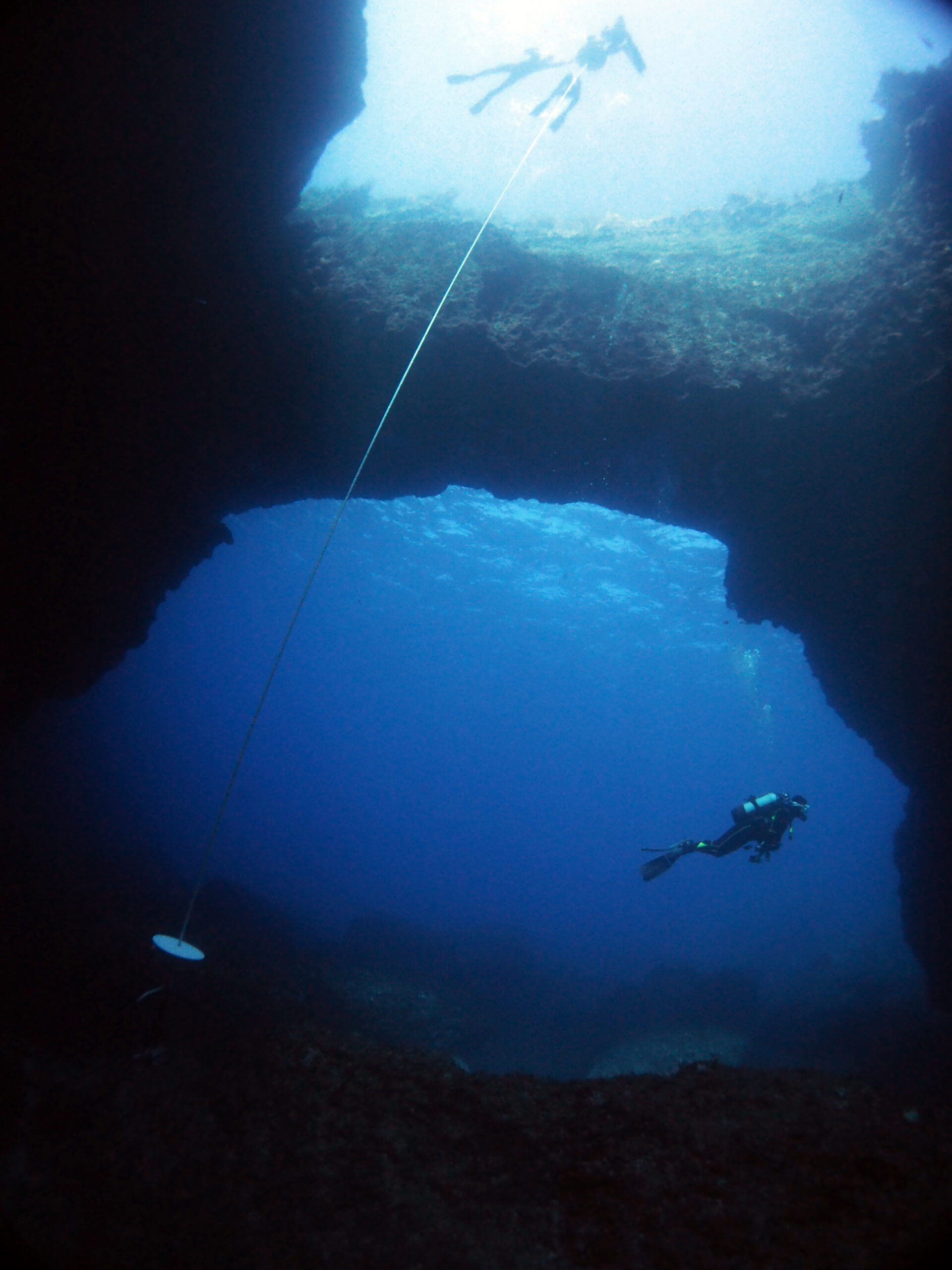
The exposed northern face of the headland offers one of the best reef wall dives in northwest Malta. The wall drops from a shallow plateau at around 10 metres down to 30 metres, covered in sponge growth, sea fans, and dense schools of salema, bream, and two-banded sea bream. Amberjack patrol the open water above the wall edge. Grouper are resident in the deeper crevices, often settled beside sea urchin clusters on the rock face. Current can run along this wall, particularly during northerly weather, and when it does, visibility sharpens significantly as open Mediterranean water pushes through. Plan the North Reef as the primary dive on calm, settled days.
A natural fault in the limestone connects the open sea entry directly to a small, enclosed inland sea on the western side of L'Ahrax Point. The tunnel passage is fully navigable and exits into sheltered, calm water that is ideal for a relaxed safety stop and ascent. The passage width varies: most sections are wide enough for two divers side by side, with one narrower squeeze near the midpoint. Nudibranchs and sea slugs inhabit the tunnel walls and floor, making it a productive macro dive. This is the recommended route when northerly swell affects the main entry area, as the inland sea side remains glassy in most conditions.
L'Ahrax Point is diveable throughout the year. The North Reef wall is at its best in summer and autumn when visibility peaks and the sea is settled. The cave and tunnel are productive year-round regardless of swell.
| Season | Visibility | Temp | Rating |
|---|---|---|---|
| Jan – Mar | 10–18m | 14–16°C | Fair |
| Apr – Jun | 15–22m | 17–22°C | Good |
| Jul – Sep | 20–25m | 24–27°C | Peak |
| Oct – Dec | 18–25m | 20–25°C | Peak |
Shore entry is easy and well-established. The rocky limestone platform provides a stable entry and exit point, with a natural descent available at the cave entrance. A short surface swim of roughly 20 metres separates the entry platform from the cave mouth. Parking is available near the headland. The entry platform can be slippery in winter, so booties are recommended year-round.
L'Ahrax Point faces directly north into open water between Malta and Gozo. Northerly swell and wind can make the main entry uncomfortable and affect the North Reef wall significantly. The cave and tunnel remain accessible in most conditions as they are sheltered on the western side. Always check the forecast before travelling. A northerly Tramontana or Gregale wind is the primary call-off condition for the reef dive.
Current can run along the northern wall, particularly when a pressure gradient is pulling water through the Malta Channel. When it runs, it tends to move from east to west and at moderate strength it assists a pleasant drift along the reef face. At stronger flow it requires experience to manage. No significant current inside the cave or tunnel. The guide will assess current at the surface before briefing the route.
All diveshack L'Ahrax Point dives are guided. Maximum five divers per guide. A full site briefing is given at the entry point before every dive, including route selection based on conditions observed that morning.
Advanced Open Water (or equivalent) is required for the North Reef wall and the full tunnel dive. The cave system can be accessed by Open Water divers on the shallower sections above 18 metres, under close guide supervision. Divers wanting to reach the air pocket at depth should hold Advanced or higher certification. A cave or cavern specialty is not required for the guided cavern dives at this site.
At 30 metres on air, NDL is approximately 20 minutes. The North Reef wall allows a natural ascending profile: start deeper at the base of the wall and work up gradually, maximising bottom time across the full depth range. A 3-minute safety stop at 5 metres is mandatory on all diveshack guided dives. Nitrox EAN32 extends NDL to approximately 35 minutes at 30 metres and is available on request.
Maximum five divers per guide on all L'Ahrax Point dives. The pre-dive briefing covers route selection, turn-around depth, gas management, buddy procedures for the cave, emergency signals, and ascent procedure. For cave dives, the briefing includes specific guidance on torch etiquette, sediment avoidance, and the air pocket protocol. Divers must confirm comfort with the selected route before descent.
Torch is required for the cave and strongly recommended for the tunnel. Dive computer mandatory. SMB for ascent. Wetsuit of at least 5mm in winter; 3mm acceptable in summer. Dive booties recommended year-round for the rocky entry platform. Equipment hire is available from diveshack. Wide-angle lens suits the cave mouth with natural light on calm mornings.
Minimum start pressure 200 bar. Rule of thirds applies on all dives involving the cave or tunnel: one third in, one third out, one third reserve. On the North Reef wall, standard back-gas planning with a reserve of 50 bar at the surface is the minimum. Nitrox EAN32 is available; book ahead of your dive. All cylinders are filled and inspected at the shop before departure.
Nearest hyperbaric chamber at Mater Dei Hospital, Msida. DAN dive accident insurance is strongly recommended and is available through diveshack. Emergency oxygen is on site at all times. Every guide is first-aid trained and familiar with the evacuation route from L'Ahrax Point. Emergency: 112. DAN Europe: +39 06 4211 5685.
Guided dives run on Wednesday and Sunday mornings. Departure from the L'Ahrax Point entry platform at 09:00. Transport from Sliema can be arranged on request. Private charters and small-group bookings are available any day of the week, subject to conditions at the site.
Include this site in a package: