Dive Site Card
Collect the card.
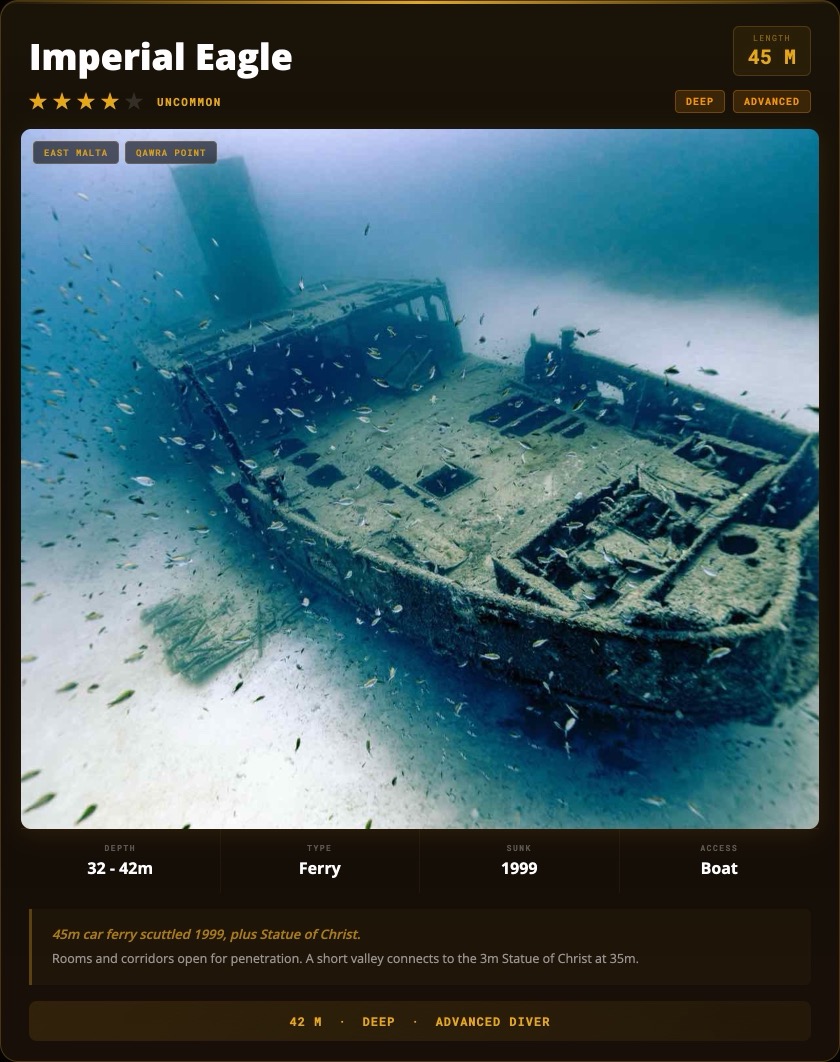
Two of Malta's most celebrated dive sites lie 30m apart off Qawra Point. The MV Imperial Eagle, a 45m car ferry scuttled in 1999, rests upright on sandy bottom at 42m with rooms and corridors open for penetration. A short underwater valley connects the wreck to the 3m Statue of Christ, standing on a natural rock amphitheatre at 35m. One mooring, one boat trip, two iconic dives.
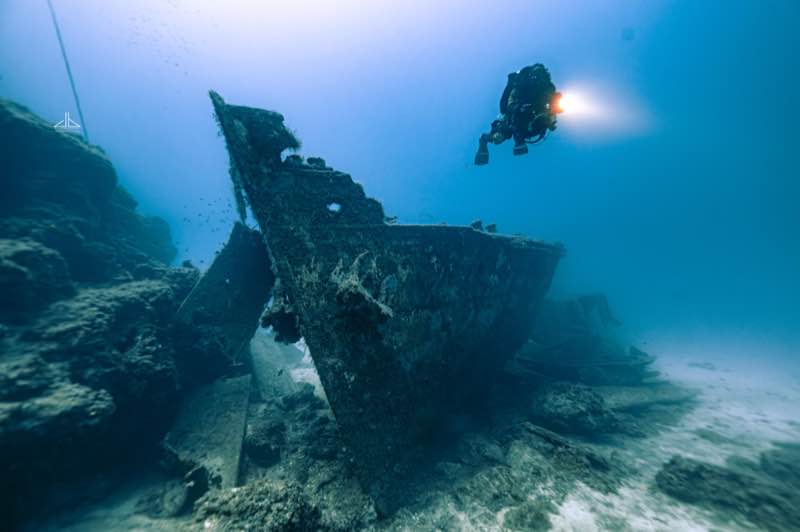
The Imperial Eagle sits upright on a flat sandy seabed at 42m, bow facing north-east. The wheelhouse and upper deck structures begin at 18m, making the wreck a genuine multi-level dive. The main deck runs from approximately 28m to 34m, with the engine room accessible at 38–42m. Multiple penetration routes are established and identifiable for experienced technical divers. The hull is densely colonised with encrusting sponges, tube worms, and hydroids. Resident grouper and moray hold positions throughout the wreck, and sea bream school around the upper decks. The sandy plateau around the wreck holds stingrays and occasional angelshark. Plan total dive time carefully; at 42m, bottom time is strictly limited on air. A natural multi-dive combination with the nearby MV Rozi at Cirkewwa.
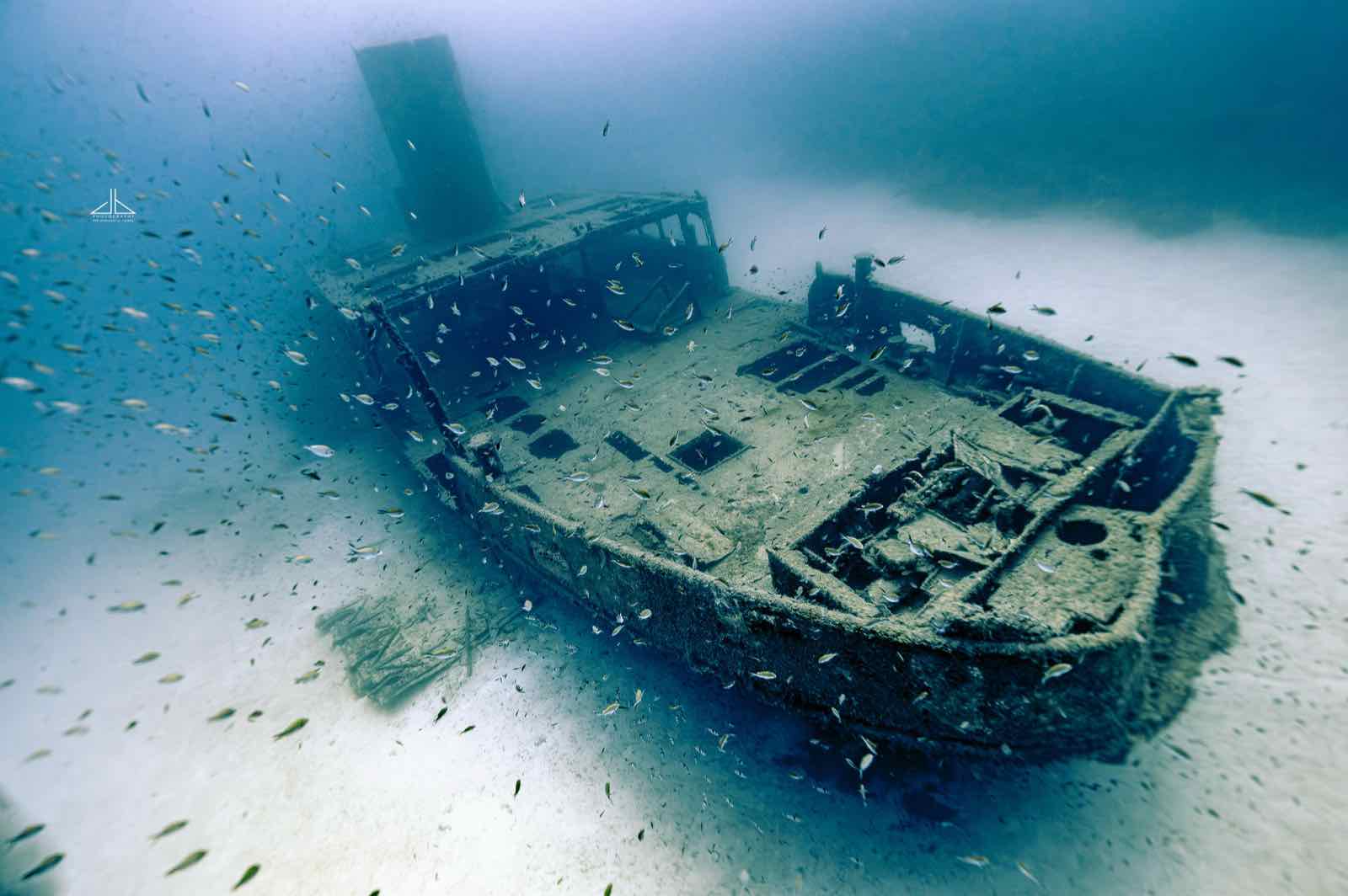
Built in 1938 by John Crown and Sons in England, the New Royal Lady served as a Malta-Gozo ferry before being deliberately scuttled on 19 July 1999. The vessel sits upright with a slight list. Wooden elements have deteriorated over the years, but the steel structure is intact throughout. Accessible rooms and corridors reward exploratory divers.
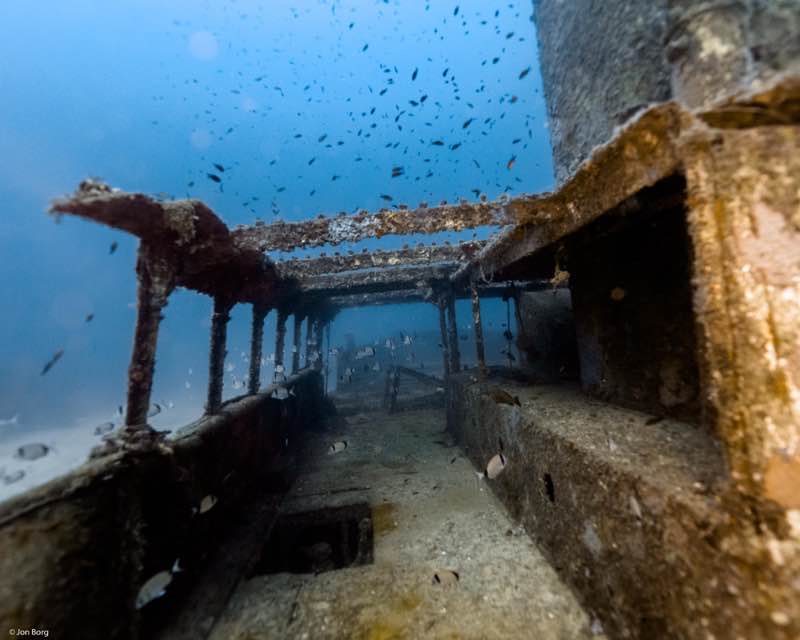
The bridge retains the lone remaining ship's wheel, one of the most photographed artefacts on any Malta wreck. The corridors leading from the main deck into the superstructure are open and spacious. Only the wheel remains on the bridge; other fittings were removed before scuttling.
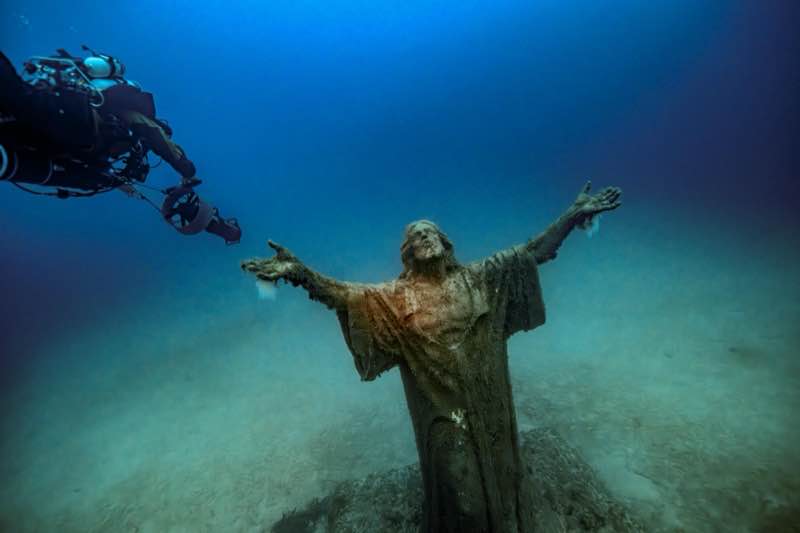
The 3m concrete and fibreglass figure was modelled on the Cristo degli Abissi near Genoa. It was originally placed off St Paul's Island on 26 May 1990 during a visit by Pope John Paul II, then re-sited to its current position off Qawra Point on 17 May 2000. The statue was cleaned and re-blessed in 2015. It stands in a natural rock amphitheatre, arms outstretched towards the surface.
Wedged between rocks in the reef adjacent to the Imperial Eagle lies an anchor dating from the 1600s. It is not always visited on every dive depending on remaining bottom time, but the guide will point it out when conditions allow. The anchor stands as a reminder of the centuries of maritime activity in these waters.
| Month | Water Temp | Visibility | Conditions |
|---|---|---|---|
| Jan–Mar | 14–16°C | 20–25m | Calm, cold |
| Apr–Jun | 17–22°C | 25–30m | Warming, clear |
| Jul–Sep | 25–27°C | 25–30m | Peak season |
| Oct–Dec | 20–22°C | 20–25m | Settling, calm |
Currents at Qawra Point are typically mild and the site is sheltered from the northwest. Occasionally a gentle current runs along the wreck hull, which is beneficial for photography. diveshack monitors conditions before departure and will reschedule if sea state makes the mooring unsafe.
Boat only from Sliema. Divers enter via giant stride or back-roll and descend on the shot line to the wreck deck at 32m. The route between the Imperial Eagle and the Statue of Christ follows the underwater valley connecting both sites. Ascent is on the shot line with a 3-minute safety stop at 5m.
5mm wetsuit from June through October; 7mm recommended in winter at 42m. A torch is required for wreck penetration sections. Deploy SMB at 5m before surfacing. Dive computers are mandatory; bottom time at 42m is constrained by no-decompression limits.
Advanced Open Water certification (SSI, PADI or equivalent) is required. Maximum depth on this dive is 42m. All divers must present logged experience at depth; the guide will confirm suitability before the boat departs.
Bottom time at 42m on air is very limited. The standard plan allows approximately 15–20 minutes on the wreck before ascending along the valley to the Statue at 35m. Dive computers are mandatory. Plan your ascent before you reach your no-decompression limit.
Penetration of the Imperial Eagle is guided only. Do not enter rooms or corridors unless the divemaster has led you in. Always maintain a visual reference to the exit. Torch is required before entering any enclosed space inside the wreck.
Descent and ascent are on the shot line. Do not leave the line during descent. The safety stop at 5m is conducted on the line for 3 minutes minimum. The guide signals when the group should begin ascending from the statue back toward the wreck and then to the line.
Every diver must carry and deploy an SMB before leaving 5m. The site is in open water approximately 500m northeast of Qawra Point with passing boat traffic. The guide will confirm the surfacing signal during the pre-dive briefing.
Stay within visual contact of your buddy throughout. The valley between the wreck and the statue is open water; maintain close buddy contact when navigating between the two sites. Signal before entering any wreck section and confirm your buddy is with you.
diveshack Malta runs guided boat dives to the Imperial Eagle and Statue of Christ from Sliema. The trip covers both sites on a single dive with a diveshack-certified divemaster who knows the wreck's layout and the route to the statue. Groups are kept small and all diving equipment is provided.
Combine this dive with the Bristol Beaufighter or HMS Stubborn for a full East Malta day. See the Triple Dive package below.
Include this site in a package:
Also consider these nearby sites: