Depth
0m
Comino · Open Water · 2–10m

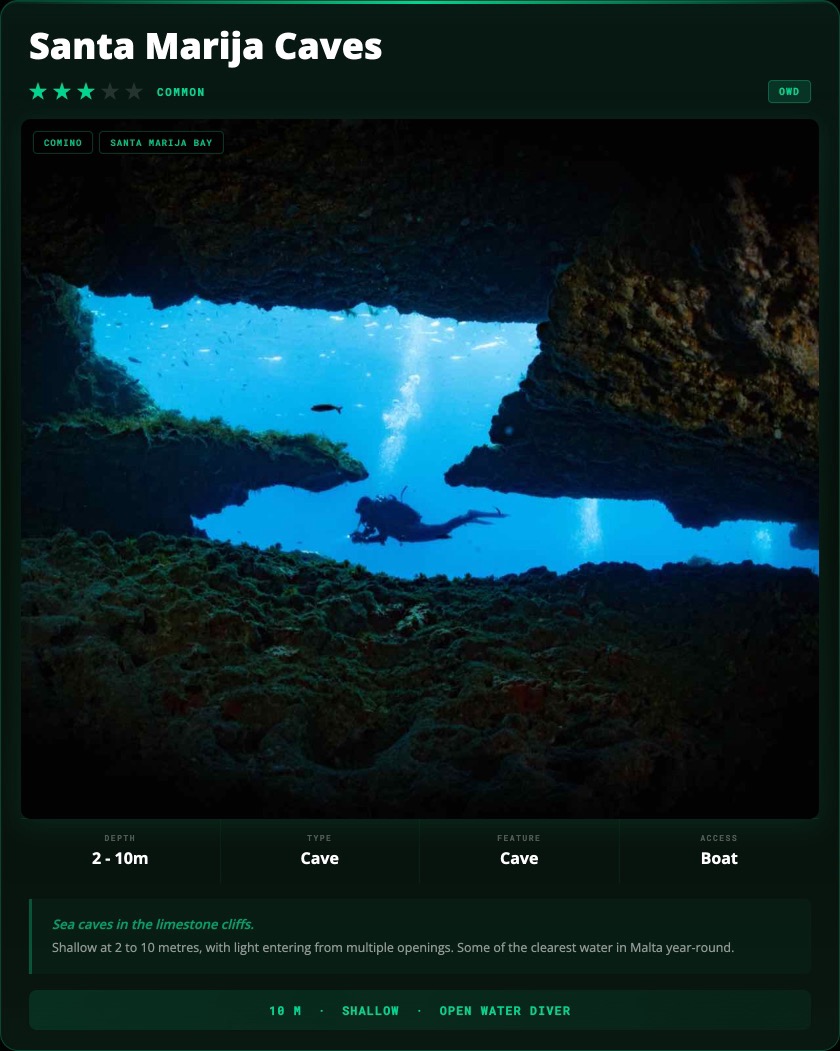
Santa Marija Caves
Comino Cavern System

A series of sea caves and cavern passages cut into the limestone cliffs of Santa Marija Bay, Comino. Shallow at 2 to 10 metres, with light entering the caverns from multiple openings, the system is well within Open Water limits and offers some of the clearest water in Malta year-round.

36°01.074' N  014°20.442' E
2m
Min Depth
10m
Max Depth
OW+
Level
25m+
Avg. Visibility
Boat
Entry Type
Year
Season

History & Background

  • Geological
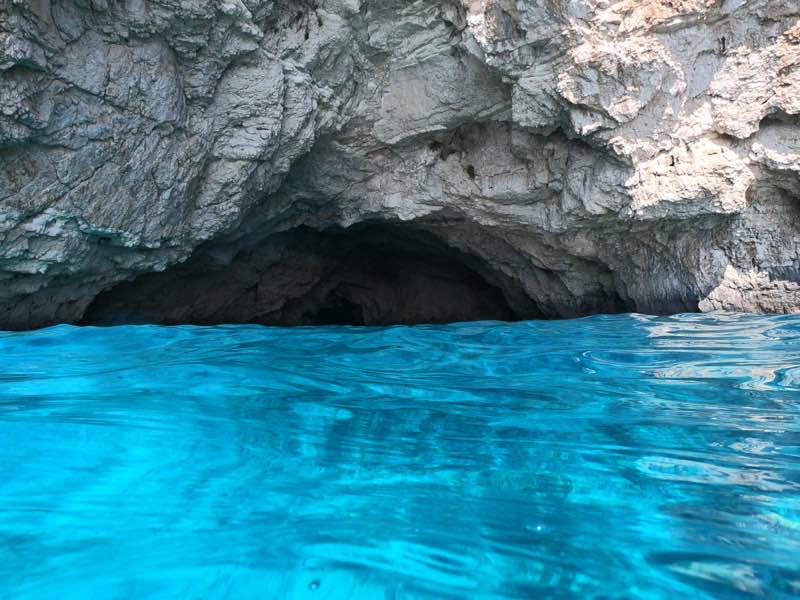
    The Santa Marija Caves were formed by wave erosion cutting into the limestone cliffs of Comino's south coast. Three separate cave chambers open to the sea at 3–6m, connected by narrow passages at different depths. The cave system is entirely light-penetrated, with natural air pockets in the upper chambers.
  • Medieval
    The caves take their name from the nearby Santa Marija Bay, which in turn is named after the feast of the Assumption of Mary. Local fishing communities used the bay and the caves as shelter; there are accounts of the caves being used as temporary refuges during bad weather for centuries.
  • Today
    Santa Marija Caves is one of Malta's most popular shallow dives and snorkel sites, combining the drama of cave diving with a beginner-accessible depth range. Access is by boat from Santa Marija Bay or the Blue Lagoon. Often combined with the P31 for a full Comino day.

Three cave chambers open to the south-facing Comino coast. The main cave is the largest: a wide arched entrance at 4m leading to a chamber with a surface-level air pocket. Sunlight penetrates fully in clear conditions, illuminating the cave interior in shades of turquoise. The secondary cave is narrower, requiring single-file passage at 6m, and connects to the main chamber via an underwater arch. The third cave is the shallowest, accessible at 2–3m with a large air space. Between the caves, the reef face at 8–10m is colonised with sponges, sea anemones, and nudibranchs. Damselfish guard territory on the cave ceilings. The site is ideal for Open Water and Try Scuba programmes, with the shallow depth and full natural light removing any overhead environment concerns.

SANTA MARIJA CAVES DEPTH PROFILE (10m) OW ZONE 0m 3m 6m 10m CLIFF Cave 1 Cave 2 Cave 3 Reef 8-10m

What You Might See

Species commonly encountered at this site, based on depth and habitat. Click any card to read the full species guide.

When to dive Santa Marija Caves

Period Water Temp Visibility Conditions
Jan–Mar 14–15°C 20–25m Good
Apr–Jun 16–21°C 25–30m Good
Jul–Sep 25–28°C 25–30m+ Peak
Oct–Dec 19–24°C 20–28m Peak
Summer
30m
Winter
20m

Currents

Santa Marija Bay is sheltered from the prevailing northwest wind. Conditions inside the caves are calm throughout the year. On exposed-coast dives outside the bay entrance, a light surge is possible during winter northerlies.

Entry / Exit

Boat access only. The bay does not have a dedicated shore-entry point for divers carrying equipment. A guide boat moors at the cave entrances. Water entry and exit are from the boat; the sites are not part of the public beach area.

Equipment Notes

A 3mm shorty suits summer; 5mm recommended from October to May. A primary torch is useful for the inner cavern passages, especially for inspecting wall life. No decompression computers required for this profile. Fins with ankle adjustment preferred for cave sections.

Safety and planning

Certification Required

An Open Water certification is sufficient for the cave entrances and first chambers. Any diver entering the inner passages beyond ambient-light range must hold a cavern or cave endorsement. The guide assigns sections according to certification held.

Torch Carry Required

Every diver entering the inner passages must carry a working primary torch. The cavern sections beyond the lit chambers require artificial light to navigate safely and to avoid contact with the walls. A backup torch is recommended for the inner route.

No-Touch Rule Required

Do not touch the cave walls, ceiling, or floor. The limestone formations are fragile and the marine growth colonising the walls is sensitive to contact. Buoyancy control should be confirmed before entering any enclosed passage.

Buoyancy Check Required

Establish neutral buoyancy before entering any passage. The low ceilings in certain sections leave minimal vertical margin. A diver who ascends uncontrolled inside a chamber risks contact with the roof and can reduce visibility for the group by disturbing silt.

Group Discipline Required

Enter and exit the cave passages as a group, in the order agreed in the pre-dive briefing. Divers must not overtake or change position within a passage. The last diver out is responsible for confirming the full group has exited before signalling the boat.

Air Management Required

For the cavern sections, begin the exit with a minimum of 100 bar remaining. The passages are short but the shallow depth means longer bottom times and higher air consumption per metre of depth is normal. Surface with 50 bar or above.

Dive Santa Marija Caves with diveshack

diveshack runs guided dives to Santa Marija Caves as part of Comino day trips and dedicated cave experience sessions. All dives include full equipment, guide, and boat. The site pairs well with the nearby P31 wreck for a double dive on the same day. Contact us to confirm scheduling and availability.

Contact: info@divemalta.com  ·  +356 9999 3483

Include this site in a package: