Blue Hole Dive Site, Gozo – Malta’s Most Iconic Shore Dive

Overview

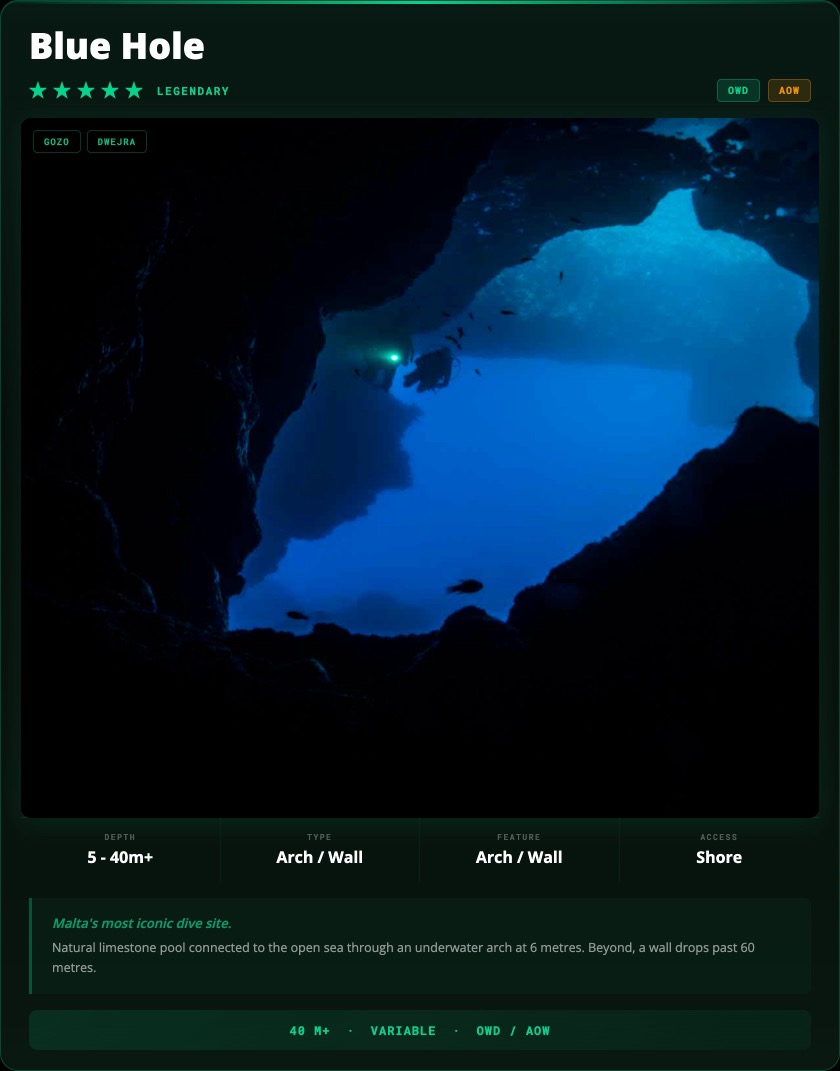
The Blue Hole dive site in Gozo is one of the most famous dive sites in the Mediterranean and a global bucket-list dive for visiting divers. Located on Gozo’s rugged west coast near Dwejra, the site combines dramatic geological formations, clear blue water, and direct access to deep open sea, all from shore.

What makes the Blue Hole exceptional is its unique transition: a shallow, sheltered circular hole carved into the limestone, opening via a short tunnel onto a sheer underwater wall that drops rapidly into deep water. This allows the site to cater to newly certified divers, advanced recreational divers, and even technical divers, all within the same entry point.

Despite its popularity, the Blue Hole remains a genuinely rewarding dive when planned correctly, offering excellent visibility, varied profiles, and direct access to some of Gozo’s most impressive underwater scenery.

Dive Summary

Access: Shore
Depth Range: 6–30m (recreational), deeper offshore
Certification Level: OWD → AOW
Dive Type: Cavern / wall / reef
Typical Visibility: 25–40m
Experience Level: Beginner friendly with advanced options

Dive Profile & Underwater Topography

The dive begins inside the Blue Hole basin, a roughly circular depression with a sandy bottom at around 6–7 metres. The surrounding rock walls create a calm, protected environment, ideal for buoyancy checks, skills refreshers, or simply acclimatising before the deeper section of the dive.

At approximately 14 metres, a short horizontal tunnel leads out of the Blue Hole into open sea. This tunnel is wide, well-lit, and non-restrictive, making it suitable for Open Water Divers under supervision, while still providing a cavern-like experience.

Once outside, divers emerge onto the Blue Hole wall, where the seabed drops away quickly. Recreational routes typically remain between 18–30 metres, following the wall south or north depending on conditions. Advanced divers can explore deeper ledges and overhangs, while technical divers use the site as an access point to deeper offshore terrain.

Navigation is straightforward, but depth awareness is critical due to the immediate proximity of deep water.

Geological Significance

The Blue Hole was formed by collapsed limestone caverns, shaped over thousands of years by wave action and erosion. The same geological forces that once created the nearby Azure Window — now collapsed — are responsible for the dramatic underwater arches, chimneys, and walls that define the site.

This geological history gives the Blue Hole its distinctive character and makes it one of the most photographed dive sites in Malta.

Marine Life & Visibility

While the Blue Hole is better known for its scenery than dense marine life, divers can expect to encounter:

  • Damselfish and wrasse along the walls

  • Octopus and cuttlefish in rocky crevices

  • Groupers and bream in deeper sections

  • Occasional pelagic sightings in blue water

Visibility is typically excellent, often exceeding 30 metres, particularly in calm summer conditions. Light penetration is strong, making the site popular with underwater photographers.

Conditions, Weather & Seasonality

The Blue Hole is highly exposed to westerly and north-westerly winds. When conditions are calm, it offers outstanding diving. When swell is present, entry and exit can become challenging or unsafe.

For this reason, the site is often scheduled:

  • Early in the day

  • During settled weather windows

  • As part of a west-coast dive plan

In rough conditions, alternative sites such as Inland Sea or east-coast Gozo dives are preferred.

Entry, Exit & Logistics

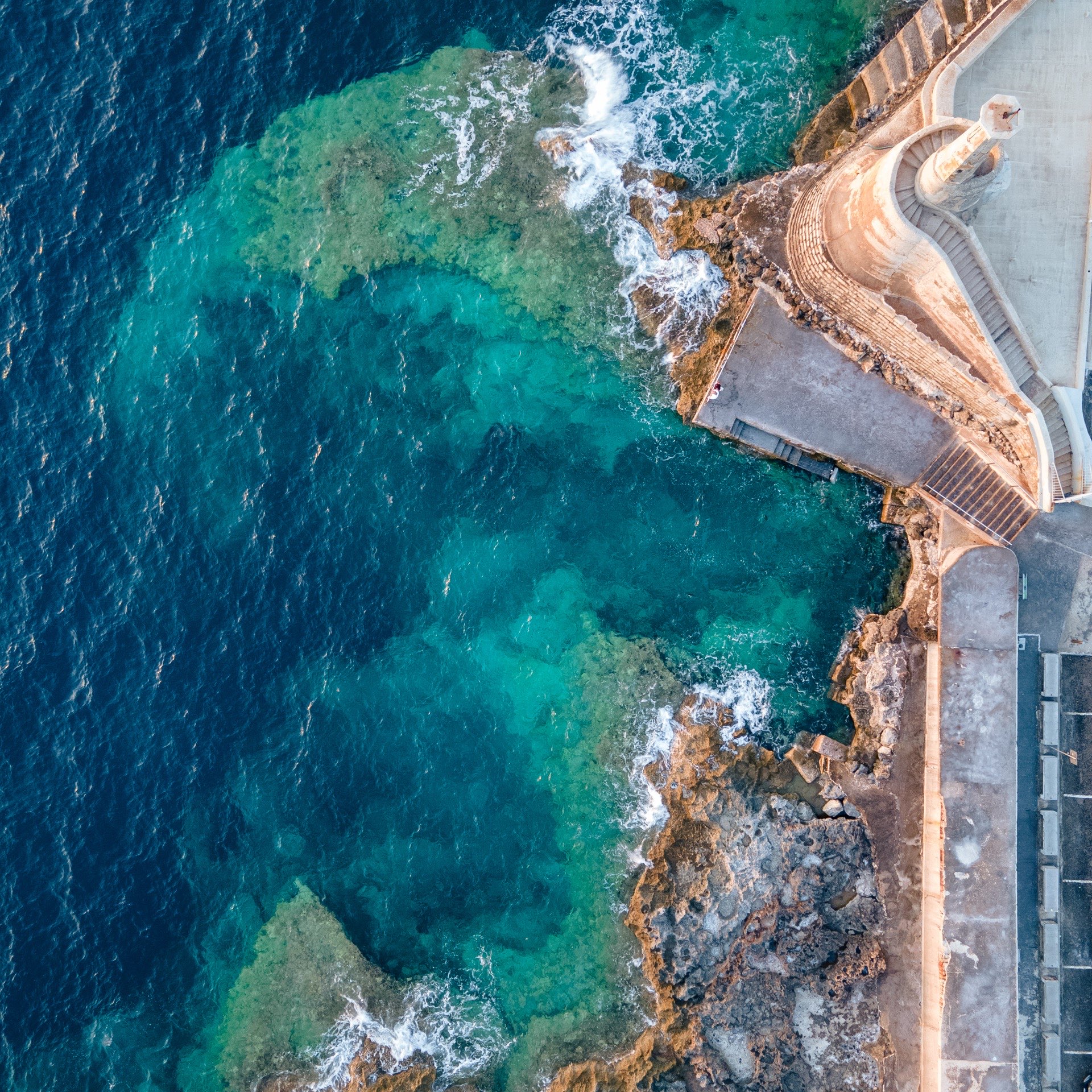
Entry is from a rocky shoreline, requiring a short walk over uneven limestone. Divers should wear appropriate footwear and move carefully, especially with full equipment.

The route to the water is well established, but assistance may be required for less mobile divers. Exit follows the same route and can be physically demanding after deeper or longer dives.

Due to its popularity, the site can become crowded during peak season, reinforcing the value of diving it with local guidance and proper timing.

Training & Experience Value

The Blue Hole is used extensively for training because it allows instructors to deliver:

Its sheltered start, controlled transition, and immediate access to depth make it one of the most versatile training sites in Malta.

Who This Dive Is Best Suited For

Ideal for:

  • Newly certified divers gaining confidence

  • Advanced divers seeking dramatic scenery

  • Photographers and videographers

  • Divers wanting a world-class shore dive

Less suitable for:

  • Divers uncomfortable with depth exposure

  • Poor weather days on the west coast

Local Knowledge & Tips

  • The best dives are often early morning, before swell and crowds build

  • Buoyancy control is essential to avoid accidental depth creep

  • The site pairs exceptionally well with Inland Sea on the same day

  • Planning surface intervals carefully is important due to depth profiles

This local insight is often missing from generic guides and is key to enjoying the site safely.

Related Dive Sites

  • Inland Sea & Tunnel (Gozo) – Natural progression from the Blue Hole

  • Reqqa Point – Advanced wall diving nearby

  • Coral Gardens – Colourful shallow alternative

  • Wied il-Ghasri – Sheltered option in rough weather