Depth
0m
Dwejra, Gozo  ·  Advanced  ·  3-40m

Inland Sea
and the 80m tunnel

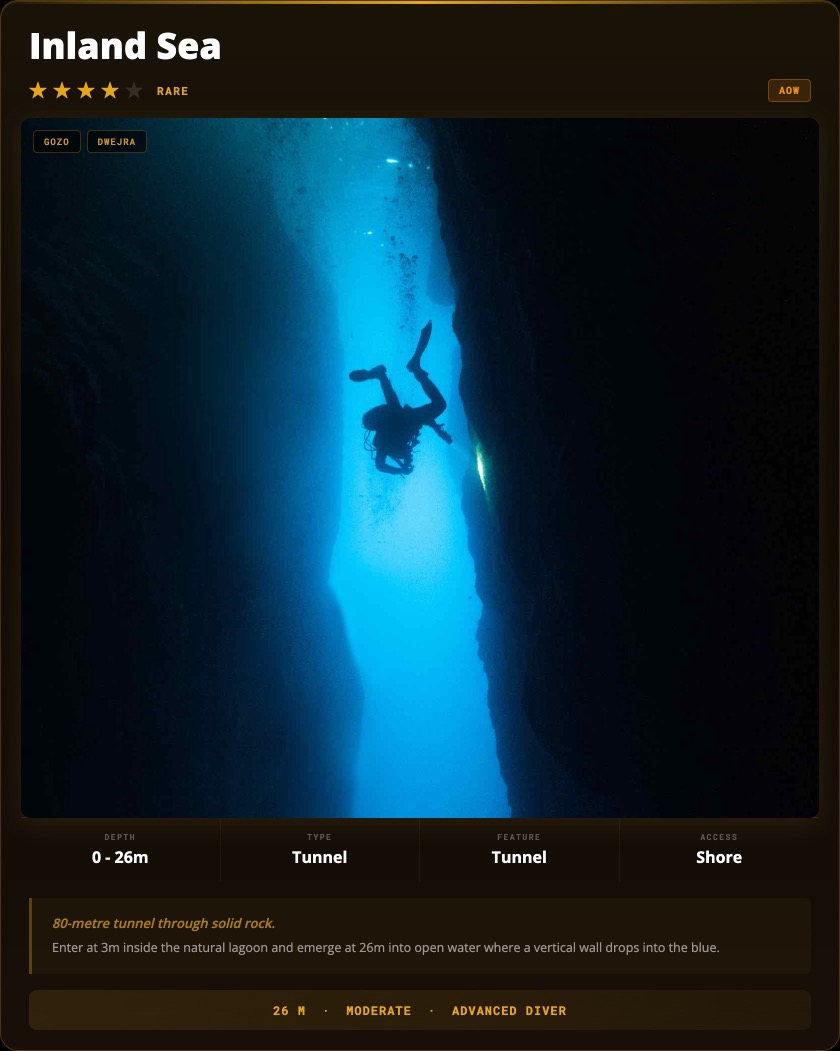
The Inland Sea is a natural lagoon at Dwejra, cut off from the open Mediterranean by a cliff. An 80-metre tunnel bored through the rock connects the two: enter at 3m inside the lagoon and emerge at 26m into open water, where a vertical wall drops into the blue. The same headland as Blue Hole, but a completely different dive.

3m
Tunnel Entry
26m
Tunnel Exit
80m
Tunnel Length
Advanced
Level
25m+
Avg. Visibility
Shore
Entry Type

History & Background

  • Geological
    The Inland Sea at Dwejra is a collapsed sea cave: a roughly circular lagoon of seawater connected to the Mediterranean by an 80-metre limestone tunnel. The lagoon sits at sea level and the tunnel descends to around 26m on the open-sea side. The formation was created by wave erosion and limestone collapse over thousands of years.
  • Ancient
    Dwejra Bay has been settled and used by fishing communities since antiquity. The Inland Sea lagoon provided a sheltered harbour for small boats; wooden luzzu fishing boats still operate from it today. The tunnel mouth on the open-sea side was historically used by small fishing craft in calm conditions.
  • Today
    The Inland Sea tunnel dive is one of Gozo's most iconic experiences. Divers enter from the sheltered lagoon, navigate the 80m tunnel, and emerge on the open-sea side at 26m. The dive can be done in either direction. The site is also popular with snorkellers inside the lagoon. Weather-dependent: the tunnel exit must be calm.

The dive begins inside the Inland Sea lagoon, an enclosed body of crystal-clear seawater. Small luzzu boats take divers to the tunnel mouth, which opens at approximately 3m depth. The tunnel descends gently from 3m at the lagoon entrance to 26m at the open Mediterranean exit. Light decreases progressively through the tunnel, but the exit glows with natural light on sunny days, creating a dramatic silhouette effect. The tunnel walls and ceiling are covered in sponges, encrusting bryozoans, and nudibranch species. At the open-sea exit, the reef wall drops away to the depths of the Dwejra channel. Grouper and amberjack are regularly seen at the exit. Return through the tunnel or ascend the outer reef wall. Strong current can occasionally affect the outer exit; always check conditions before entry.

INLAND SEA TUNNEL PROFILE (26m) OW ADV 0m 3m 18m 26m INLAND SEA Entry 3m Exit 26m ~80m tunnel

What You Might See

Species commonly encountered at this site, based on depth and habitat. Click any card to read the full species guide.

When to dive the Inland Sea

PeriodWater TempVisibilityConditions
Jan-Mar14-16°C25-35mVery clear water; cold dive, 7mm suit recommended
Apr-Jun17-22°C20-30mGood conditions; calm seas at Dwejra typical
Jul-Sep25-28°C20-25mPeak season; warm, occasional jellyfish blooms
Oct-Dec18-23°C25-35mExcellent visibility; northwest swell can affect open-sea section
Summer visibility (Jul-Sep)
Winter/autumn visibility (Oct-Mar)

Currents

Inside the lagoon there is no measurable current. In the tunnel, a gentle flow may run toward the open sea on an outgoing cycle; surfacing is possible throughout so divers can wait out any increased flow. The open-sea section can have a directional current running along the wall.

Entry and Exit

Shore entry from the Inland Sea lagoon is rated easy. Steps and a concrete platform provide access. Entry and exit are both from the lagoon; the tunnel is dived as a circuit exiting back through the tunnel on the return. Stay below 1m depth to remain clear of tourist boats.

Equipment Notes

A torch improves the tunnel experience even at midday. An SMB is required for any open-water portion beyond the tunnel exit. The site is sheltered enough to dive when Dwejra is exposed, making it a useful alternative on windier days. A 5mm wetsuit covers summer; 7mm for winter.

Safety and planning

Certification Level Required

Advanced Open Water or equivalent certification is required. The tunnel exit at 26m and the open-sea wall section place this dive in the advanced category. Divers should have logged a minimum of 20 open-water dives before attempting this site.

Boat Awareness Required

Small motorised tourist boats operate continuously inside the lagoon. Divers must descend immediately on entry and remain below 1m depth while crossing the lagoon. Before surfacing on return, wait under the water and confirm the lagoon is clear of vessels above you.

Torch Mandatory Required

Each diver must carry a torch. While natural light enters the tunnel, it is insufficient for examining the walls or managing navigation in reduced conditions. A torch also acts as a signalling device to other divers in the tunnel.

SMB for Open Water Required

If the dive plan includes time on the open-sea wall beyond the tunnel exit, deploy a surface marker buoy before ascending. Boat traffic operates in the waters outside Dwejra. Ascending without a visible SMB is not acceptable practice at this site.

Depth Limit Beyond Tunnel Required

The wall outside the tunnel drops beyond recreational limits. Agree a maximum depth before entry and treat it as a hard limit. There is no dive-specific reason to descend past 30m at this site on a recreational profile.

Tunnel Navigation Recommended

The tunnel is wide and the route is straightforward, but first-time divers benefit from a guided entry. Visibility inside the tunnel can temporarily reduce if silt is disturbed. Maintain good buoyancy and keep clear of the tunnel floor throughout the passage.

Dive the Inland Sea with diveshack

diveshack runs guided dives to the Inland Sea and Tunnel as part of Gozo day trips. The site pairs well with Blue Hole on the same headland for a full Dwejra day. All dives include a site briefing, guided tunnel transit, and surface cover. Equipment rental is available.

Include this site in a package: