Aetomylaeus bovinus
Elasmobranch
Range
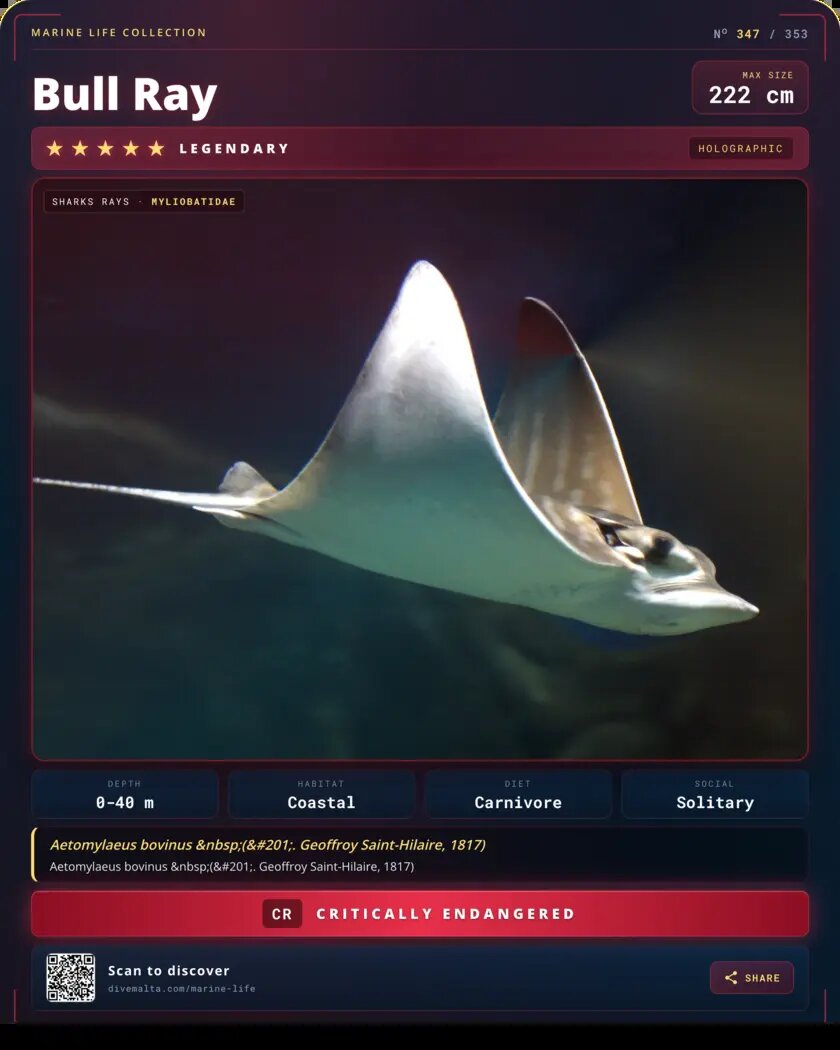
The bull ray inhabits coastal and estuarine waters across the Mediterranean and Atlantic, typically in the upper 30 m. It was once common in Malta but is now extremely rarely encountered – a reflection of its Critically Endangered status across the Mediterranean region.
Sightings are logged by divers using our What Did You See? dive-log tool. View the full live sightings map.
Sandy and muddy coastal substrates, estuaries and lagoons at 0–30 m. Frequently enters very shallow water. Occasionally encountered in open water mid-column.
Sightings in Malta are rare events. Sandy open areas at sites like Ghar Lapsi and Blue Lagoon offer the best chance. Approach slowly, stay low, and avoid any sudden movement that may cause the ray to flee.
Biology
Benthic-pelagic predator that searches sandy and muddy substrates for prey. Uses powerful crushing dental plates to crack open bivalve shells, gastropods, and crustacean carapaces. Also takes squids and prawns in the water column. Bull rays have been recorded causing significant damage to commercial shellfish farms.
DurophageOvoviviparous: embryos develop inside the mother and are born live. Litter size is low at 3–4 pups, with a gestation period of 6–12 months depending on location. Sexual maturity is reached at 4–6 years. This slow reproductive rate makes population recovery from decline extremely difficult.
OvoviviparousClassified Critically Endangered by the IUCN with population declines exceeding 80% over three generations. Extremely rare throughout the Mediterranean. The primary threats are bycatch in pelagic and bottom trawls, trammel nets, and gill nets. No species-specific protective measures are currently in place across most of its range.
Critically EndangeredDive with diveshack
Bull Ray favour sandy and muddy seabeds across the Maltese Islands, resting or foraging on the open bottom. The sites below offer consistent sandy habitat where encounters are reliable on guided dives with diveshack.
Bull Ray settle on the sandy floor and posidonia meadows at 3–14m, often partially buried when resting between foraging bouts. Sandy areas around Blue Lagoon are the most productive search zones.
View dive site ›Bull Ray settle on the Victorian cannon barrels on a sandy harbour seabed at 2–12m, often partially buried when resting between foraging bouts. Sandy areas around Victorian Guns are the most productive search zones.
View dive site ›Bull Ray settle on the sea grass meadows and boulder fields at 10–30m, often partially buried when resting between foraging bouts. Sandy areas around Ben's Arch are the most productive search zones.
View dive site ›Extensive sandy floor with excellent visibility. The calm, shallow sandy channels are ideal bull ray habitat and occasional sightings have been reported in the area.
View dive site ›Sandy channels flanking the reef system at 10–30 m. The open sandy corridors offer suitable foraging habitat for any pelagic rays moving through the channel.
View dive site ›The bull ray is Critically Endangered (IUCN 2016). Mediterranean populations have declined by more than 80% over three generations, driven almost entirely by bycatch in commercial fishing gear. The species has extremely low fecundity (3–4 pups per litter) and reaches sexual maturity late, making recovery very slow. No species-specific protective measures are in place across most of its range.