Depth
Etmopterus · Sharks & Rays

Velvet Belly

Etmopterus spinax

70-2000m
Depth Range
60cm
Max Size
Mediterranean
Distribution
70-2000m
Depth Range
60cm
Max Size
Bathypelagic
Habitat
Carnivore
Diet
Small groups
Social
VU
IUCN Status
Rare
Sighting Likelihood
KingdomAnimalia
PhylumChordata
ClassElasmobranchii
GenusEtmopterus
Speciesspinax

Identification & Biology

  • IdentificationA small lantern shark with a dark brown to black velvety underside and lighter brown upper body. Small, green fluorescent eyes. Two dorsal fins, each with a sharp spine. One of the most common deep-water sharks in the Mediterranean.
  • SizeUp to 60 cm total length. Most adults are between 30 and 45 cm.
  • Social HabitFound in groups, sometimes in large numbers. Bioluminescent, producing a blue-green glow from photophores on the belly and flanks that serves as counter-illumination camouflage.
  • HabitatDeep continental and insular slopes, on or near the bottom over muddy substrates.
  • Depth70 to 2490 m. Most abundant between 200 and 500 m.
  • Feeds OnSmall fish, squid, crustaceans (shrimp and krill), and polychaete worms.
  • DistributionEastern Atlantic from Iceland and Norway to South Africa, and throughout the Mediterranean Sea. Common in deep waters around Malta.
  • DescriptionEtmopterus spinax is one of several bioluminescent shark species found in the deep Mediterranean. The glowing belly, produced by thousands of tiny light-emitting organs called photophores, is thought to break up the shark's silhouette when seen from below, hiding it from both predators and prey. Despite being common in deep-water trawl catches, it is rarely seen alive. Listed as Least Concern by the IUCN.

Habitat & Distribution

Found on continental slopes and in deep basins from 70 to over 2000 metres. Well recorded in the deep waters around Malta and throughout the Mediterranean basin. Rarely seen by divers.

Where Malta divers have spotted this species

Loading…

Sightings are logged by divers using our What Did You See? dive-log tool. View the full live sightings map.

Detail

Preferred Environment

Deep-water slopes and basins above muddy substrates. Performs vertical migrations, moving to shallower depths at night.

Encounter Tips

Best approached slowly and calmly. Avoid casting shadows directly over the animal. Neutral buoyancy and patience increase encounter success significantly.
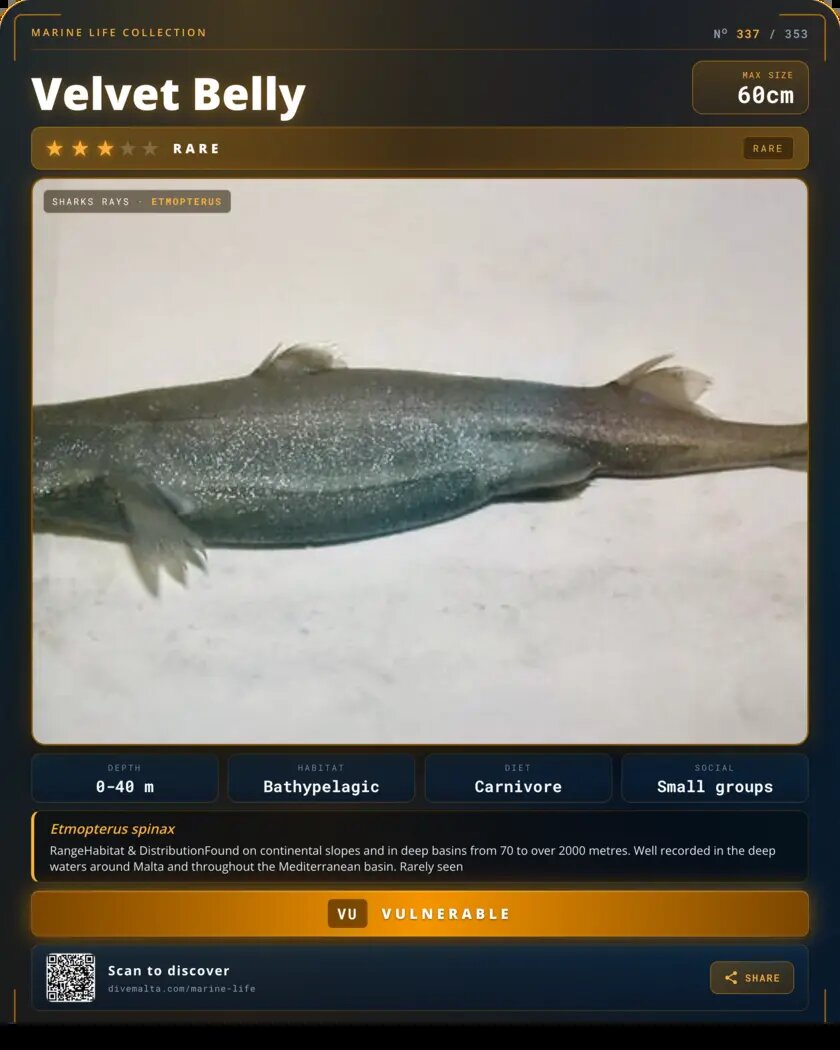
Velvet Belly species card

Where to Encounter in Malta

Dive sites where Etmopterus spinax may be encountered will be added as sighting data is collected.

IUCN Red ListVulnerable

Conservation Status

This species is assessed as Vulnerable on the IUCN Red List. Mediterranean populations face ongoing pressure from fishing activity, habitat degradation, and climate-driven changes.

Source: IUCN Red List
diveshack Mediterranean Marine Life guide