Range
Habitat & Distribution
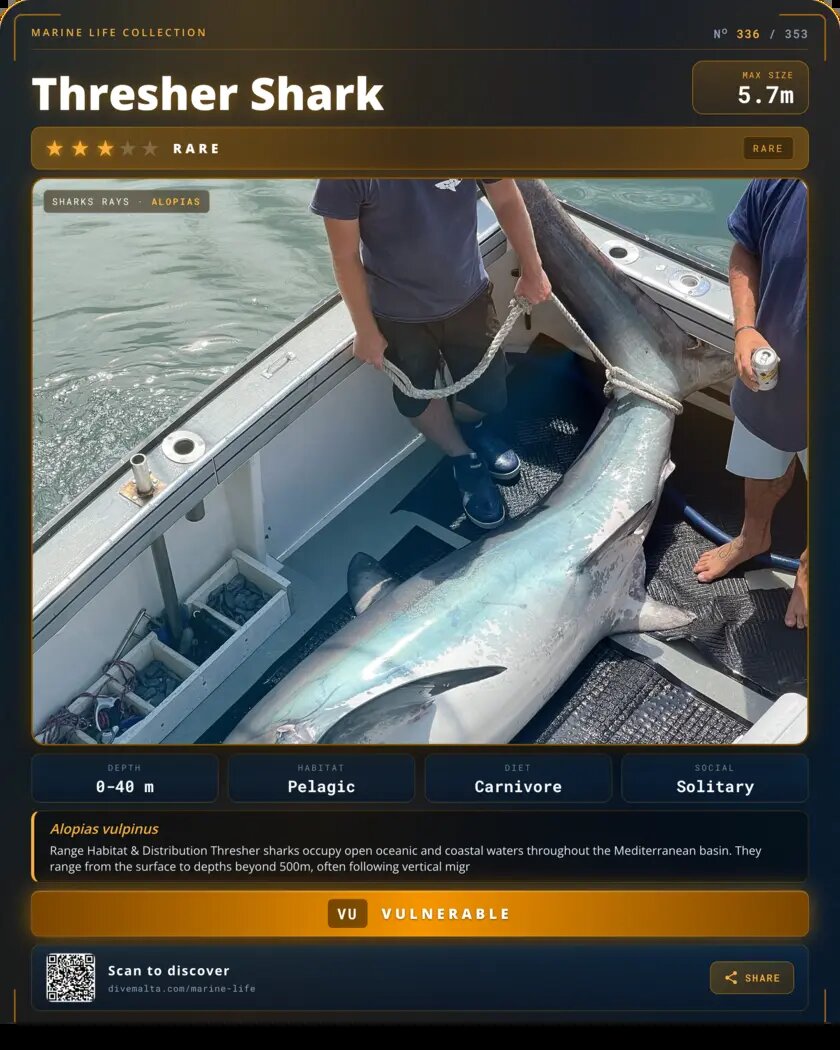
Thresher sharks occupy open oceanic and coastal waters throughout the Mediterranean basin. They range from the surface to depths beyond 500m, often following vertical migrations of prey species along the continental slope.
Where Malta divers have spotted this species
Sightings are logged by divers using our What Did You See? dive-log tool. View the full live sightings map.
Detail
Preferred Environment
Prefers epipelagic to mesopelagic zones over deep water, frequently near underwater drop-offs and seamounts. In the Mediterranean, most encounters occur in open water well offshore from the coast.
Encounter Tips
Best approached slowly and calmly. Avoid casting shadows directly over the animal. Neutral buoyancy and patience increase encounter success significantly.