Depth
Raja · Sharks & Rays

Thornback Ray

Raja clavata

2-300m
Depth Range
1.2m
Max Size
Mediterranean
Distribution
2-300m
Depth Range
1.2m
Max Size
Sandy / Rocky
Habitat
Carnivore
Diet
Solitary
Social
NT
IUCN Status
High
Sighting Likelihood
Kingdom Animalia
Phylum Chordata
Class Elasmobranchii
Genus Raja
Species clavata

Identification & Biology

  • IdentificationA medium-sized ray with a broad, diamond-shaped disc and distinctive rows of sharp, curved thorns running along the back and tail. The upper surface is highly variable in colour and pattern, typically brown with darker blotches and sometimes pale spots, providing excellent camouflage.
  • SizeDisc width up to 60 cm. Total length up to 105 cm. Weight up to 4.5 kg.
  • Social HabitSolitary. Rests on the seabed during the day, partially buried in sand. Lays rectangular egg cases (mermaid's purses) that are often found washed up on shores.
  • HabitatSandy, muddy, and gravelly bottoms from shallow coastal waters to the outer continental shelf. One of the most common rays in European waters.
  • Depth2 to 300 m. Most common between 10 and 60 m.
  • Feeds OnCrabs (main prey), shrimp, small bony fish, worms, and other bottom-dwelling invertebrates.
  • DistributionEastern Atlantic from Iceland and Norway to Morocco, and throughout the Mediterranean and Black Seas. One of the most widespread rays in the region.
  • DescriptionRaja clavata is the most commonly encountered ray species across much of Europe, including Malta. Its name comes from the rows of thorn-like spines on its back, which deter predators. The highly variable patterning provides excellent camouflage against different seabed types. Listed as Near Threatened by the IUCN but still relatively common compared to many other Mediterranean ray species.

Habitat & Distribution

One of the more commonly encountered rays in Mediterranean waters, found from shallow coastal zones to depths of 300m. Inhabits a wide range of substrates across the continental shelf, particularly in the central and western Mediterranean.

Where Malta divers have spotted this species

Loading…

Sightings are logged by divers using our What Did You See? dive-log tool. View the full live sightings map.

Detail

Preferred Environment

Favours mixed sandy, muddy, and rocky seabeds where it can lie partially buried. Often encountered near Posidonia seagrass meadows and on open sandy patches between rocky outcrops at recreational diving depths.

Encounter Tips

Best approached slowly and calmly. Avoid casting shadows directly over the animal. Neutral buoyancy and patience increase encounter success significantly.
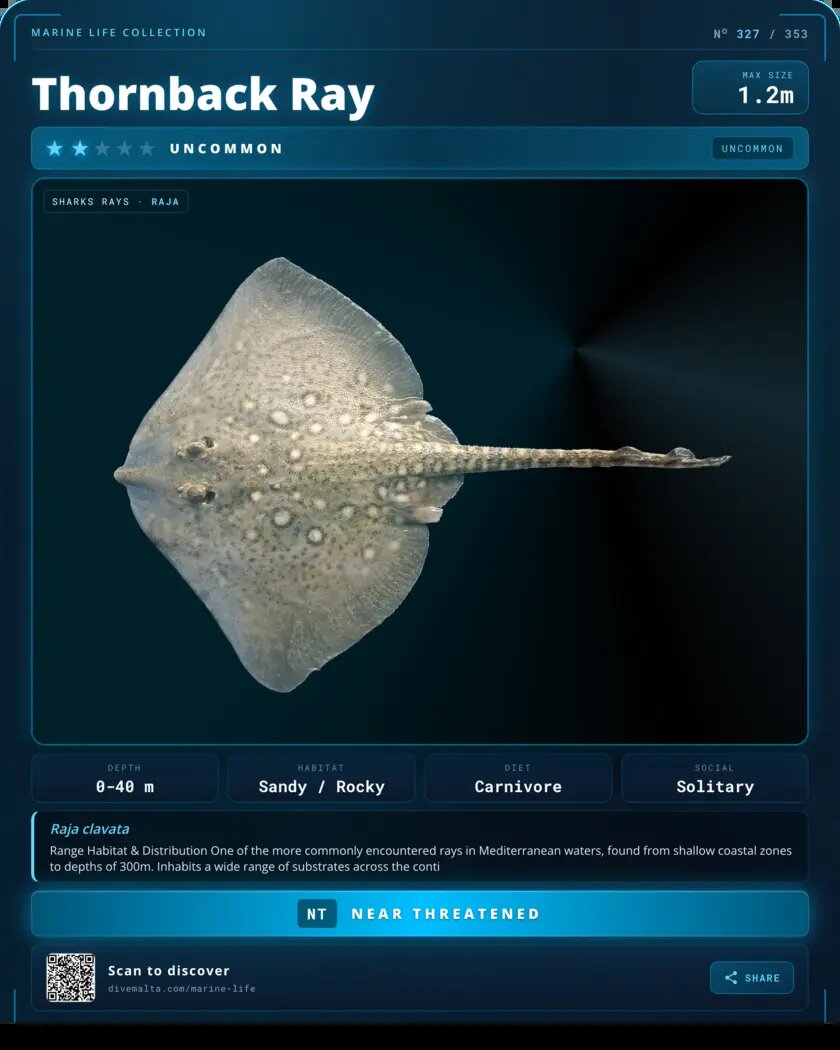
Thornback Ray species card

Behaviour & Diet

Feeding Strategy

Feeds primarily on crustaceans, especially crabs and shrimps, along with small fish and molluscs. Detects prey buried in sediment using its electroreceptors, then excavates them with jets of water from its mouth.

Bottom forager

Reproduction

Oviparous, laying rectangular egg cases commonly known as mermaid's purses. Females deposit around 20 egg cases per year on sandy or weedy substrates. Embryos take 4-5 months to develop.

Oviparous

Behaviour & Defence

Relies on camouflage and the rows of sharp thorns along its back and tail for protection. When stepped on or handled, the thorns can cause painful puncture wounds.

Thorny armour

Where to Encounter in Malta

Dive sites where Raja clavata may be encountered will be added as sighting data is collected.

IUCN Red List Near Threatened

Conservation Status

This species is assessed as Near Threatened on the IUCN Red List. Mediterranean populations face ongoing pressure from fishing activity, habitat degradation, and climate-driven changes.

Source: IUCN Red List
diveshack Mediterranean Marine Life guide