Depth
Carcharhinus · Sharks & Rays

Sandbar Shark

Carcharhinus plumbeus

1-280m
Depth Range
2.4m
Max Size
Mediterranean
Distribution
1-280m
Depth Range
2.4m
Max Size
Coastal
Habitat
Carnivore
Diet
Small groups
Social
VU
IUCN Status
Rare
Sighting Likelihood
Kingdom Animalia
Phylum Chordata
Class Elasmobranchii
Genus Carcharhinus
Species plumbeus

Identification & Biology

  • IdentificationA stocky, medium-sized requiem shark with an unusually tall, triangular first dorsal fin and a prominent interdorsal ridge. Grey-brown to bronze on top, fading to white on the belly. The snout is broadly rounded.
  • SizeCommonly 1.5 to 2 m. Maximum recorded length 2.4 m and weight up to 120 kg.
  • Social HabitOften found in groups segregated by sex and age. Migratory, moving between inshore nursery areas and deeper offshore waters seasonally.
  • HabitatShallow coastal waters, harbours, estuaries, and continental shelf edges. Prefers sandy and muddy bottoms.
  • Depth1 to 280 m. Typically between 20 and 65 m.
  • Feeds OnSmall bony fish, rays, squid, octopus, crabs, shrimp, and gastropod snails.
  • DistributionWorldwide in warm temperate and tropical waters. In the Mediterranean, one of the more commonly recorded large requiem sharks, though still uncommon.
  • DescriptionCarcharhinus plumbeus is distinguished from other requiem sharks by its exceptionally tall first dorsal fin, which is one of the most recognisable features in shark identification. It is one of the longest-lived requiem sharks, reaching over 30 years. Listed as Endangered in the Mediterranean by the IUCN. Historically present in Maltese waters, though encounters are now rare.

Habitat & Distribution

Occupies coastal and continental shelf waters throughout the Mediterranean, from shallow bays to moderate depths along the shelf edge. Populations have declined significantly but the species remains among the more regularly recorded large sharks in the basin.

Where Malta divers have spotted this species

Loading…

Sightings are logged by divers using our What Did You See? dive-log tool. View the full live sightings map.

Detail

Preferred Environment

Prefers shallow to moderate-depth waters over sandy and muddy substrates. Often found near harbours, estuaries, and along sandy coastlines where it forages on bottom-dwelling prey.

Encounter Tips

Best approached slowly and calmly. Avoid casting shadows directly over the animal. Neutral buoyancy and patience increase encounter success significantly.
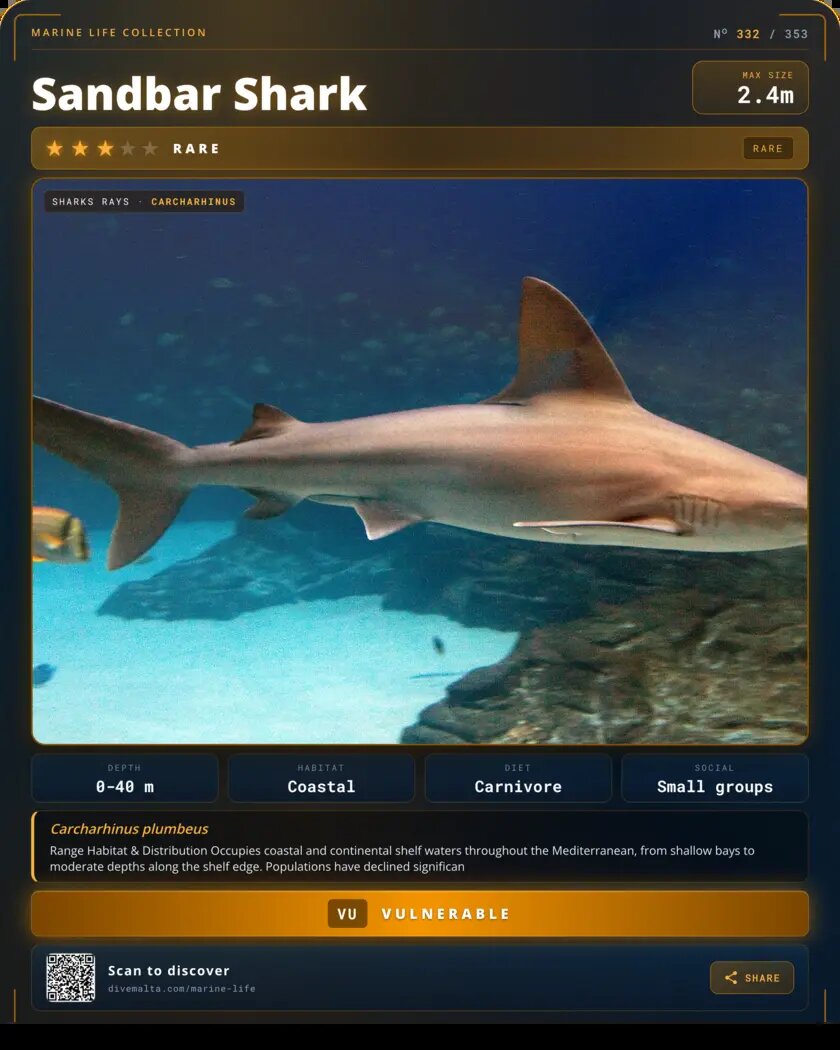
Sandbar Shark species card

Behaviour & Diet

Feeding Strategy

A bottom-oriented predator that feeds primarily on bony fish, octopus, squid, and crustaceans. Forages along the seabed, using its electroreceptors to detect buried prey.

Bottom feeder

Reproduction

Viviparous with a yolk-sac placenta. Litters of 5-12 pups are born after a gestation of approximately 12 months. One of the slowest-reproducing shark species, with females breeding only every two to three years.

Viviparous

Behaviour & Defence

Generally non-aggressive and wary of divers. Its slow reproductive rate makes populations particularly vulnerable to overfishing pressure.

Non-confrontational

Where to Encounter in Malta

Dive sites where Carcharhinus plumbeus may be encountered will be added as sighting data is collected.

IUCN Red List Vulnerable

Conservation Status

This species is assessed as Vulnerable on the IUCN Red List. Mediterranean populations face ongoing pressure from fishing activity, habitat degradation, and climate-driven changes.

Source: IUCN Red List
diveshack Mediterranean Marine Life guide