Chimaera monstrosa
Elasmobranch
Range
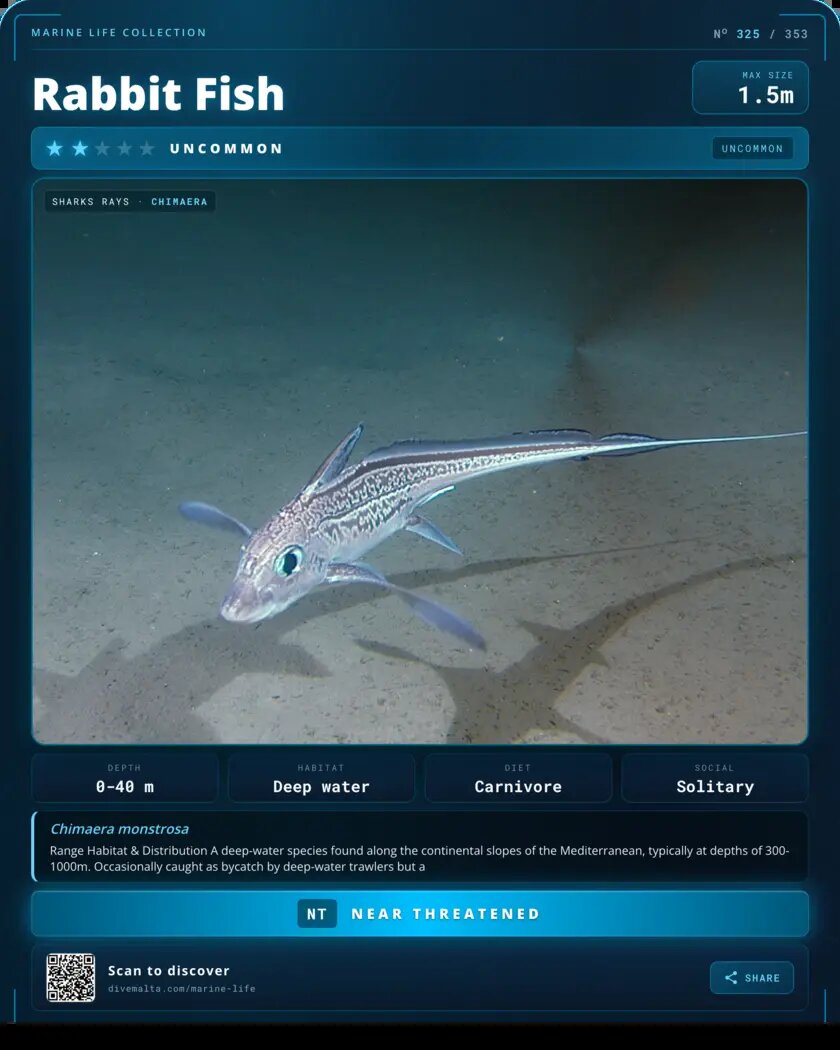
A deep-water species found along the continental slopes of the Mediterranean, typically at depths of 300-1000m. Occasionally caught as bycatch by deep-water trawlers but almost never encountered by recreational divers.
Sightings are logged by divers using our What Did You See? dive-log tool. View the full live sightings map.
Inhabits muddy and soft-sediment deep-sea floors along continental slopes. Prefers cold, dark environments well below the photic zone, where it forages slowly along the bottom.
Best approached slowly and calmly. Avoid casting shadows directly over the animal. Neutral buoyancy and patience increase encounter success significantly.
Biology
Feeds on bottom-dwelling invertebrates including crustaceans, molluscs, worms, and echinoderms. Uses its mineralised tooth plates to crush hard-shelled prey items found on or in the sediment.
Benthic crusherOviparous, laying large, elongated leathery egg cases on the seabed. Each case contains a single embryo that develops over several months before hatching. Reproductive output is very low.
OviparousPossesses a mildly venomous spine at the leading edge of the first dorsal fin. Its deep-water habitat provides the primary protection from most predators.
Venomous dorsal spineDive with diveshack
Dive sites where Chimaera monstrosa may be encountered will be added as sighting data is collected.
This species is assessed as Near Threatened on the IUCN Red List. Mediterranean populations face ongoing pressure from fishing activity, habitat degradation, and climate-driven changes.