Depth
Raja · Sharks & Rays

Mediterranean Starry Ray

Raja asterias

Variable
Depth Range
Variable
Max Size
Mediterranean
Distribution
Variable
Depth Range
Variable
Max Size
Variable
Habitat
Variable
Diet
Variable
Social
NT
IUCN Status
Moderate
Sighting Likelihood
KingdomAnimalia
PhylumChordata
ClassElasmobranchii
GenusRaja
Speciesasterias

Identification & Biology

  • IdentificationA medium-sized skate with a broad, rhombic disc covered in small, star-shaped spiny patches (stellate denticles) that give it a rough texture. Brown to olive on top with numerous small white spots scattered across the disc. Pale white underside.
  • SizeDisc width up to 60 cm. Total length up to 80 cm. Weight up to 2 kg.
  • Social HabitSolitary. Rests on the seabed during the day, partially buried in sand. Lays rectangular egg cases (mermaid's purses) on the bottom.
  • HabitatSandy and muddy bottoms in shallow to moderate coastal waters. Often found on open sandy plains and near Posidonia meadows.
  • Depth1 to 300 m. Most common between 10 and 100 m.
  • Feeds OnCrustaceans (small crabs and shrimp), polychaete worms, small bony fish, and molluscs.
  • DistributionEndemic to the Mediterranean Sea and adjacent eastern Atlantic coast from Portugal to Morocco.
  • DescriptionRaja asterias is one of the most commonly encountered rays in the Mediterranean and one of the more likely skate species a diver might spot on sandy seabeds around Malta. Its white-spotted pattern provides excellent camouflage against sandy substrates. Despite being relatively common compared to other Mediterranean rays, it is listed as Near Threatened by the IUCN due to ongoing bycatch pressure from bottom trawling.

Habitat & Distribution

Found across the Mediterranean Sea. Habitat and depth details to be confirmed.

Where Malta divers have spotted this species

Loading…

Sightings are logged by divers using our What Did You See? dive-log tool. View the full live sightings map.

Detail

Preferred Environment

Habitat details for Mediterranean Starry Ray to be confirmed. Most commonly encountered in Mediterranean waters.

Encounter Tips

Best approached slowly and calmly. Avoid casting shadows directly over the animal. Neutral buoyancy and patience increase encounter success significantly.
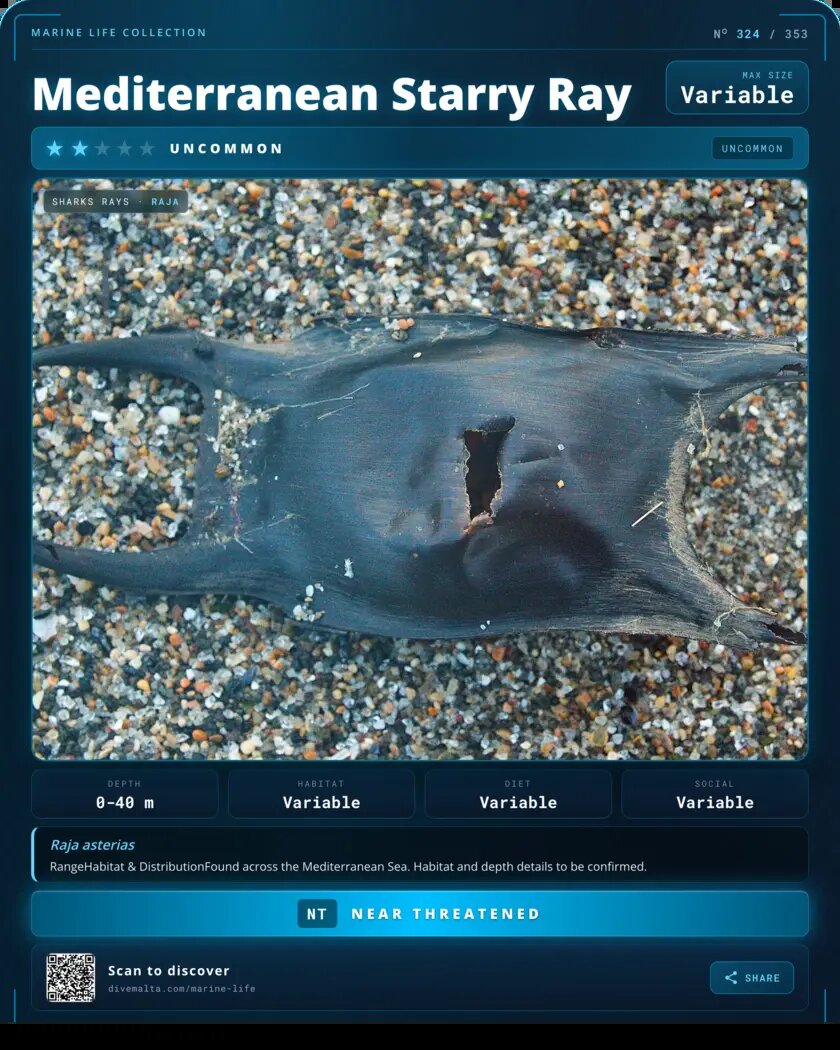
Mediterranean Starry Ray species card

Where to Encounter in Malta

Dive sites where Raja asterias may be encountered will be added as sighting data is collected.

IUCN Red ListNear Threatened

Conservation Status

This species is assessed as Near Threatened on the IUCN Red List. Mediterranean populations face ongoing pressure from fishing activity, habitat degradation, and climate-driven changes.

Source: IUCN Red List
diveshack Mediterranean Marine Life guide