Depth
Echinorhinus · Sharks & Rays

Bramble Shark

Echinorhinus brucus

50-900m
Depth Range
310cm
Max Size
Mediterranean
Distribution
50-900m
Depth Range
310cm
Max Size
Demersal / Deep
Habitat
Carnivore
Diet
Solitary
Social
EN
IUCN Status
Rare
Sighting Likelihood
KingdomAnimalia
PhylumChordata
ClassElasmobranchii
GenusEchinorhinus
Speciesbrucus

Identification & Biology

  • IdentificationA large, heavy-bodied shark covered in scattered thorn-like denticles (dermal thorns) that give it a rough, bramble-like texture. Brown to dark grey body with no distinctive markings. Two small, spineless dorsal fins set far back. Small spiracles behind the eyes.
  • SizeUp to 3.1 m total length. Most recorded specimens are between 1.5 and 2.5 m.
  • Social HabitSolitary and sluggish. Very rarely encountered due to its deep habitat and low population density.
  • HabitatDeep continental and insular shelves and upper slopes, on or near the bottom over mud and sand.
  • Depth18 to 900 m. Most records come from between 200 and 600 m.
  • Feeds OnOther sharks (including smaller dogfish), bony fish, crabs, and cephalopods. A slow-moving ambush predator.
  • DistributionScattered records worldwide in temperate and tropical seas. In the Mediterranean, recorded from the western basin, around Sicily, and the Adriatic. Extremely rare everywhere.
  • DescriptionEchinorhinus brucus is one of the rarest sharks in the Mediterranean and one of the least studied large sharks in the world. Its scattered thorn-like skin denticles are unique among living sharks. Encounters are so infrequent that each sighting adds to the scientific record. Listed as Endangered by the IUCN, with population trends unknown.

Habitat & Distribution

Inhabits deep continental shelves and slopes from 50 to 900 metres, typically over muddy and rocky seabeds. Mediterranean records exist from the central and western basins, including waters around Malta and Sicily.

Where Malta divers have spotted this species

Loading…

Sightings are logged by divers using our What Did You See? dive-log tool. View the full live sightings map.

Detail

Preferred Environment

Deep muddy and rocky slopes along the continental shelf edge. Most commonly found near the seabed in cold, dark water.

Encounter Tips

Best approached slowly and calmly. Avoid casting shadows directly over the animal. Neutral buoyancy and patience increase encounter success significantly.
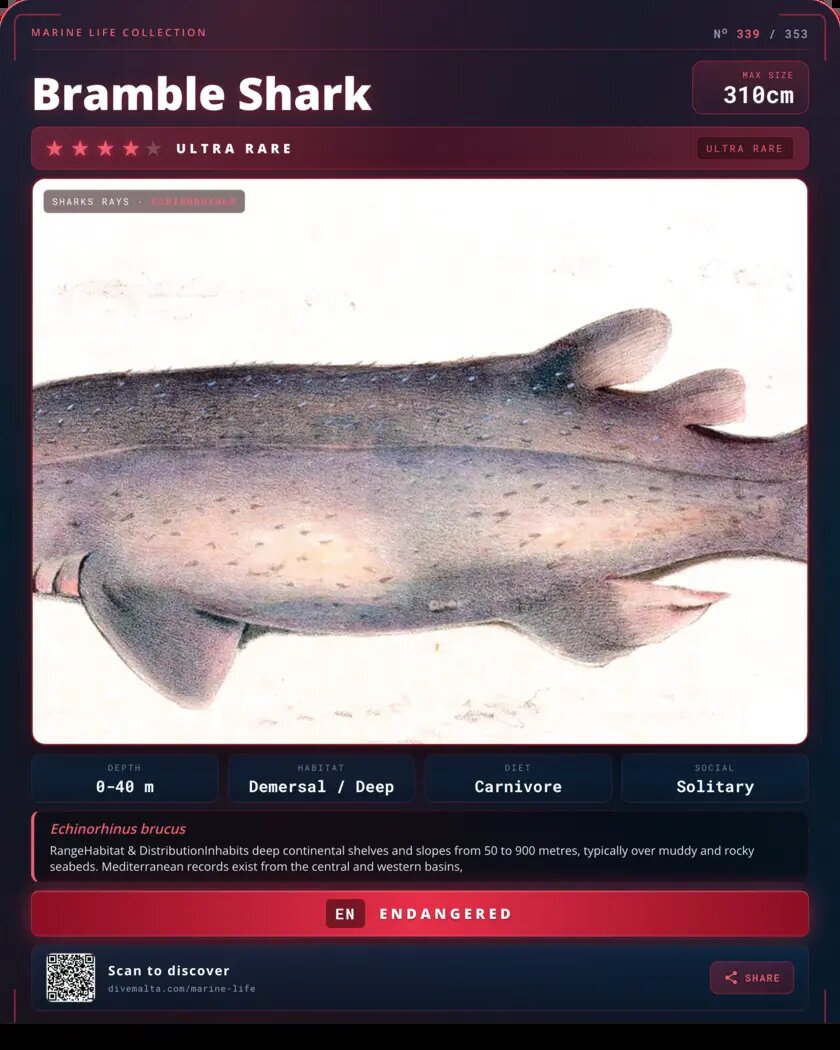
Bramble Shark species card

Where to Encounter in Malta

Dive sites where Echinorhinus brucus may be encountered will be added as sighting data is collected.

IUCN Red ListEndangered

Conservation Status

This species is assessed as Endangered on the IUCN Red List. Mediterranean populations face ongoing pressure from fishing activity, habitat degradation, and climate-driven changes.

Source: IUCN Red List
diveshack Mediterranean Marine Life guide