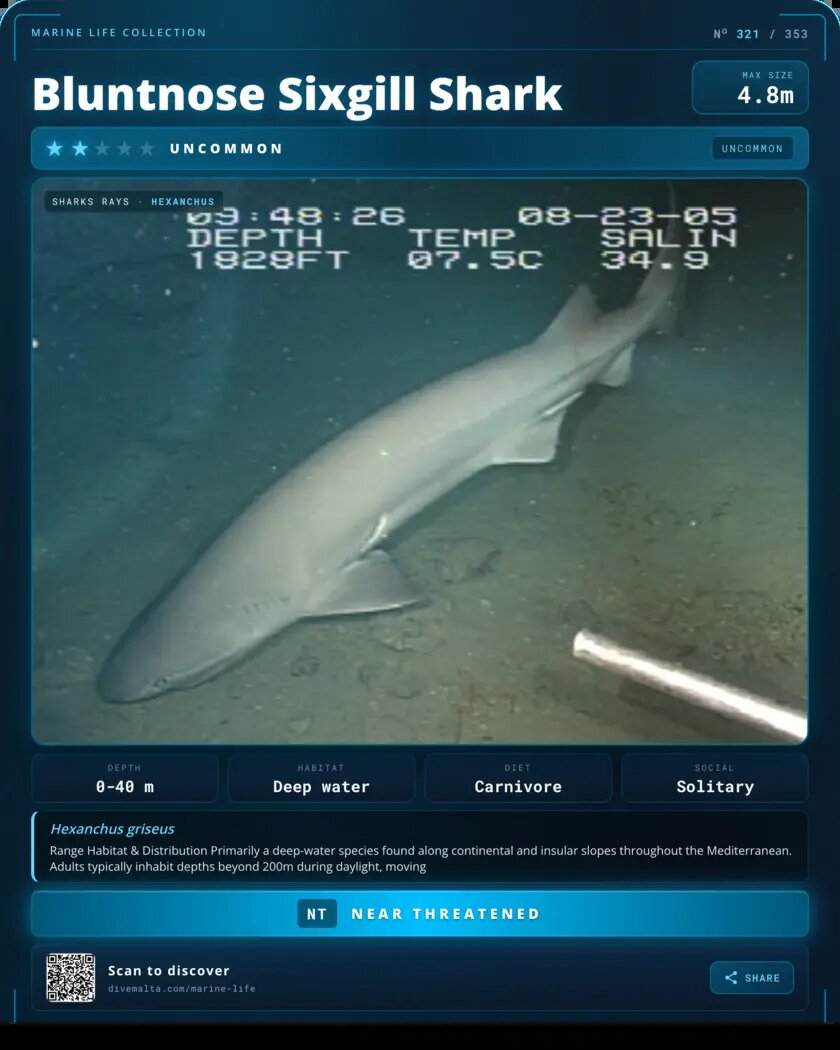
Hexanchus griseus
Elasmobranch
Range
Primarily a deep-water species found along continental and insular slopes throughout the Mediterranean. Adults typically inhabit depths beyond 200m during daylight, moving into shallower water at night to feed.
Sightings are logged by divers using our What Did You See? dive-log tool. View the full live sightings map.
Favours deep benthic and benthopelagic zones near steep drop-offs and submarine canyons. Juveniles may be encountered in relatively shallow coastal waters, while adults remain in deep water during the day.
Best approached slowly and calmly. Avoid casting shadows directly over the animal. Neutral buoyancy and patience increase encounter success significantly.
Biology
A slow but powerful opportunistic predator that feeds on a wide range of prey including bony fish, other sharks, rays, squid, and crustaceans. Hunts primarily at night in shallower water.
Opportunistic predatorOvoviviparous with large litters of up to 100 pups per brood. Gestation period is unknown but believed to be lengthy. Pups measure around 65-70cm at birth.
OvoviviparousIts large size and deep-water habitat provide natural protection. Generally docile and slow-moving, posing little threat to divers on the rare occasions they are encountered.
Size advantageDive with diveshack
Dive sites where Hexanchus griseus may be encountered will be added as sighting data is collected.
This species is assessed as Near Threatened on the IUCN Red List. Mediterranean populations face ongoing pressure from fishing activity, habitat degradation, and climate-driven changes.