Range
Habitat & Distribution
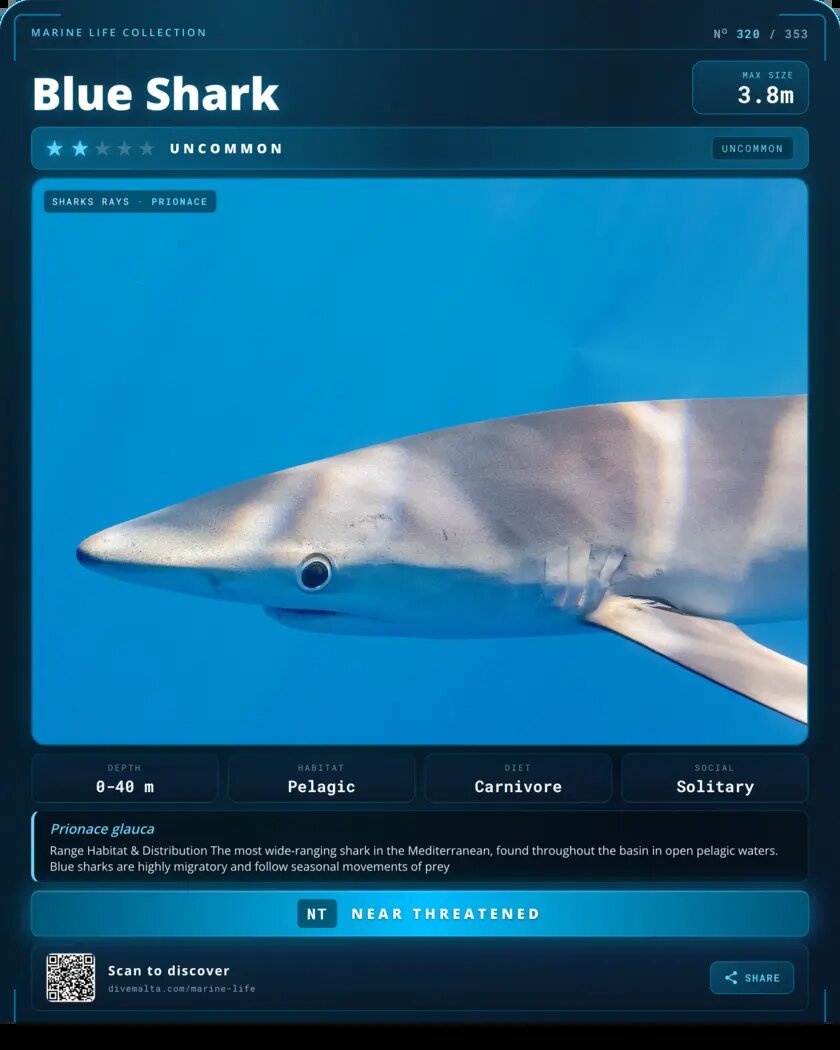
The most wide-ranging shark in the Mediterranean, found throughout the basin in open pelagic waters. Blue sharks are highly migratory and follow seasonal movements of prey, covering enormous distances across the sea.
Where Malta divers have spotted this species
Sightings are logged by divers using our What Did You See? dive-log tool. View the full live sightings map.
Detail
Preferred Environment
Primarily an open-ocean species preferring cool to temperate waters above the thermocline. In the Mediterranean, it ranges from the surface to several hundred metres depth and is most often encountered well offshore.
Encounter Tips
Best approached slowly and calmly. Avoid casting shadows directly over the animal. Neutral buoyancy and patience increase encounter success significantly.