Depth
Carcharhinus · Sharks & Rays

Blacktip Shark

Carcharhinus limbatus

0-64m
Depth Range
2.5m
Max Size
Mediterranean
Distribution
0-64m
Depth Range
2.5m
Max Size
Coastal
Habitat
Carnivore
Diet
Small groups
Social
VU
IUCN Status
Very Rare
Sighting Likelihood
Kingdom Animalia
Phylum Chordata
Class Elasmobranchii
Genus Carcharhinus
Species limbatus

Identification & Biology

  • IdentificationA fast, streamlined shark with a long, pointed snout and distinctive black tips on all fins, most prominently on the first dorsal and lower caudal lobe. Grey to bronze upper body with a white belly and a clear band of lighter colour along each flank.
  • SizeCommonly 1.5 to 1.8 m. Maximum recorded length 2.8 m and weight around 120 kg.
  • Social HabitOften seen in small groups, especially during feeding events. Known for spectacular spinning leaps out of the water while chasing fish. Migratory, following warm water and prey schools.
  • HabitatCoastal and offshore waters, often near reef edges, sandbars, and river mouths. Prefers warm, clear water.
  • Depth0 to 64 m. Typically found in water shallower than 30 m.
  • Feeds OnSchooling bony fish (sardines, anchovies, mullet), small sharks, rays, squid, and crustaceans.
  • DistributionWorldwide in tropical and warm temperate seas. In the Mediterranean, recorded mainly in the eastern basin and around Sicily. Rare but present.
  • DescriptionCarcharhinus limbatus is an active, fast-swimming predator recognisable by the black edges on its fins. Mediterranean records are uncommon and most sightings come from the warmer eastern and southern regions. The species is listed as Vulnerable globally by the IUCN, and Mediterranean populations face additional pressure from fishing.

Habitat & Distribution

Found in shallow coastal and shelf waters throughout the warmer parts of the Mediterranean. Blacktip sharks favour nearshore environments and are often spotted in the upper water column close to river mouths and estuaries.

Where Malta divers have spotted this species

Loading…

Sightings are logged by divers using our What Did You See? dive-log tool. View the full live sightings map.

Detail

Preferred Environment

Prefers warm, shallow waters over muddy or sandy bottoms near the coast. Frequently encountered in bays, harbours, and near drop-offs where small schooling fish congregate.

Encounter Tips

Best approached slowly and calmly. Avoid casting shadows directly over the animal. Neutral buoyancy and patience increase encounter success significantly.
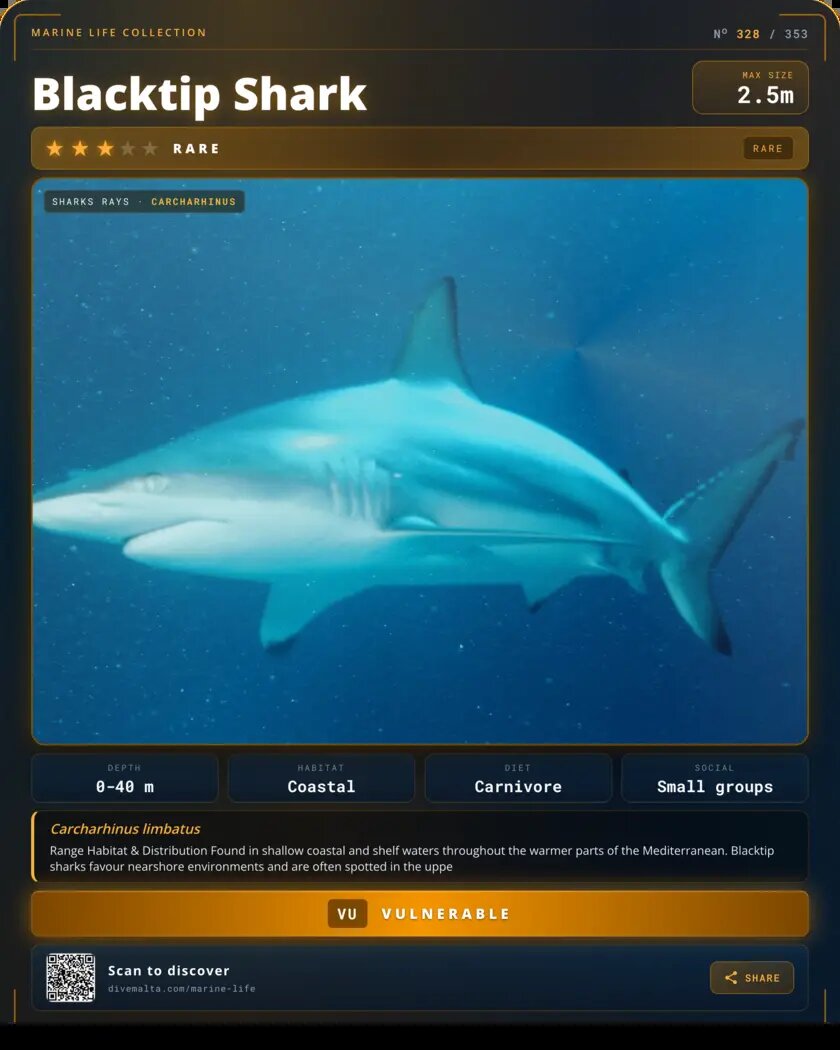
Blacktip Shark species card

Behaviour & Diet

Feeding Strategy

An active, fast predator that feeds on schooling fish such as sardines, mullet, and mackerel. Also takes small sharks, rays, and cephalopods. Known to make spinning leaps when feeding.

Active predator

Reproduction

Viviparous with a yolk-sac placenta. Females produce litters of 1-10 pups after a gestation period of approximately 10-12 months. Shallow bays serve as nursery habitat.

Viviparous

Behaviour & Defence

Alert and cautious around divers, typically maintaining distance. May display threat behaviour with exaggerated swimming movements when feeling cornered.

Cautious retreat

Where to Encounter in Malta

Dive sites where Carcharhinus limbatus may be encountered will be added as sighting data is collected.

IUCN Red List Vulnerable

Conservation Status

This species is assessed as Vulnerable on the IUCN Red List. Mediterranean populations face ongoing pressure from fishing activity, habitat degradation, and climate-driven changes.

Source: IUCN Red List
diveshack Mediterranean Marine Life guide