Depth
Glaucostegus · Sharks & Rays

Blackchin Guitarfish

Glaucostegus cemiculus

0-80m
Depth Range
265cm
Max Size
Mediterranean
Distribution
0-80m
Depth Range
265cm
Max Size
Sandy / Demersal
Habitat
Carnivore
Diet
Solitary
Social
CR
IUCN Status
Rare
Sighting Likelihood
KingdomAnimalia
PhylumChordata
ClassElasmobranchii
GenusGlaucostegus
Speciescemiculus

Identification & Biology

  • IdentificationA large ray with a flattened, wedge-shaped head and a shark-like body and tail. The snout is pointed and the pectoral fins merge smoothly with the head to form a triangular disc. Pale sandy-brown above with a distinctive dark patch under the chin.
  • SizeUp to 2.6 m total length. One of the largest guitarfish species.
  • Social HabitMostly solitary. Rests on sandy bottoms during the day and becomes more active at night when hunting.
  • HabitatSandy and muddy coastal bottoms, often near seagrass meadows and estuaries. Prefers shallow, warm water.
  • Depth1 to 80 m. Most common in water shallower than 30 m.
  • Feeds OnSmall fish, crabs, shrimps, and bivalves found on or buried in sandy substrates.
  • DistributionEastern Atlantic from Portugal to Angola, and throughout the Mediterranean. Now extremely rare across its entire range.
  • DescriptionGlaucostegus cemiculus is one of the most critically endangered elasmobranchs in the Mediterranean Sea. Once common in shallow coastal waters, it has been devastated by bottom trawling and is now functionally extinct across much of its former range. The IUCN lists it as Critically Endangered. Any confirmed sighting in Maltese waters would be considered exceptional.

Habitat & Distribution

Found on sandy and muddy seabeds in shallow coastal waters down to about 80 metres. Historically present throughout the southern Mediterranean and Maltese waters, now extremely rare due to overfishing.

Where Malta divers have spotted this species

Loading…

Sightings are logged by divers using our What Did You See? dive-log tool. View the full live sightings map.

Detail

Preferred Environment

Shallow sandy bays and coastal flats where it lies partially buried on the seabed. Enters very shallow water, sometimes just a metre deep.

Encounter Tips

Best approached slowly and calmly. Avoid casting shadows directly over the animal. Neutral buoyancy and patience increase encounter success significantly.
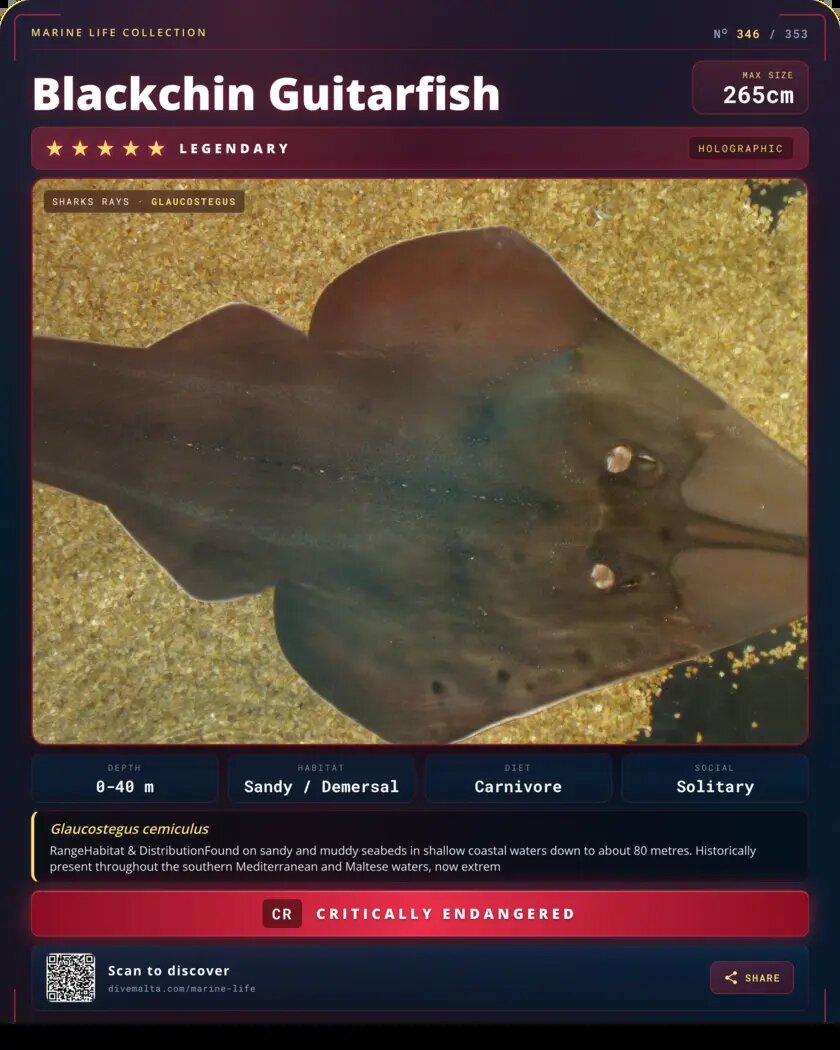
Blackchin Guitarfish species card

Where to Encounter in Malta

Dive sites where Glaucostegus cemiculus may be encountered will be added as sighting data is collected.

IUCN Red ListCritically Endangered

Conservation Status

This species is assessed as Critically Endangered on the IUCN Red List. Mediterranean populations face ongoing pressure from fishing activity, habitat degradation, and climate-driven changes.

Source: IUCN Red List
diveshack Mediterranean Marine Life guide