Depth
Oxynotus · Sharks & Rays

Angular Roughshark

Oxynotus centrina

Variable
Depth Range
Variable
Max Size
Mediterranean
Distribution
Variable
Depth Range
Variable
Max Size
Variable
Habitat
Variable
Diet
Variable
Social
CR
IUCN Status
Rare
Sighting Likelihood
KingdomAnimalia
PhylumChordata
ClassElasmobranchii
GenusOxynotus
Speciescentrina

Identification & Biology

  • IdentificationA small, unmistakable shark with a triangular cross-section, two tall dorsal fins each bearing a spine, and rough, sandpaper-like skin. The body is laterally compressed with prominent ridges along the belly. Grey-brown to dark brown colouring with no obvious markings.
  • SizeUp to 150 cm total length. Most individuals encountered in the Mediterranean are between 50 and 80 cm.
  • Social HabitSolitary and slow-moving. Spends most of its time resting on or near the seabed. Rarely seen by divers due to its depth preference.
  • HabitatMuddy and sandy bottoms on the continental shelf and upper slope. Prefers soft substrates where it can rest partially buried.
  • Depth60 to 660 m. Most common between 100 and 400 m.
  • Feeds OnPolychaete worms, small crustaceans, and molluscs extracted from soft sediment.
  • DistributionEastern Atlantic from Norway to South Africa, including the entire Mediterranean Sea. Uncommon everywhere and declining.
  • DescriptionOxynotus centrina is one of the most distinctive sharks in the Mediterranean, immediately recognisable by its triangular body shape and tall, sail-like dorsal fins. It is a bottom-dwelling species found on deep muddy substrates, rarely encountered by divers. Listed as Critically Endangered by the IUCN due to bycatch in bottom trawl fisheries across its range.

Habitat & Distribution

Found across the Mediterranean Sea. Habitat and depth details to be confirmed.

Where Malta divers have spotted this species

Loading…

Sightings are logged by divers using our What Did You See? dive-log tool. View the full live sightings map.

Detail

Preferred Environment

Habitat details for Angular Roughshark to be confirmed. Most commonly encountered in Mediterranean waters.

Encounter Tips

Best approached slowly and calmly. Avoid casting shadows directly over the animal. Neutral buoyancy and patience increase encounter success significantly.
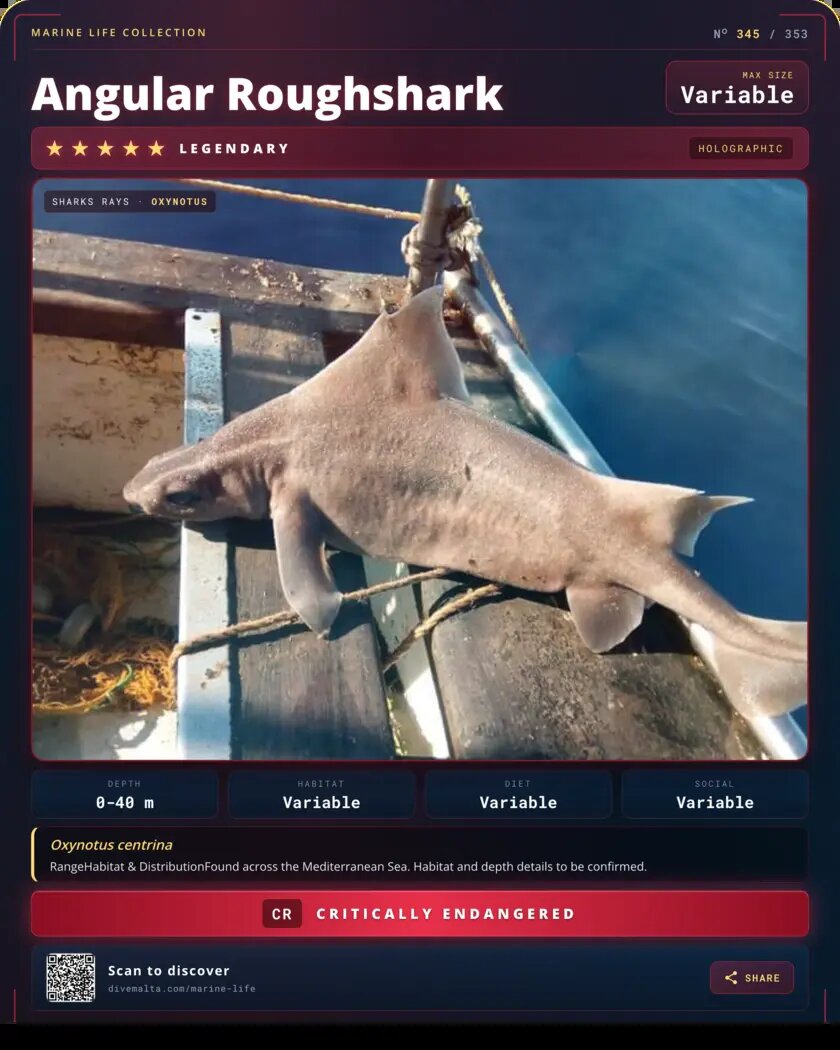
Angular Roughshark species card

Where to Encounter in Malta

Dive sites where Oxynotus centrina may be encountered will be added as sighting data is collected.

IUCN Red ListCritically Endangered

Conservation Status

This species is assessed as Critically Endangered on the IUCN Red List. Mediterranean populations face ongoing pressure from fishing activity, habitat degradation, and climate-driven changes.

Source: IUCN Red List
diveshack Mediterranean Marine Life guide