Posidonia oceanica
Marine Plant
Range
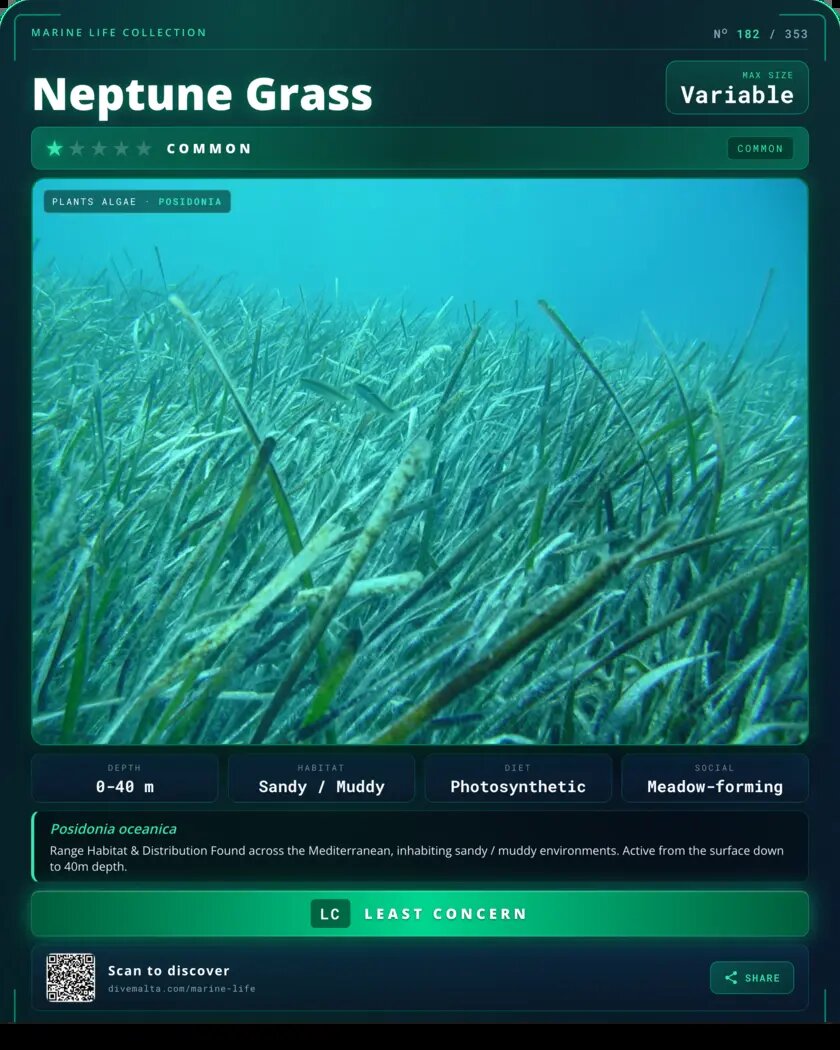
Found across the Mediterranean, inhabiting sandy / muddy environments. Active from the surface down to 40m depth.
Sightings are logged by divers using our What Did You See? dive-log tool. View the full live sightings map.
Sandy / Muddy habitats, typically at depths of 0-40m. Most commonly encountered by divers at the shallower end of its range.
Best approached slowly and calmly. Avoid casting shadows directly over the animal. Neutral buoyancy and patience increase encounter success significantly.
Biology
Produces energy through photosynthesis using sunlight penetrating the water column. Forms dense meadows that are critical nursery habitat and oxygen producers for the Mediterranean ecosystem.
PhotosyntheticReproduces vegetatively and sexually. Vegetative growth is the dominant strategy; sexual reproduction is seasonal and infrequent.
Seasonal spawningPosidonia and other Mediterranean seagrasses form protected meadows under EU Habitats Directive. These habitats are sensitive to anchor damage, trawling, and water quality. Recreational divers should avoid contact with the meadow.
DefensiveDive with diveshack
The following dive sites offer strong habitat match for Posidonia oceanica. All are accessible on a guided dive with diveshack.
Extensive sandy floor with excellent visibility. A prime habitat for benthic species that shelter in the sandy channels.
View dive site ›Sheltered cove with sandy patches between rocky outcrops. The sandy areas at 8-15m are rich in benthic marine life.
View dive site ›Sandy channels flanking the reef system provide excellent habitat for bottom-dwelling species.
View dive site ›This species is assessed as Least Concern on the IUCN Red List. Mediterranean populations face ongoing pressure from fishing activity, habitat degradation, and climate-driven changes to prey availability.