Depth
Patella · Molluscs (Octopus, Nudibranchs & Shellfish)

Mediterranean Limpet

Patella caerulea

0-40m
Depth Range
Variable
Max Size
Mediterranean
Distribution
0-40m
Depth Range
Variable
Max Size
Reef & Open
Habitat
Carnivore
Diet
Solitary
Social
LC
IUCN Status
Kingdom Animalia
Phylum Mollusca
Genus Patella
Species caerulea

Identification & Biology

  • IdentificationA common limpet with a low, conical shell that is broadly oval in outline. The exterior is ribbed and often encrusted with algae. The shell colour is variable, typically grey to olive-green. The interior is white to pale blue with a distinctive dark horseshoe-shaped muscle scar.
  • SizeShell length up to 7 cm. Commonly 3 to 5 cm.
  • Social HabitSolitary. Returns to the same home spot on the rock after each grazing trip, grinding a perfect-fit scar into the rock surface over time. Active mainly when submerged or splashed by waves.
  • HabitatRocky intertidal zone, particularly on wave-exposed surfaces. One of the most characteristic animals of Mediterranean rocky shores.
  • DepthIntertidal to 1 m. Strictly a shore-zone species.
  • Feeds OnMicroalgae scraped from rock surfaces using a rasping radula. Each limpet maintains a grazing territory around its home scar.
  • DistributionThroughout the Mediterranean Sea and the Black Sea. Abundant on all Maltese rocky shores.
  • DescriptionPatella caerulea is the most common limpet on Mediterranean shores, visible on virtually every wave-washed rock in Malta. Each individual grinds a home scar into the rock that matches its shell shape exactly, forming a watertight seal that prevents desiccation at low water. The radula (tongue) of a limpet contains the strongest known biological material, made of goethite nanofibres stronger than spider silk.

Habitat & Distribution

Found across the Mediterranean, inhabiting reef & open environments. Active from the surface down to 40m depth.

Where Malta divers have spotted this species

Loading…

Sightings are logged by divers using our What Did You See? dive-log tool. View the full live sightings map.

Detail

Preferred Environment

Reef & Open habitats, typically at depths of 0-40m. Most commonly encountered by divers at the shallower end of its range.

Encounter Tips

Best approached slowly and calmly. Avoid casting shadows directly over the animal. Neutral buoyancy and patience increase encounter success significantly.
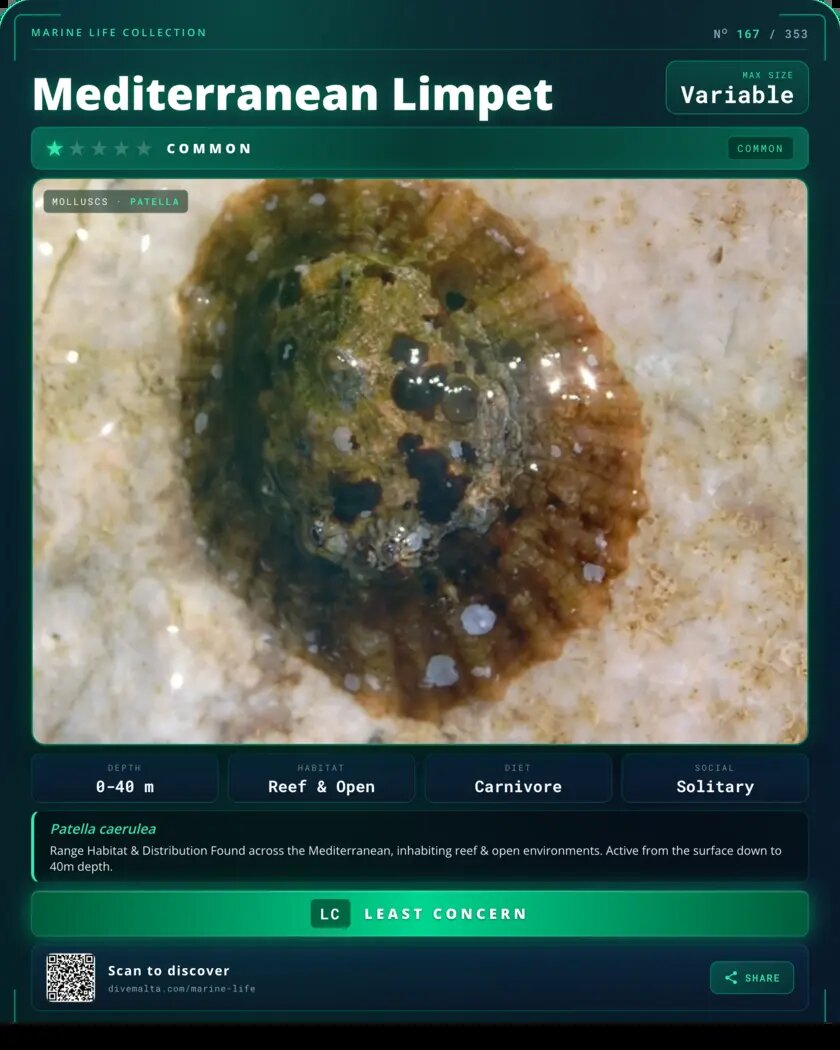
Mediterranean Limpet species card

Behaviour & Diet

Feeding Strategy

Grazes on microalgae, cyanobacteria and biofilm on rocky shores, scraping the substrate clean with a tough, iron-mineralised radula.

Algae grazer

Reproduction

Broadcast spawns in autumn and winter. Fertilised eggs hatch into planktonic trochophore larvae that settle on rocky surfaces after a few weeks.

Broadcast spawner

Behaviour & Defence

Clamps its conical shell firmly against the rock using a powerful muscular foot, creating a watertight seal. Each individual returns to the same home scar after foraging.

Clamping foot

Where to Encounter in Malta

The following dive sites offer strong habitat match for Patella caerulea. All are accessible on a guided dive with diveshack.

5-30m
North Malta

Cirkewwa

Rocky reef with caves, arches and ledges hosting a rich diversity of reef species.

View dive site ›
5-50m
Gozo

Blue Hole

One of the Med's most famous reef dive sites. Rocky walls and archways covered in life.

View dive site ›
18-36m
South Malta

Um El Faroud

The wreck lies on a sandy bottom surrounded by rocky reef -- a diverse habitat attracting reef species.

View dive site ›
IUCN Red List Least Concern

Conservation Status

This species is assessed as Least Concern on the IUCN Red List. Mediterranean populations face ongoing pressure from fishing activity, habitat degradation, and climate-driven changes to prey availability.

Source: iNaturalist Guide #888
by Lesley Clements (CC BY-SA)
diveshack Mediterranean Marine Life guide