Depth
Haliotis · Molluscs (Octopus, Nudibranchs & Shellfish)

Green Ormer

Haliotis tuberculata

0-40m
Depth Range
Variable
Max Size
Mediterranean
Distribution
0-40m
Depth Range
Variable
Max Size
Reef & Open
Habitat
Carnivore
Diet
Solitary
Social
LC
IUCN Status
Kingdom Animalia
Phylum Mollusca
Genus Haliotis
Species tuberculata

Identification & Biology

  • IdentificationA large, ear-shaped gastropod with a flattened shell pierced by a row of holes along one edge. The exterior is rough and often heavily encrusted. The interior is lined with spectacular iridescent mother-of-pearl (nacre) in green, blue, and pink.
  • SizeShell length up to 12 cm. A large and impressive gastropod.
  • Social HabitSolitary. Nocturnal, hiding under rocks during the day. Clamps tightly to rock surfaces using its muscular foot when disturbed.
  • HabitatRocky reefs and boulder fields, particularly under large rocks and in crevices. Prefers areas with good algal growth.
  • Depth0 to 20 m. Most common in very shallow water to about 10 m.
  • Feeds OnAlgae, particularly red and brown species, grazed from rock surfaces at night.
  • DistributionEastern Atlantic from the Channel Islands to West Africa, and throughout the Mediterranean Sea. Present in Maltese waters.
  • DescriptionHaliotis tuberculata is the Mediterranean abalone, prized both for its iridescent shell (used in jewellery and decorative inlay) and its meat (a delicacy in many cultures). The row of holes along the shell edge serves as exhaust ports for water that has passed over the gills. Overharvesting has reduced populations across much of its range, and the species is now protected in several Mediterranean countries.

Habitat & Distribution

Found across the Mediterranean, inhabiting reef & open environments. Active from the surface down to 40m depth.

Where Malta divers have spotted this species

Loading…

Sightings are logged by divers using our What Did You See? dive-log tool. View the full live sightings map.

Detail

Preferred Environment

Reef & Open habitats, typically at depths of 0-40m. Most commonly encountered by divers at the shallower end of its range.

Encounter Tips

Best approached slowly and calmly. Avoid casting shadows directly over the animal. Neutral buoyancy and patience increase encounter success significantly.
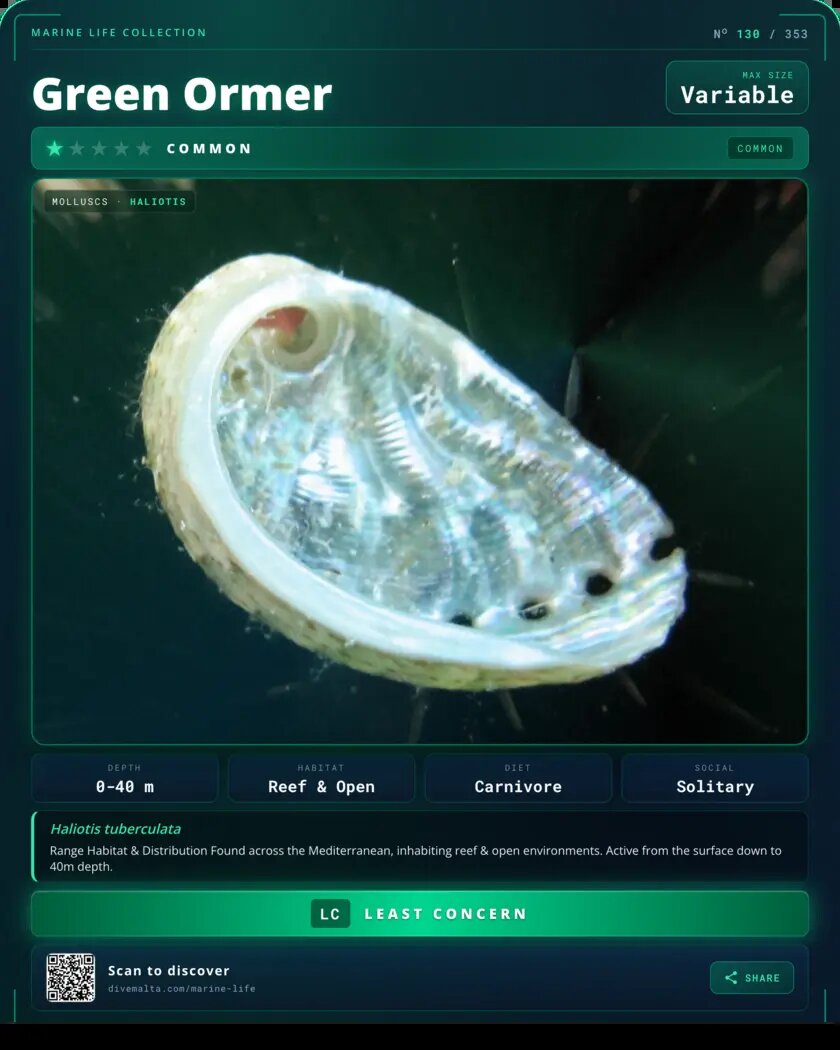
Green Ormer species card

Behaviour & Diet

Feeding Strategy

A nocturnal herbivore that grazes on encrusting algae and biofilm on rocky surfaces. It uses a broad, ribbon-like radula to scrape food from the substrate.

Algae grazer

Reproduction

Broadcast spawns during late summer, releasing eggs and sperm through the row of holes in its shell. Fertilised eggs develop into planktonic trochophore larvae.

Broadcast spawner

Behaviour & Defence

Clamps its large, muscular foot tightly against the rock surface, making it extremely difficult for predators to dislodge. The shell also provides robust physical protection.

Clamping foot

Where to Encounter in Malta

The following dive sites offer strong habitat match for Haliotis tuberculata. All are accessible on a guided dive with diveshack.

5-30m
North Malta

Cirkewwa

Rocky reef with caves, arches and ledges hosting a rich diversity of reef species.

View dive site ›
5-50m
Gozo

Blue Hole

One of the Med's most famous reef dive sites. Rocky walls and archways covered in life.

View dive site ›
18-36m
South Malta

Um El Faroud

The wreck lies on a sandy bottom surrounded by rocky reef -- a diverse habitat attracting reef species.

View dive site ›
IUCN Red List Least Concern

Conservation Status

This species is assessed as Least Concern on the IUCN Red List. Mediterranean populations face ongoing pressure from fishing activity, habitat degradation, and climate-driven changes to prey availability.

Source: iNaturalist Guide #888
by Lesley Clements (CC BY-SA)
diveshack Mediterranean Marine Life guide