Depth
Cratena · Molluscs (Octopus, Nudibranchs & Shellfish)

Feathered Sea Slug

Cratena peregrina

0-40m
Depth Range
Variable
Max Size
Mediterranean
Distribution
0-40m
Depth Range
Variable
Max Size
Reef & Open
Habitat
Carnivore
Diet
Solitary
Social
LC
IUCN Status
Kingdom Animalia
Phylum Mollusca
Genus Cratena
Species peregrina

Identification & Biology

  • IdentificationA small, elegant nudibranch with a translucent white to pale lavender body and clusters of bright orange-tipped cerata (finger-like projections) along its back. The rhinophores (head tentacles) are smooth and pale.
  • SizeBody length up to 5 cm. A delicate and slender species.
  • Social HabitSolitary. Crawls slowly across its hydroid prey, feeding as it moves. The bright colouring serves as a warning to predators.
  • HabitatRocky reefs, especially on and near hydroid colonies which are its primary food source.
  • Depth0 to 40 m. Found wherever hydroid colonies grow on suitable rocky substrates.
  • Feeds OnHydroids. Stores the stinging cells (nematocysts) from its prey in the tips of its cerata, recycling them for its own defence.
  • DistributionMediterranean Sea and eastern Atlantic. Common in Maltese waters.
  • DescriptionCratena peregrina is one of the most commonly encountered nudibranchs in Malta and a favourite subject for macro photographers. The bright orange tips of its cerata contain functional stinging cells stolen from the hydroids it eats, a remarkable example of kleptocnidae (stolen stinging cells). Despite its small size, the warning colours are effective, and most predators leave it alone.

Habitat & Distribution

Found across the Mediterranean, inhabiting reef & open environments. Active from the surface down to 40m depth.

Where Malta divers have spotted this species

Loading…

Sightings are logged by divers using our What Did You See? dive-log tool. View the full live sightings map.

Detail

Preferred Environment

Reef & Open habitats, typically at depths of 0-40m. Most commonly encountered by divers at the shallower end of its range.

Encounter Tips

Best approached slowly and calmly. Avoid casting shadows directly over the animal. Neutral buoyancy and patience increase encounter success significantly.
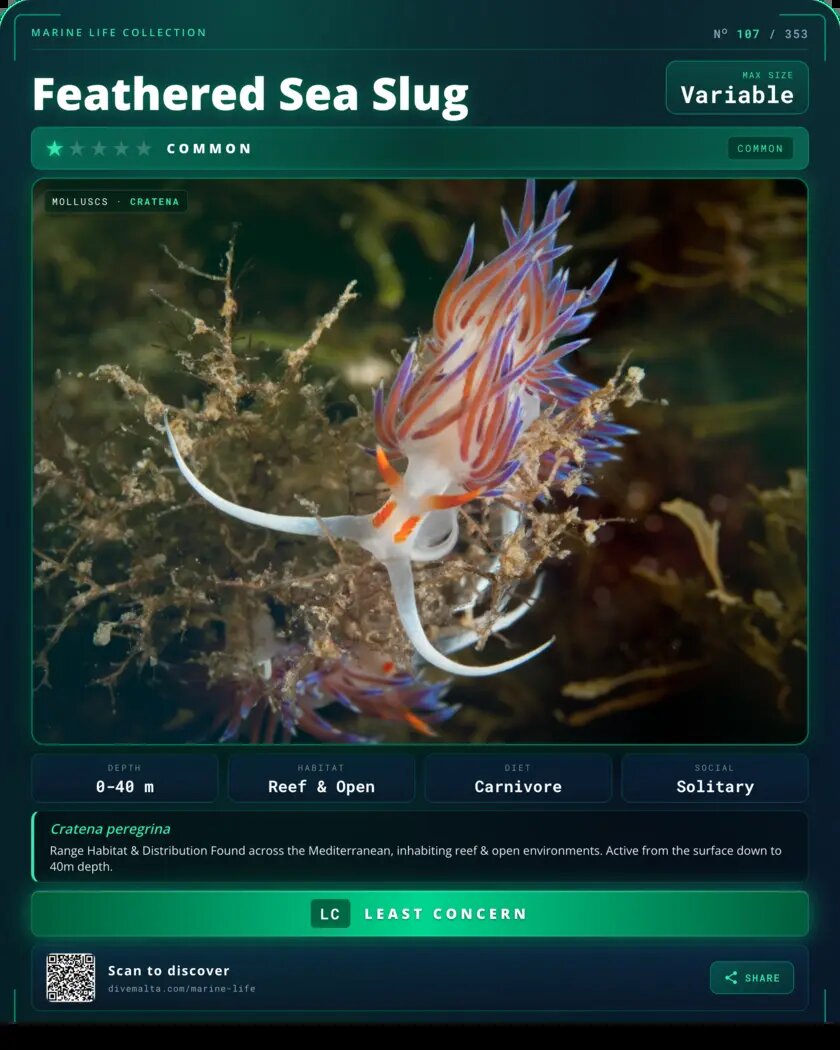
Feathered Sea Slug species card

Behaviour & Diet

Feeding Strategy

Feeds exclusively on hydroids, crawling over colonies and rasping off individual polyps with its radula. It sequesters the hydroids' nematocysts for its own defence.

Hydroid feeder

Reproduction

A simultaneous hermaphrodite that lays coiled ribbons of eggs on or near its hydroid prey. Larvae hatch as free-swimming veligers that settle after a brief planktonic phase.

Hermaphrodite

Behaviour & Defence

Stores functional stinging cells (nematocysts) from its hydroid prey in the tips of its cerata, delivering a sting to any fish that tries to eat it.

Stolen stingers

Where to Encounter in Malta

The following dive sites offer strong habitat match for Cratena peregrina. All are accessible on a guided dive with diveshack.

5-30m
North Malta

Cirkewwa

Rocky reef with caves, arches and ledges hosting a rich diversity of reef species.

View dive site ›
5-50m
Gozo

Blue Hole

One of the Med's most famous reef dive sites. Rocky walls and archways covered in life.

View dive site ›
18-36m
South Malta

Um El Faroud

The wreck lies on a sandy bottom surrounded by rocky reef -- a diverse habitat attracting reef species.

View dive site ›
IUCN Red List Least Concern

Conservation Status

This species is assessed as Least Concern on the IUCN Red List. Mediterranean populations face ongoing pressure from fishing activity, habitat degradation, and climate-driven changes to prey availability.

Source: iNaturalist Guide #888
by Lesley Clements (CC BY-SA)
diveshack Mediterranean Marine Life guide