Depth
Sepia · Molluscs (Octopus, Nudibranchs & Shellfish)

European Common Cuttlefish

Sepia officinalis

0-40m
Depth Range
Variable
Max Size
Mediterranean
Distribution
0-40m
Depth Range
Variable
Max Size
Reef & Open
Habitat
Carnivore
Diet
Solitary
Social
LC
IUCN Status
Moderate
Sighting Likelihood
Kingdom Animalia
Phylum Mollusca
Genus Sepia
Species officinalis

Identification & Biology

  • IdentificationA medium to large cephalopod with a broad, flattened body, a narrow fin running the full length of each side, and eight short arms plus two longer retractable tentacles. Colour and pattern change constantly for camouflage and communication.
  • SizeMantle length up to 45 cm. Weight up to 4 kg. The internal cuttlebone (often found washed ashore) is chalky white and oval.
  • Social HabitSolitary outside breeding season. Males perform elaborate colour displays and posturing to compete for females. Communication through rapid colour and pattern changes is among the most complex in the animal kingdom.
  • HabitatSandy and muddy bottoms, seagrass meadows, and rocky reef edges. Prefers areas where it can bury in sand.
  • Depth0 to 200 m. Most common between 5 and 40 m on the inner continental shelf.
  • Feeds OnSmall fish, crabs, shrimps, and other cephalopods. Hunts by slowly approaching prey, then striking with its two long tentacles at high speed.
  • DistributionEastern Atlantic from Scandinavia to West Africa, and throughout the Mediterranean and Baltic Seas. Common in Maltese waters.
  • DescriptionSepia officinalis is one of the most intelligent and mesmerising animals a diver can encounter in Malta. Its ability to change colour, pattern, and even skin texture in a fraction of a second is unmatched. The internal cuttlebone, filled with gas chambers, provides precise buoyancy control. Cuttlefish are commercially important throughout the Mediterranean and are a staple of Maltese cuisine.

Habitat & Distribution

Found across the Mediterranean, inhabiting reef & open environments. Active from the surface down to 40m depth.

Where Malta divers have spotted this species

Loading…

Sightings are logged by divers using our What Did You See? dive-log tool. View the full live sightings map.

Detail

Preferred Environment

Reef & Open habitats, typically at depths of 0-40m. Most commonly encountered by divers at the shallower end of its range.

Encounter Tips

Best approached slowly and calmly. Avoid casting shadows directly over the animal. Neutral buoyancy and patience increase encounter success significantly.
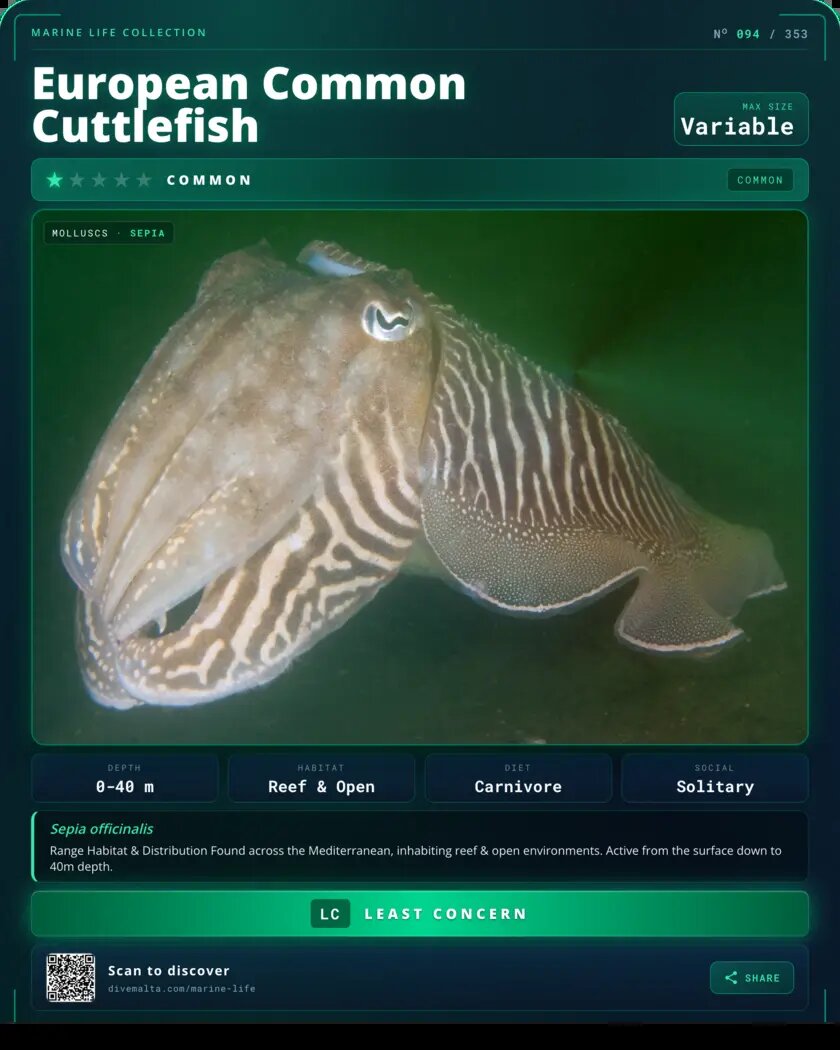
European Common Cuttlefish species card

Behaviour & Diet

Feeding Strategy

An ambush predator that stalks shrimp, crabs and small fish, striking with two rapid tentacles that shoot out to capture prey in under 15 milliseconds.

Ambush predator

Reproduction

Males perform elaborate courtship displays involving rapid colour changes. Females attach grape-like clusters of ink-stained eggs to seagrass, algae or debris, then die shortly after.

Seasonal spawning

Behaviour & Defence

Possesses the most sophisticated camouflage in the animal kingdom, controlling millions of chromatophores to match colour, pattern and texture of any background almost instantly.

Camouflage

Where to Encounter in Malta

The following dive sites offer strong habitat match for Sepia officinalis. All are accessible on a guided dive with diveshack.

5-30m
North Malta

Cirkewwa

Rocky reef with caves, arches and ledges hosting a rich diversity of reef species.

View dive site ›
5-50m
Gozo

Blue Hole

One of the Med's most famous reef dive sites. Rocky walls and archways covered in life.

View dive site ›
18-36m
South Malta

Um El Faroud

The wreck lies on a sandy bottom surrounded by rocky reef -- a diverse habitat attracting reef species.

View dive site ›
IUCN Red List Least Concern

Conservation Status

This species is assessed as Least Concern on the IUCN Red List. Mediterranean populations face ongoing pressure from fishing activity, habitat degradation, and climate-driven changes to prey availability.

Source: iNaturalist Guide #888
by Lesley Clements (CC BY-SA)
diveshack Mediterranean Marine Life guide