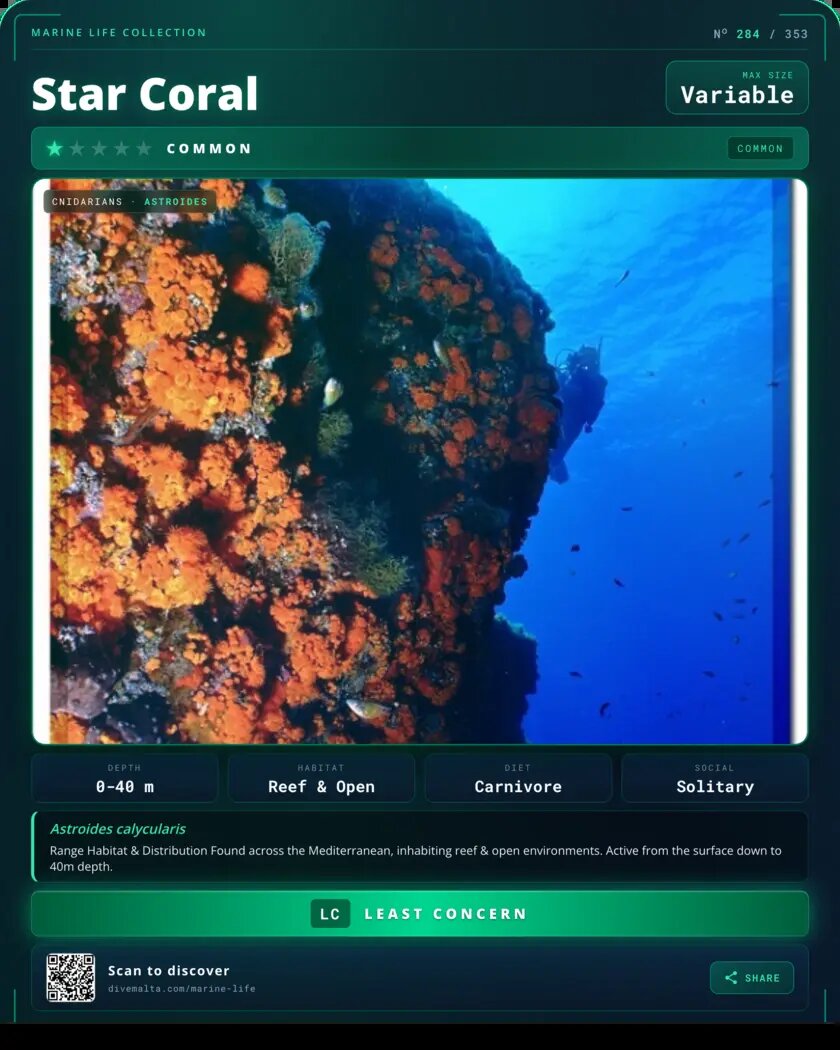
Astroides calycularis
Cnidarian
Range
Found across the Mediterranean, inhabiting reef & open environments. Active from the surface down to 40m depth.
Sightings are logged by divers using our What Did You See? dive-log tool. View the full live sightings map.
Reef & Open habitats, typically at depths of 0-40m. Most commonly encountered by divers at the shallower end of its range.
Best approached slowly and calmly. Avoid casting shadows directly over the animal. Neutral buoyancy and patience increase encounter success significantly.
Biology
Obtains most of its energy from symbiotic zooxanthellae algae in its tissues. Polyps also extend at night to capture zooplankton and suspended particles for supplementary nutrition.
PhotosyntheticA gonochoric brooder that incubates larvae internally. Planula larvae are released in summer and settle on hard substrate nearby, which leads to patchy, localised colony clusters.
Internal broodingThe calcium carbonate skeleton provides physical armour for the polyps. Retraction into the calice offers further protection, and the symbiotic algae help sustain the colony in nutrient-poor conditions.
Skeletal armourDive with diveshack
The following dive sites offer strong habitat match for Astroides calycularis. All are accessible on a guided dive with diveshack.
Rocky reef with caves, arches and ledges hosting a rich diversity of reef species.
View dive site ›One of the Med's most famous reef dive sites. Rocky walls and archways covered in life.
View dive site ›The wreck lies on a sandy bottom surrounded by rocky reef -- a diverse habitat attracting reef species.
View dive site ›This species is assessed as Least Concern on the IUCN Red List. Mediterranean populations face ongoing pressure from fishing activity, habitat degradation, and climate-driven changes to prey availability.