Depth
Calliactis · Cnidarians (Jellyfish, Anemones & Corals)

Parasitic Anemone

Calliactis parasitica

0-100m
Depth Range
Variable
Max Size
Mediterranean
Distribution
0-100m
Depth Range
Variable
Max Size
Rocky Reef
Habitat
Carnivore
Diet
Solitary
Social
LC
IUCN Status
Kingdom Animalia
Phylum Cnidaria
Genus Calliactis
Species parasitica

Identification & Biology

  • IdentificationA medium-sized anemone with a squat, brownish column covered in wart-like bumps and a ring of pale brown tentacles. Almost always found attached to gastropod shells occupied by hermit crabs. Not truly parasitic despite the common name; the relationship is mutualistic.
  • SizeColumn diameter up to 8 cm. Tentacle span up to 10 cm.
  • Social HabitSymbiotic. Lives attached to shells carried by hermit crabs (Dardanus species). Multiple anemones may share a single shell. When the crab changes shells, it carefully transfers its anemones to the new home.
  • HabitatFound on hermit crab shells on sandy bottoms, rocky reefs, and mixed substrates. Goes wherever the hermit crab carries it.
  • Depth5 to 100 m. Found throughout the depth range of its hermit crab hosts.
  • Feeds OnFood scraps from the hermit crab's meals, plus plankton and small organisms captured by its own tentacles.
  • DistributionMediterranean Sea and adjacent eastern Atlantic. Common in Maltese waters wherever hermit crabs are found.
  • DescriptionCalliactis parasitica is one of the best-known examples of mutualism in the Mediterranean. The anemone provides the hermit crab with stinging-tentacle defence against predators (especially octopus), while the anemone benefits from transport to new feeding areas and scraps from the crab's meals. The careful behaviour of hermit crabs transferring their anemones to new shells has been captured on film many times.

Habitat & Distribution

Found across the Mediterranean, inhabiting rocky reef environments. Active from the surface down to 100m depth.

Where Malta divers have spotted this species

Loading…

Sightings are logged by divers using our What Did You See? dive-log tool. View the full live sightings map.

Detail

Preferred Environment

Rocky Reef habitats, typically at depths of 0-100m. Most commonly encountered by divers at the shallower end of its range.

Encounter Tips

Best approached slowly and calmly. Avoid casting shadows directly over the animal. Neutral buoyancy and patience increase encounter success significantly.
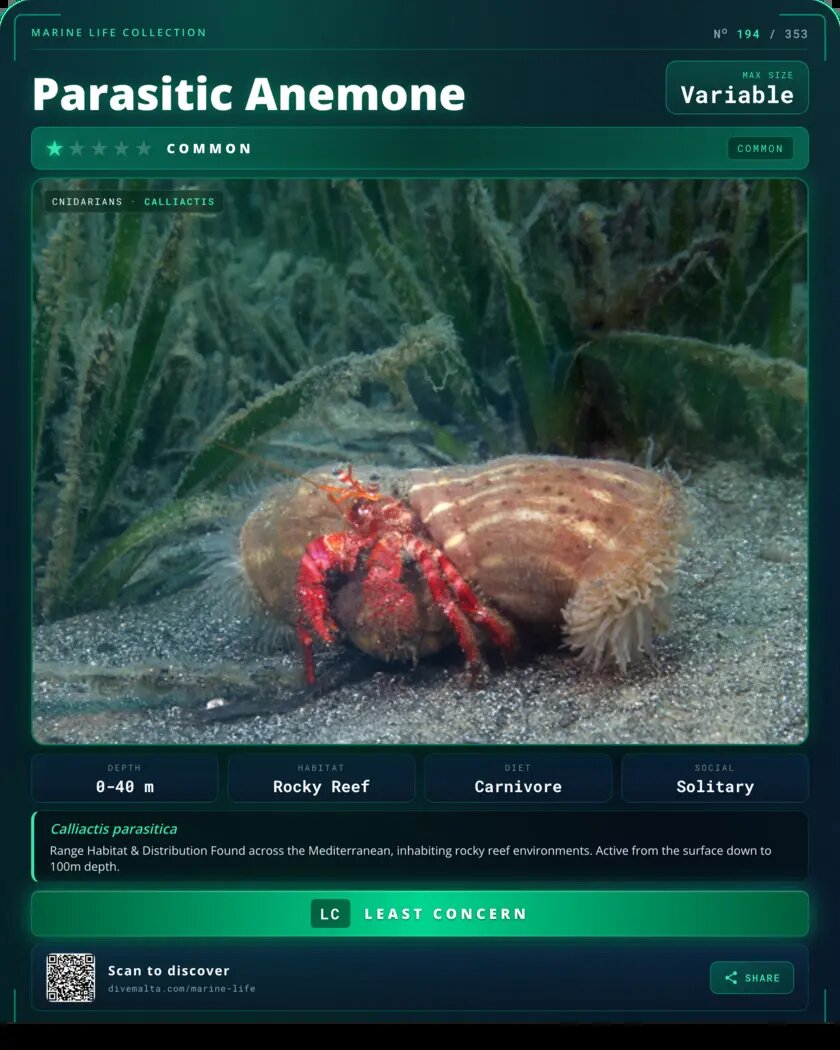
Parasitic Anemone species card

Behaviour & Diet

Feeding Strategy

Lives attached to hermit crab shells or gastropod shells, benefiting from food scraps generated by the host's feeding. Also captures small prey independently with its tentacles.

Commensal feeder

Reproduction

Reproduces asexually by longitudinal fission, often splitting to cover a larger area of the host shell. Sexual reproduction produces planula larvae that seek out occupied shells.

Longitudinal fission

Behaviour & Defence

Provides a mutual defence benefit: its stinging tentacles protect the hermit crab host from octopus predation, while the crab's mobility carries the anemone away from danger.

Stinging cells

Where to Encounter in Malta

The following dive sites offer strong habitat match for Calliactis parasitica. All are accessible on a guided dive with diveshack.

5-30m
North Malta

Cirkewwa

Rocky reef with caves, arches and ledges hosting a rich diversity of reef species.

View dive site ›
5-50m
Gozo

Blue Hole

One of the Med's most famous reef dive sites. Rocky walls and archways covered in life.

View dive site ›
18-36m
South Malta

Um El Faroud

The wreck lies on a sandy bottom surrounded by rocky reef -- a diverse habitat attracting reef species.

View dive site ›
IUCN Red List Least Concern

Conservation Status

This species is assessed as Least Concern on the IUCN Red List. Mediterranean populations face ongoing pressure from fishing activity, habitat degradation, and climate-driven changes to prey availability.

Source: iNaturalist Guide #888
by Lesley Clements (CC BY-SA)
diveshack Mediterranean Marine Life guide