Depth
Diplecogaster · Bony Fish

Two-spotted Clingfish

Diplecogaster bimaculata

0-20m
Depth Range
5cm
Max Size
Mediterranean
Distribution
0-20m
Depth Range
5cm
Max Size
Rocky / Under stones
Habitat
Micro-invertivore
Diet
Solitary
Social
LC
IUCN Status
Moderate
Sighting Likelihood
KingdomAnimalia
PhylumChordata
ClassActinopterygii
GenusDiplecogaster
Speciesbimaculata

Identification & Biology

  • IdentificationVery small, flattened clingfish with a broad head and ventral suction disc. Reddish-brown body with a pair of distinctive bright spots (often blue or purple-edged) behind the head.
  • SizeUp to 5 cm total length, commonly 2 to 3 cm.
  • Social HabitSolitary and extremely cryptic. Clings to the underside of rocks and boulders.
  • HabitatRocky subtidal areas, under boulders and in crevices. Also found among seagrass and algae.
  • Depth0 to 30 m, most common in the first 15 m.
  • Feeds OnTiny invertebrates found on rock surfaces.
  • DistributionEastern Atlantic from the British Isles to Morocco, including the Mediterranean Sea.
  • DescriptionA diminutive clingfish distinguished by the pair of bright spots on its body. Like all clingfish, it adheres to hard surfaces using a modified ventral suction disc. Finding one requires deliberately turning rocks, making it a rewarding discovery for patient observers of small marine life.

Habitat & Distribution

Found under rocks, on empty shells, and among hydroids in the shallow subtidal zone down to about 20 metres. Present in Maltese rocky shores and harbour rubble.

Where Malta divers have spotted this species

Loading…

Sightings are logged by divers using our What Did You See? dive-log tool. View the full live sightings map.

Detail

Preferred Environment

Underside of flat stones, empty bivalve shells, and rocky overhangs in sheltered shallow water.

Encounter Tips

Best approached slowly and calmly. Avoid casting shadows directly over the animal. Neutral buoyancy and patience increase encounter success significantly.
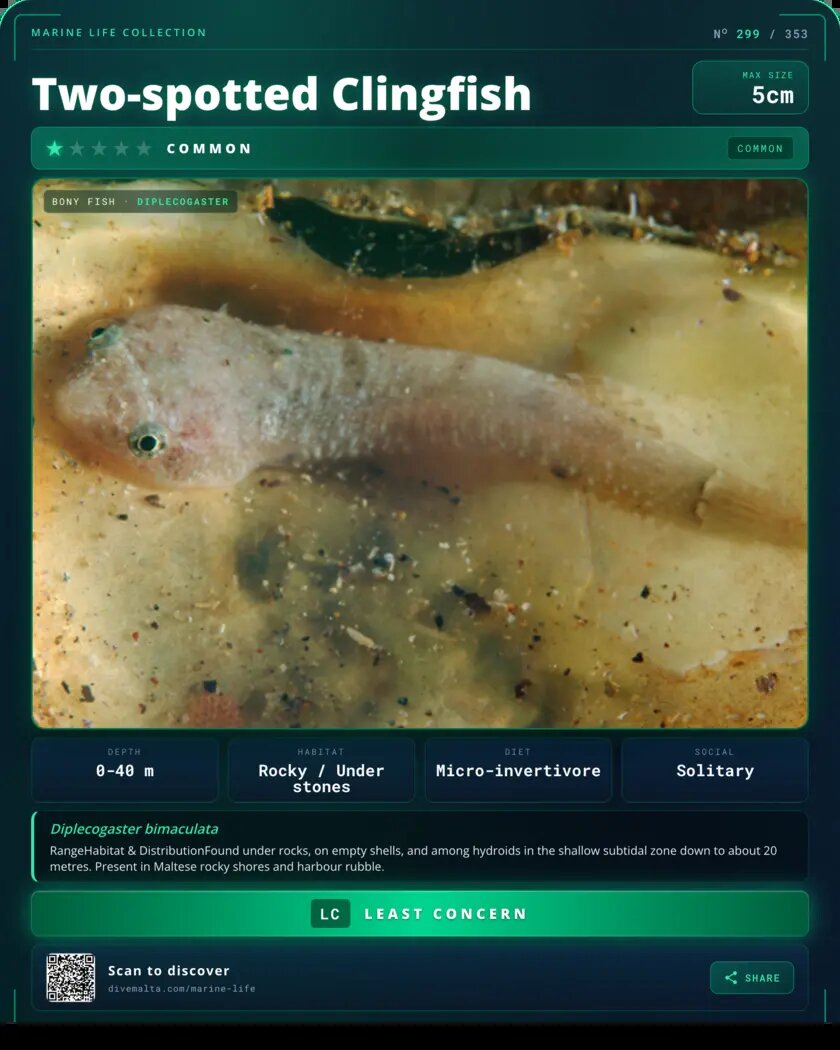
Two-spotted Clingfish species card

Where to Encounter in Malta

Dive sites where Diplecogaster bimaculata may be encountered will be added as sighting data is collected.

IUCN Red ListLeast Concern

Conservation Status

This species is assessed as Least Concern on the IUCN Red List. Mediterranean populations face ongoing pressure from fishing activity, habitat degradation, and climate-driven changes.

Source: IUCN Red List
diveshack Mediterranean Marine Life guide