Range
Habitat & Distribution
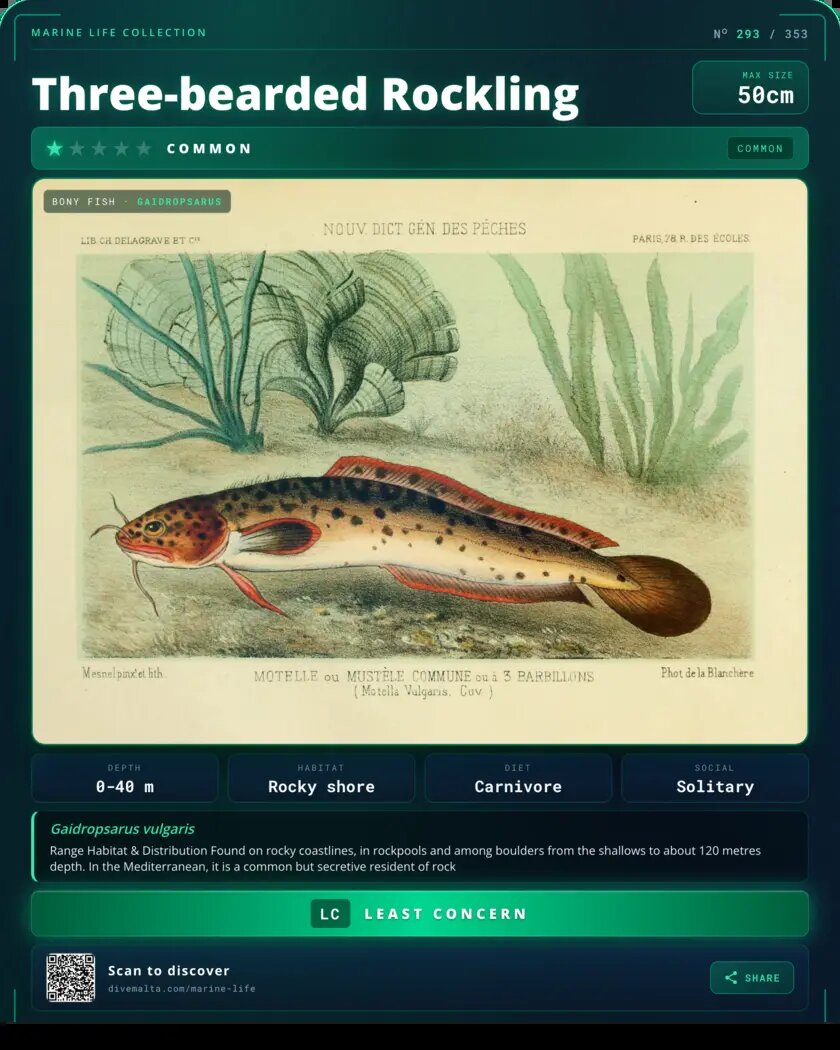
Found on rocky coastlines, in rockpools and among boulders from the shallows to about 120 metres depth. In the Mediterranean, it is a common but secretive resident of rocky habitats, sheltering in crevices and under stones during the day.
Where Malta divers have spotted this species
Sightings are logged by divers using our What Did You See? dive-log tool. View the full live sightings map.
Detail
Preferred Environment
Prefers rocky environments with abundant hiding places -- crevices, overhangs, algae-covered boulders and rocky rubble. Also found in and around harbour structures and artificial reefs.
Encounter Tips
Best approached slowly and calmly. Avoid casting shadows directly over the animal. Neutral buoyancy and patience increase encounter success significantly.