Depth
Dicentrarchus · Bony Fish

Spotted Seabass

Dicentrarchus punctatus

0 - 30 m
Depth Range
70 cm
Max Size
Mediterranean
Distribution
0 - 30 m
Depth Range
70 cm
Max Size
Coastal
Habitat
Predator
Diet
Schooling
Social
LC
IUCN Status
Low
Sighting Likelihood
KingdomAnimalia
PhylumChordata
ClassActinopterygii
GenusDicentrarchus
Speciespunctatus

Identification & Biology

  • IdentificationElongated, silver-bodied seabass covered with small dark spots on the flanks and back. Very similar to the European seabass but distinguished by the spotting and a slightly more pointed snout.
  • SizeUp to 70 cm total length, commonly 25 to 45 cm.
  • Social HabitSchooling species, often in mixed groups with European seabass, particularly as juveniles.
  • HabitatCoastal waters, estuaries, lagoons, and river mouths. Tolerates brackish and occasionally fresh water.
  • Depth0 to 30 m, predominantly in shallow coastal areas.
  • Feeds OnSmall fish, crustaceans, and worms caught in shallow water.
  • DistributionEastern Atlantic from the English Channel to Senegal, including the Mediterranean and Black Sea.
  • DescriptionOften confused with the European seabass, the spotted seabass is identified by the dark spots scattered across its silver body. It favours warmer, shallower water than its relative and is particularly common in lagoons and estuaries.

Habitat & Distribution

Found in coastal waters from the surface to 30 m depth. Prefers sheltered coastal environments including estuaries, lagoons, and harbours. More common in the southern Mediterranean than the European seabass.

Where Malta divers have spotted this species

Loading…

Sightings are logged by divers using our What Did You See? dive-log tool. View the full live sightings map.

Detail

Preferred Environment

Coastal waters, estuaries, lagoons, and harbours. Tolerant of brackish conditions and sometimes enters freshwater briefly. Found over sandy and muddy bottoms in sheltered areas with moderate turbidity.

Encounter Tips

Look in harbours, near harbour walls, and in sheltered bays with slightly turbid water. Often seen in small groups near the surface or mid-water, especially around structures like piers and breakwaters.
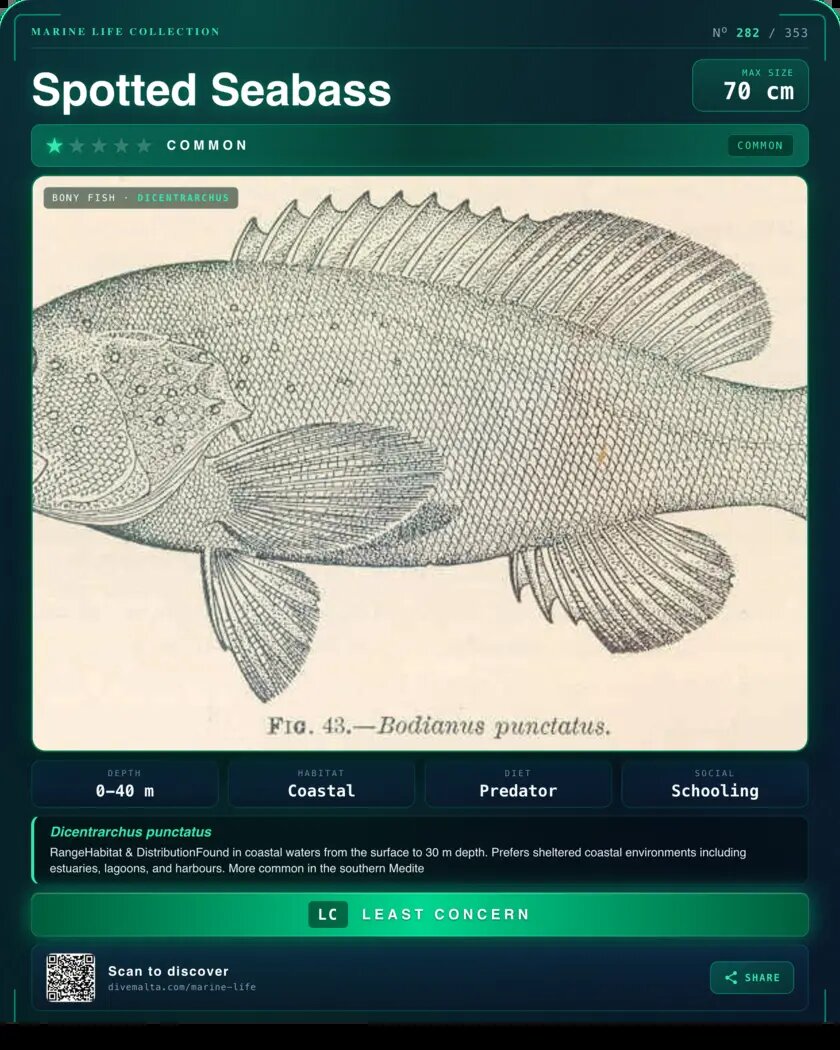
Spotted Seabass species card

Where to Encounter in Malta

Dive sites where Dicentrarchus punctatus may be encountered will be added as sighting data is collected.

IUCN Red ListLeast Concern

Conservation Status

This species is assessed as Least Concern on the IUCN Red List. Mediterranean populations face ongoing pressure from fishing activity, habitat degradation, and climate-driven changes.

Source: IUCN Red List
diveshack Mediterranean Marine Life guide