Depth
Ophidion · Bony Fish

Snake Blenny

Ophidion barbatum

Variable
Depth Range
Variable
Max Size
Mediterranean
Distribution
Variable
Depth Range
Variable
Max Size
Variable
Habitat
Variable
Diet
Variable
Social
LC
IUCN Status
Low
Sighting Likelihood
KingdomAnimalia
PhylumChordata
ClassActinopterygii
GenusOphidion
Speciesbarbatum

Identification & Biology

  • IdentificationVery elongated, eel-like body that is unlike typical blenny shape. Pale pinkish-brown to yellowish body. Single barbel on the chin. Eyes are small. Often confused with a small eel rather than a blenny.
  • SizeUp to 25 cm total length, commonly 12 to 18 cm.
  • Social HabitSolitary and burrowing. Lives in burrows in sandy and muddy substrates.
  • HabitatSandy and muddy bottoms from the shallows to moderate depths. Occupies permanent burrows.
  • Depth5 to 150 m, most common between 15 and 80 m.
  • Feeds OnSmall invertebrates found in and on the sediment near its burrow.
  • DistributionEastern Atlantic from the British Isles to Morocco, including the Mediterranean Sea.
  • DescriptionAn unusual blenny that looks nothing like a typical blenny. Its elongated, eel-like body and burrowing lifestyle are more reminiscent of a snake eel. It lives in permanent burrows in sandy substrates and pokes its head out to survey the surroundings. Rarely seen by divers unless specifically looked for on sandy bottoms.

Habitat & Distribution

Found across the Mediterranean Sea. Habitat and depth details to be confirmed.

Where Malta divers have spotted this species

Loading…

Sightings are logged by divers using our What Did You See? dive-log tool. View the full live sightings map.

Detail

Preferred Environment

Habitat details for Snake Blenny to be confirmed. Most commonly encountered in Mediterranean waters.

Encounter Tips

Best approached slowly and calmly. Avoid casting shadows directly over the animal. Neutral buoyancy and patience increase encounter success significantly.
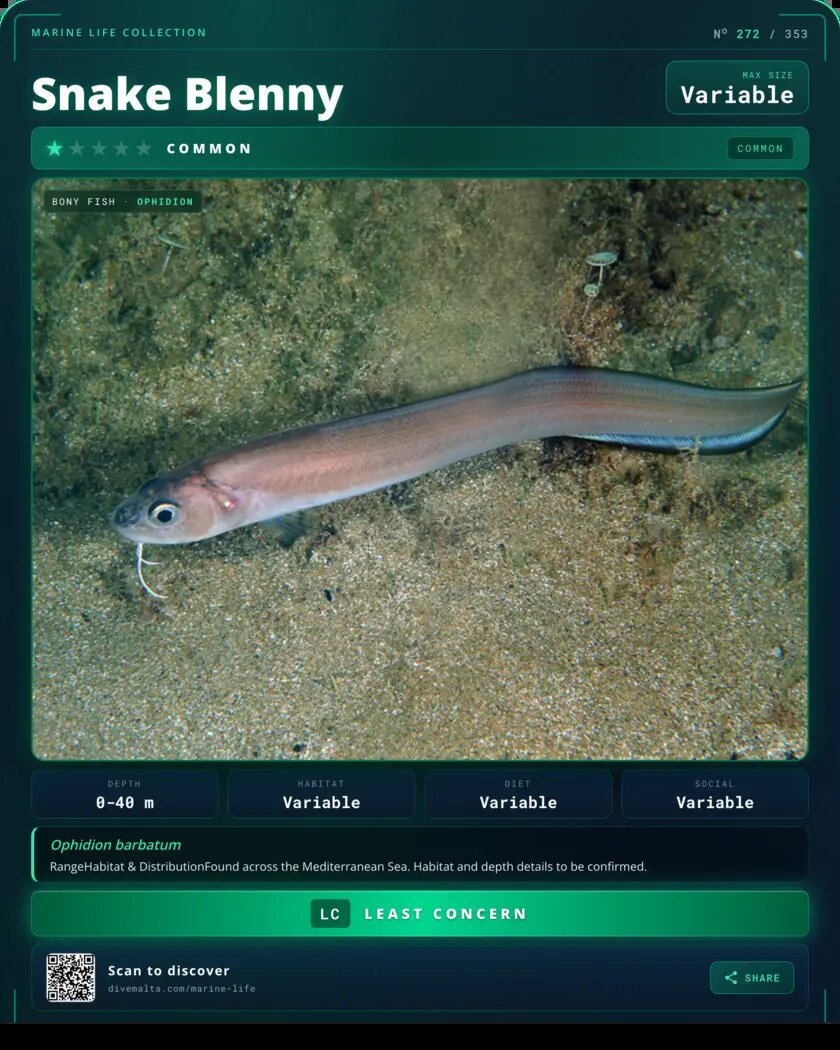
Snake Blenny species card

Where to Encounter in Malta

Dive sites where Ophidion barbatum may be encountered will be added as sighting data is collected.

IUCN Red ListLeast Concern

Conservation Status

This species is assessed as Least Concern on the IUCN Red List. Mediterranean populations face ongoing pressure from fishing activity, habitat degradation, and climate-driven changes.

Source: IUCN Red List
diveshack Mediterranean Marine Life guide