Depth
Opeatogenys · Bony Fish

Slender Clingfish

Opeatogenys gracilis

0-15m
Depth Range
3cm
Max Size
Mediterranean
Distribution
0-15m
Depth Range
3cm
Max Size
Seagrass / Algal
Habitat
Micro-invertivore
Diet
Solitary
Social
LC
IUCN Status
Rare
Sighting Likelihood
KingdomAnimalia
PhylumChordata
ClassActinopterygii
GenusOpeatogenys
Speciesgracilis

Identification & Biology

  • IdentificationExtremely small, elongated clingfish with a narrow body. Pale to translucent with subtle darker markings. Ventral suction disc is proportionally smaller than in other clingfish.
  • SizeUp to 3 cm total length. One of the smallest fish in the Mediterranean.
  • Social HabitSolitary and extremely cryptic. Lives among algae and on seagrass blades.
  • HabitatSeagrass beds and rocky areas with algal cover.
  • Depth0 to 20 m, most common in the first 10 m.
  • Feeds OnMicroscopic invertebrates found on seagrass blades and algae.
  • DistributionMediterranean Sea and adjacent Atlantic coast.
  • DescriptionOne of the tiniest fish in European waters, this minute clingfish is virtually invisible among seagrass and algae. It is so small and transparent that it can only be detected by extremely careful observation or through scientific sampling methods.

Habitat & Distribution

Found clinging to Posidonia oceanica seagrass blades and filamentous algae in the shallow subtidal zone. Present in Maltese Posidonia meadows but very rarely observed due to its minute size.

Where Malta divers have spotted this species

Loading…

Sightings are logged by divers using our What Did You See? dive-log tool. View the full live sightings map.

Detail

Preferred Environment

Posidonia seagrass beds and dense stands of fine macroalgae in sheltered, shallow water.

Encounter Tips

Best approached slowly and calmly. Avoid casting shadows directly over the animal. Neutral buoyancy and patience increase encounter success significantly.
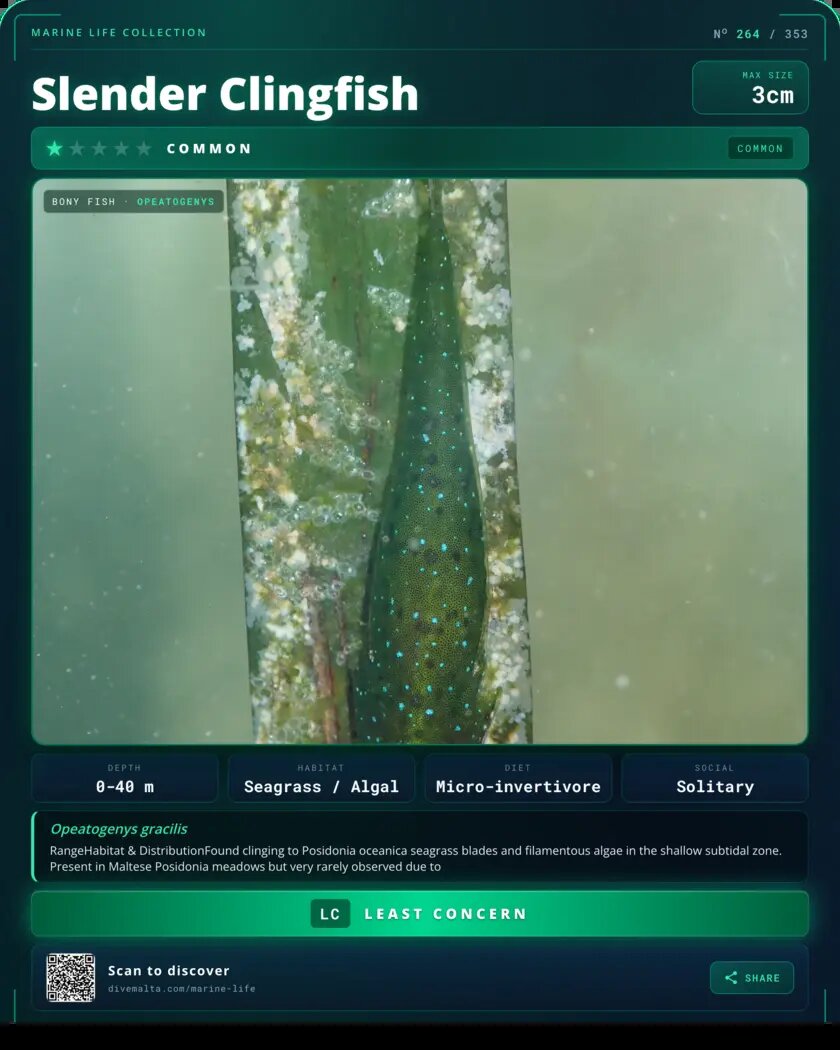
Slender Clingfish species card

Where to Encounter in Malta

Dive sites where Opeatogenys gracilis may be encountered will be added as sighting data is collected.

IUCN Red ListLeast Concern

Conservation Status

This species is assessed as Least Concern on the IUCN Red List. Mediterranean populations face ongoing pressure from fishing activity, habitat degradation, and climate-driven changes.

Source: IUCN Red List
diveshack Mediterranean Marine Life guide