Lepidopus caudatus
Bony Fish
Range
Inhabits deep waters from about 100 to 600 metres, typically over continental slopes and deep-sea plains. In the Mediterranean, it is most common in deeper basins where it makes vertical migrations following prey.
Sightings are logged by divers using our What Did You See? dive-log tool. View the full live sightings map.
Prefers deep pelagic and benthopelagic environments above muddy or sandy bottoms. Undertakes nightly vertical migrations, moving closer to the surface to feed before returning to depth at dawn.
Best approached slowly and calmly. Avoid casting shadows directly over the animal. Neutral buoyancy and patience increase encounter success significantly.
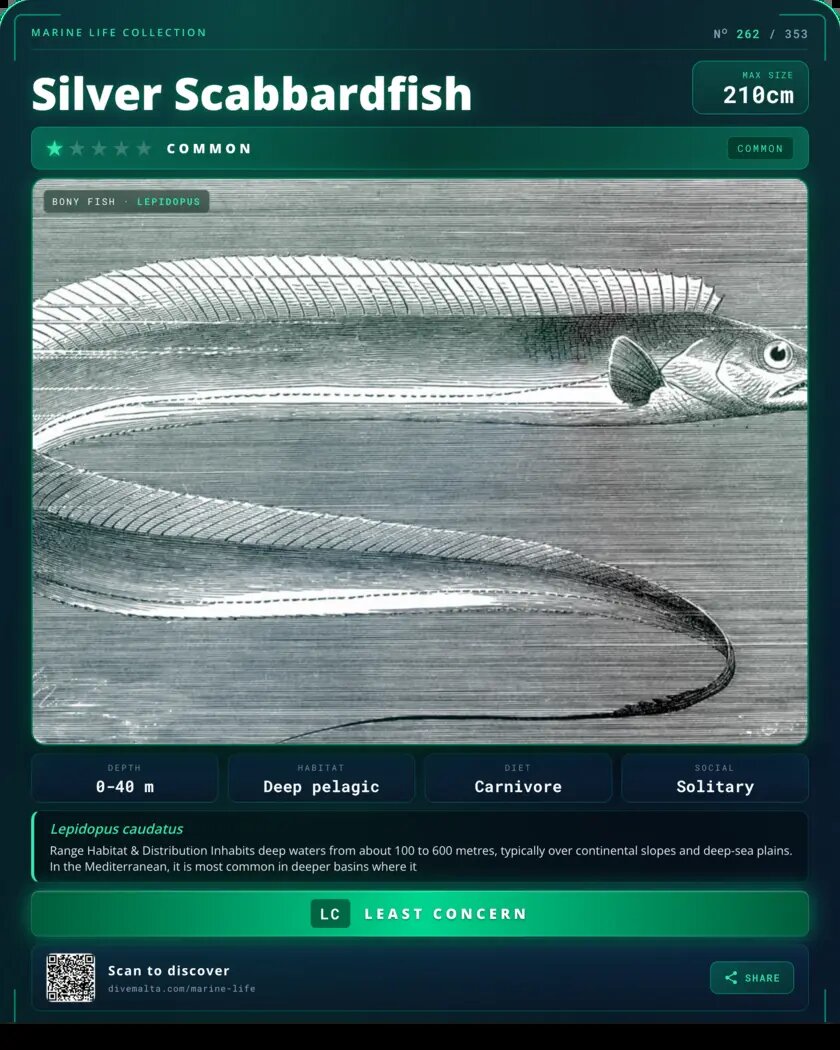
Biology
A voracious predator of mid-water fish, squid and crustaceans, using its large eyes and fang-like teeth to hunt efficiently in deep, low-light conditions.
Deep-Water PredatorSpawns in deep water, with eggs and larvae rising to shallower depths where food is more abundant. Growth is relatively slow and individuals can live over 10 years.
Deep SpawnerIts extremely laterally compressed, ribbon-like body makes it difficult for predators to target head-on. The bright silver colouration reflects what little light exists at depth, potentially confusing predators.
Ribbon Body ProfileDive with diveshack
Dive sites where Lepidopus caudatus may be encountered will be added as sighting data is collected.
This species is assessed as Least Concern on the IUCN Red List. Mediterranean populations face ongoing pressure from fishing activity, habitat degradation, and climate-driven changes.