Depth
Pomatoschistus · Bony Fish

Sand Goby

Pomatoschistus minutus

2 - 20 m
Depth Range
11 cm
Max Size
Mediterranean
Distribution
2 - 20 m
Depth Range
11 cm
Max Size
Sandy Bottoms
Habitat
Carnivore
Diet
Semi-social
Social
LC
IUCN Status
High
Sighting Likelihood
KingdomAnimalia
PhylumChordata
ClassActinopterygii
GenusPomatoschistus
Speciesminutus

Identification & Biology

  • IdentificationSmall, slender goby with a pale sandy body and faint darker markings. Males develop a prominent dark spot on the rear of the first dorsal fin during breeding. Head is slightly flattened.
  • SizeUp to 9 cm total length, commonly 5 to 7 cm.
  • Social HabitMales build nests under empty shells and guard eggs. Outside breeding, found singly or in loose aggregations on open sand.
  • HabitatSandy and muddy bottoms in shallow coastal waters, estuaries, and lagoons.
  • Depth0 to 20 m, most common in the first 10 m.
  • Feeds OnSmall crustaceans, worms, and other benthic invertebrates found in sandy substrates.
  • DistributionEastern Atlantic from Norway to Spain, including the western Mediterranean Sea.
  • DescriptionA common shallow-water goby that is perfectly camouflaged against sandy bottoms. Males are attentive parents that construct and guard nests under empty bivalve shells. One of the most studied gobies in European waters.

Habitat & Distribution

Common on sandy and muddy bottoms from 2 to 20 m depth throughout the Mediterranean and Eastern Atlantic. Abundant in sheltered bays, harbours, and coastal lagoons with soft sediment substrates.

Where Malta divers have spotted this species

Loading…

Sightings are logged by divers using our What Did You See? dive-log tool. View the full live sightings map.

Detail

Preferred Environment

Sandy and muddy bottoms in sheltered coastal waters. Abundant in harbours, lagoons, and estuarine environments. Often found near Posidonia meadow edges where sand patches occur. Tolerates reduced salinity.

Encounter Tips

Scan sandy patches carefully, especially near the edges of seagrass beds. Sand gobies sit motionless on the substrate and are best spotted by the shadow they cast or their dark dorsal spot.
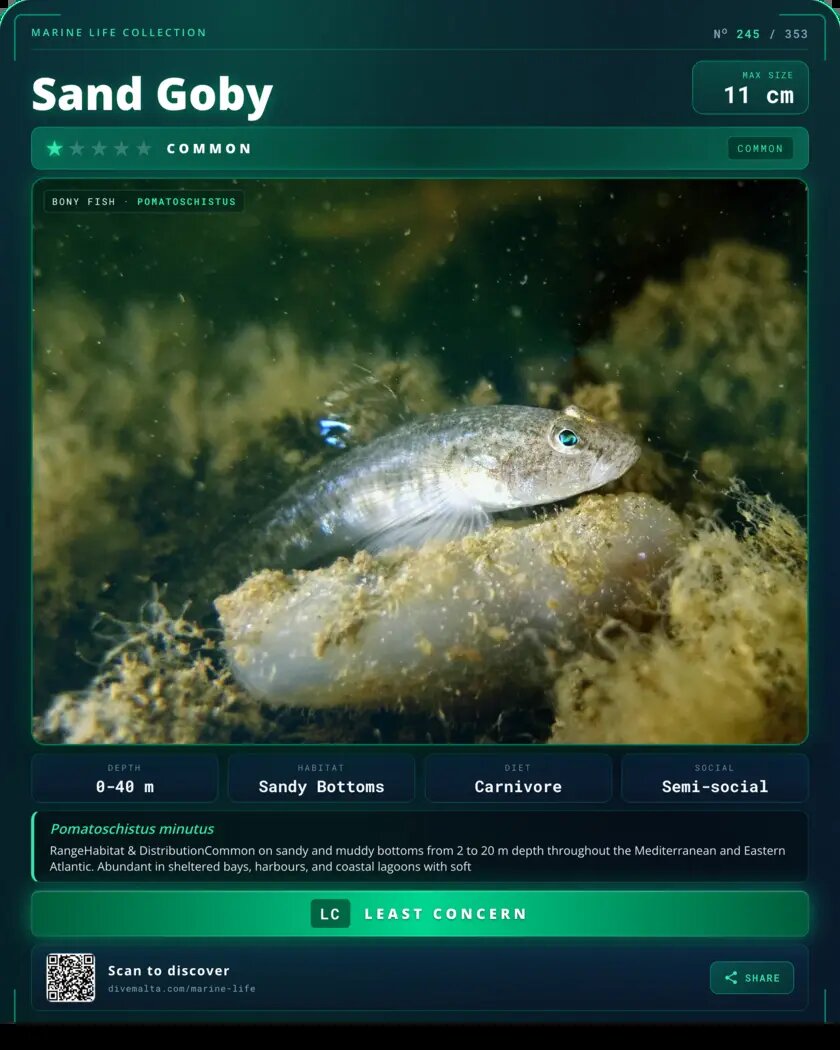
Sand Goby species card

Where to Encounter in Malta

Dive sites where Pomatoschistus minutus may be encountered will be added as sighting data is collected.

IUCN Red ListLeast Concern

Conservation Status

This species is assessed as Least Concern on the IUCN Red List. Mediterranean populations face ongoing pressure from fishing activity, habitat degradation, and climate-driven changes.

Source: IUCN Red List
diveshack Mediterranean Marine Life guide