Range
Habitat & Distribution
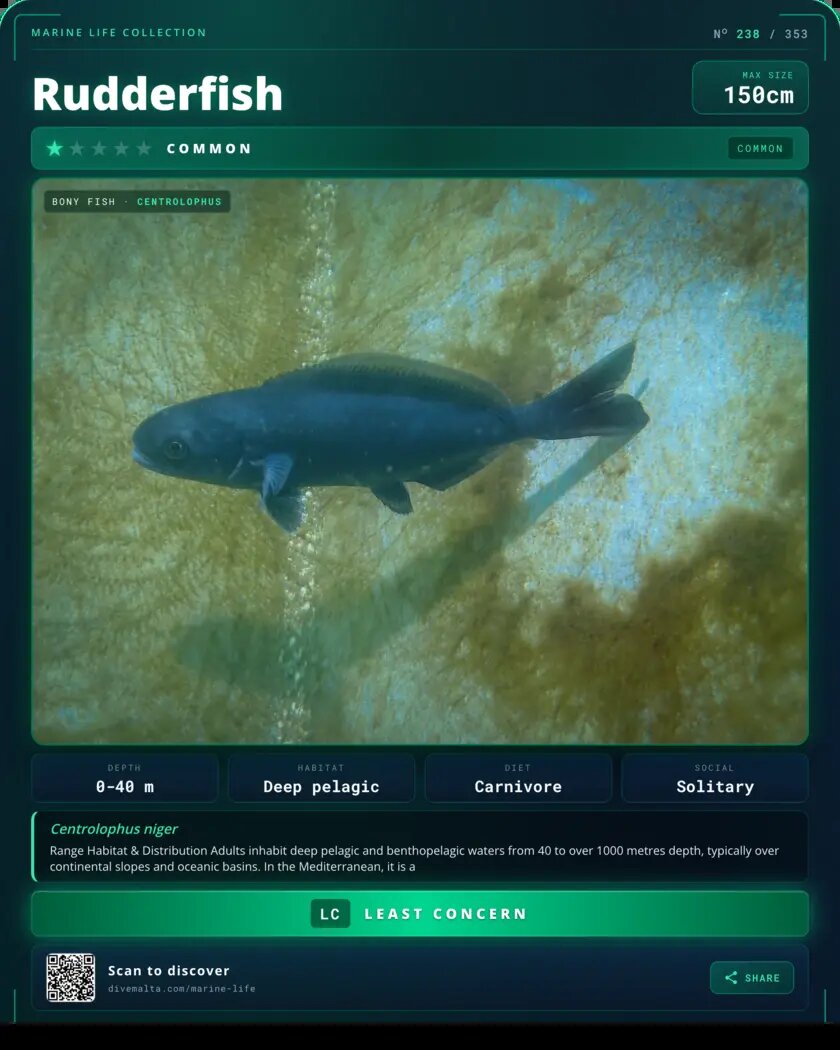
Adults inhabit deep pelagic and benthopelagic waters from 40 to over 1000 metres depth, typically over continental slopes and oceanic basins. In the Mediterranean, it is an uncommon deep-water species rarely encountered by divers.
Where Malta divers have spotted this species
Sightings are logged by divers using our What Did You See? dive-log tool. View the full live sightings map.
Detail
Preferred Environment
Juveniles associate with floating objects, jellyfish and surface debris in open water. Adults transition to a solitary deep-water existence in cold, dark conditions over soft muddy bottoms.
Encounter Tips
Best approached slowly and calmly. Avoid casting shadows directly over the animal. Neutral buoyancy and patience increase encounter success significantly.