Depth
Gobius · Bony Fish

Rock Goby

Gobius paganellus

1 - 15 m
Depth Range
12 cm
Max Size
Mediterranean
Distribution
1 - 15 m
Depth Range
12 cm
Max Size
Rocky Shores
Habitat
Omnivore
Diet
Territorial
Social
LC
IUCN Status
Very High
Sighting Likelihood
KingdomAnimalia
PhylumChordata
ClassActinopterygii
GenusGobius
Speciespaganellus

Identification & Biology

  • IdentificationRobust goby with a large, rounded head. Brown to dark grey body with darker mottling and banding. First dorsal fin has a distinctive pale or orange-yellow upper edge.
  • SizeUp to 12 cm total length, commonly 7 to 10 cm.
  • Social HabitSolitary and territorial. Males guard eggs attached to the underside of rocks during breeding season.
  • HabitatRocky intertidal and shallow subtidal zones. Found under boulders, in rock pools, and on algae-covered rocks.
  • DepthIntertidal to 15 m, predominantly in very shallow water.
  • Feeds OnSmall crustaceans, worms, molluscs, and algae found among rocks.
  • DistributionEastern Atlantic from Scotland to Morocco, including the Mediterranean and Black Sea.
  • DescriptionOne of the most common gobies in the Mediterranean rocky shallows. It sits motionless on rocks, relying on its mottled camouflage for protection. The pale-edged first dorsal fin is the best identification feature in the field.

Habitat & Distribution

Found on rocky shores, tide pools, and shallow subtidal rocky areas throughout the Mediterranean. Prefers crevices and underhangs in the intertidal and shallow subtidal zone from 0 to 15 m depth.

Where Malta divers have spotted this species

Loading…

Sightings are logged by divers using our What Did You See? dive-log tool. View the full live sightings map.

Detail

Preferred Environment

Rocky intertidal and shallow subtidal zones with abundant crevices. Often found under stones and in tide pools on exposed and semi-exposed rocky coastlines. Tolerant of reduced salinity in estuarine conditions.

Encounter Tips

Look under rocks and ledges in very shallow water, especially around tide pool margins. Remains motionless when approached, relying on camouflage. Easiest to spot when it darts between hiding spots.
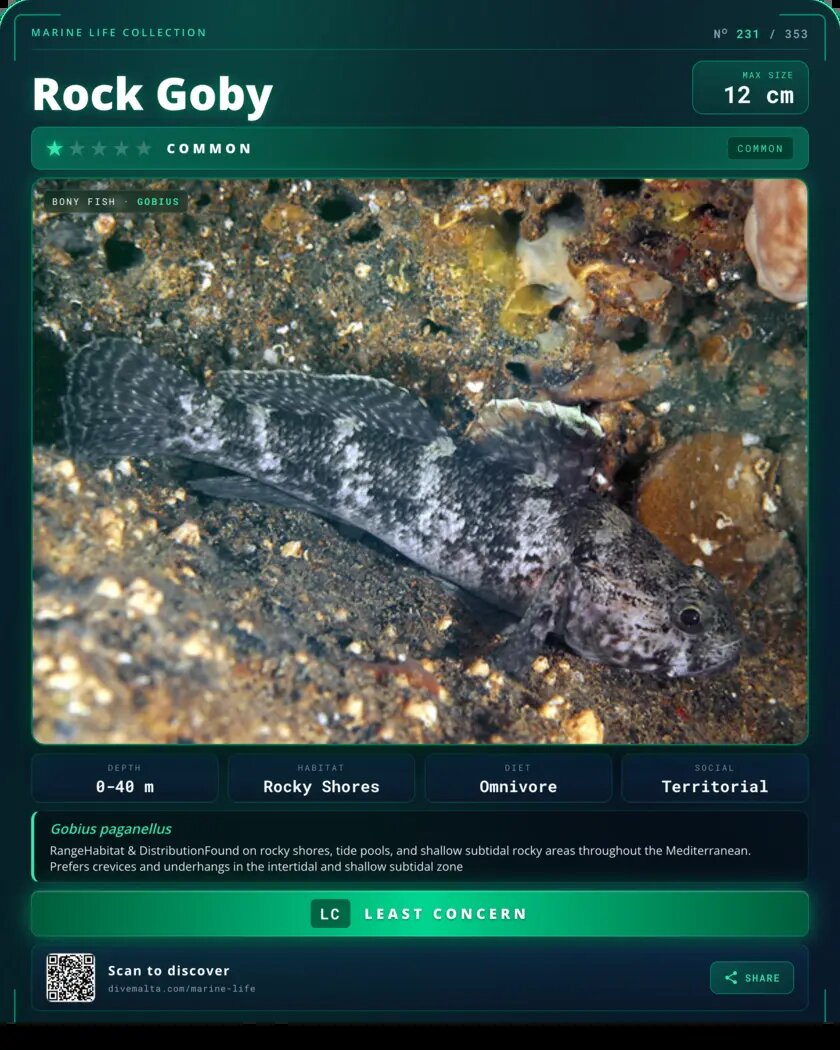
Rock Goby species card

Where to Encounter in Malta

Dive sites where Gobius paganellus may be encountered will be added as sighting data is collected.

IUCN Red ListLeast Concern

Conservation Status

This species is assessed as Least Concern on the IUCN Red List. Mediterranean populations face ongoing pressure from fishing activity, habitat degradation, and climate-driven changes.

Source: IUCN Red List
diveshack Mediterranean Marine Life guide