Depth
Mullus · Bony Fish

Red Mullet

Mullus barbatus

5 - 300 m
Depth Range
30 cm
Max Size
Mediterranean
Distribution
5 - 300 m
Depth Range
30 cm
Max Size
Sandy / Muddy
Habitat
Carnivore
Diet
Small Groups
Social
LC
IUCN Status
Moderate
Sighting Likelihood
KingdomAnimalia
PhylumChordata
ClassActinopterygii
GenusMullus
Speciesbarbatus

Identification & Biology

  • IdentificationElongated body with a steep forehead and two long chin barbels used for probing the seabed. Reddish-pink body with no distinctive lateral markings. First dorsal fin lacks a dark spot.
  • SizeUp to 30 cm total length, commonly 15 to 20 cm.
  • Social HabitOften found in small groups foraging over sandy bottoms. Uses its barbels to detect buried prey by touch and taste.
  • HabitatSandy and muddy bottoms from the shallows to the outer continental shelf. Often over clean sand with little vegetation.
  • Depth5 to 300 m, most common between 10 and 100 m.
  • Feeds OnSmall crustaceans, worms, molluscs, and other invertebrates detected and extracted from sediment using the chin barbels.
  • DistributionEastern Atlantic from Norway to Senegal, including the entire Mediterranean and Black Sea.
  • DescriptionA highly valued food fish across the Mediterranean, prized since ancient Roman times. Red mullets methodically sweep the seabed with their sensitive barbels, leaving characteristic trails in the sand. Divers frequently see small groups working sandy patches between reef structures.

Habitat & Distribution

A common and important species found on sandy and muddy bottoms from 5 to 300 m depth across the Mediterranean. One of the most commercially and ecologically significant bottom-dwelling fish in the region.

Where Malta divers have spotted this species

Loading…

Sightings are logged by divers using our What Did You See? dive-log tool. View the full live sightings map.

Detail

Preferred Environment

Sandy and muddy bottoms from shallow coastal waters to the deep continental shelf. Prefers soft substrates where it can probe for buried prey. Also found on mixed sandy-rocky bottoms and near Posidonia meadow edges.

Encounter Tips

Look on sandy and muddy patches at almost any depth. Often seen actively probing the sediment with its barbels, creating small clouds of disturbed sand. Other fish species frequently follow foraging red mullet.
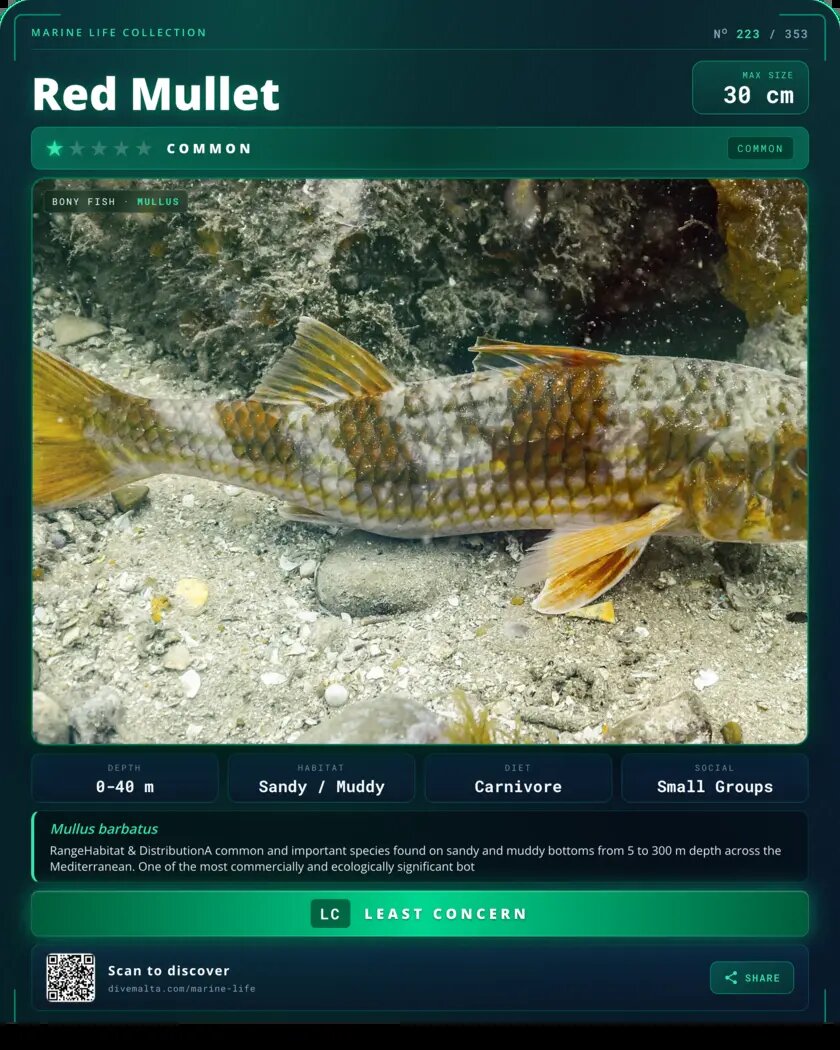
Red Mullet species card

Where to Encounter in Malta

Dive sites where Mullus barbatus may be encountered will be added as sighting data is collected.

IUCN Red ListLeast Concern

Conservation Status

This species is assessed as Least Concern on the IUCN Red List. Mediterranean populations face ongoing pressure from fishing activity, habitat degradation, and climate-driven changes.

Source: IUCN Red List
diveshack Mediterranean Marine Life guide