Trachinotus ovatus
Bony Fish
Range
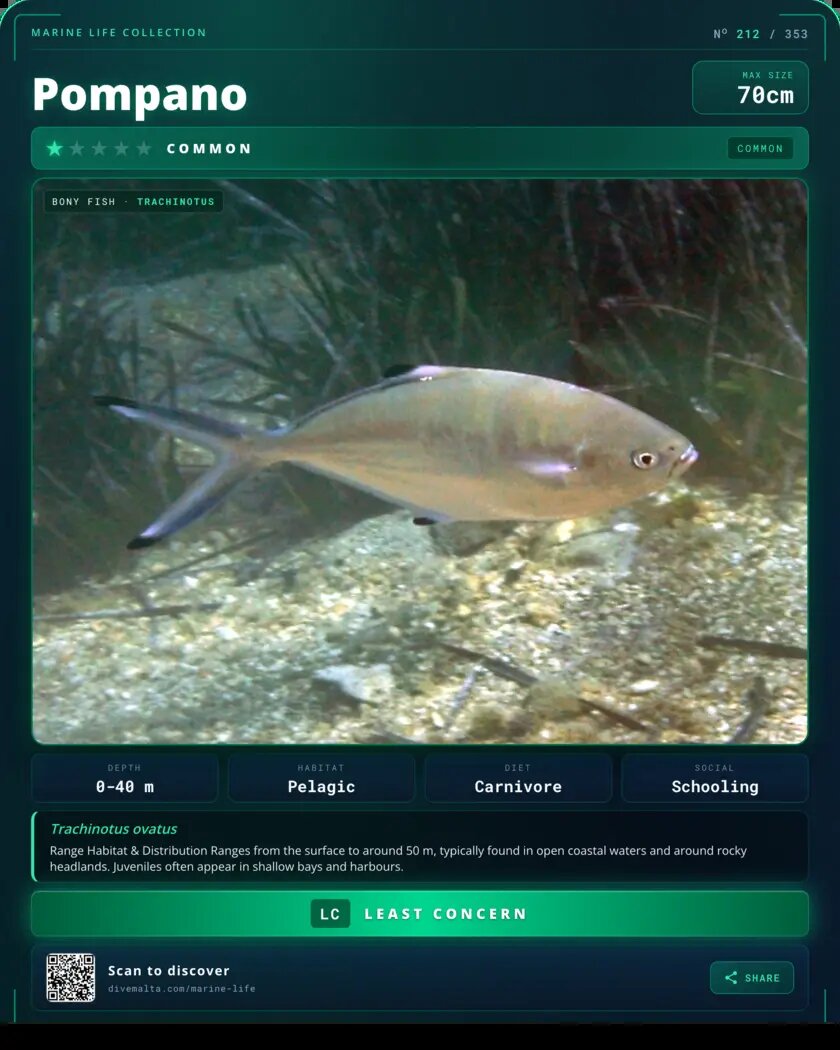
Ranges from the surface to around 50 m, typically found in open coastal waters and around rocky headlands. Juveniles often appear in shallow bays and harbours.
Sightings are logged by divers using our What Did You See? dive-log tool. View the full live sightings map.
Prefers clear, warm coastal waters over mixed substrates. Commonly seen near surface schools around rocky points and current-swept areas.
Best approached slowly and calmly. Avoid casting shadows directly over the animal. Neutral buoyancy and patience increase encounter success significantly.
Biology
Feeds on small fish, crustaceans, and zooplankton. Schools actively chase baitfish near the surface, creating visible splashes during feeding events.
Active schooling hunterSpawns in open water during summer months. Eggs are buoyant and pelagic, with larvae drifting in the plankton for several weeks.
Pelagic spawnerExtremely fast and agile, relying on speed and tight school formation to evade larger predators. The reflective body creates confusion in group formation.
Speed & schoolingDive with diveshack
Dive sites where Trachinotus ovatus may be encountered will be added as sighting data is collected.
This species is assessed as Least Concern on the IUCN Red List. Mediterranean populations face ongoing pressure from fishing activity, habitat degradation, and climate-driven changes.