Naucrates ductor
Bony Fish
Range
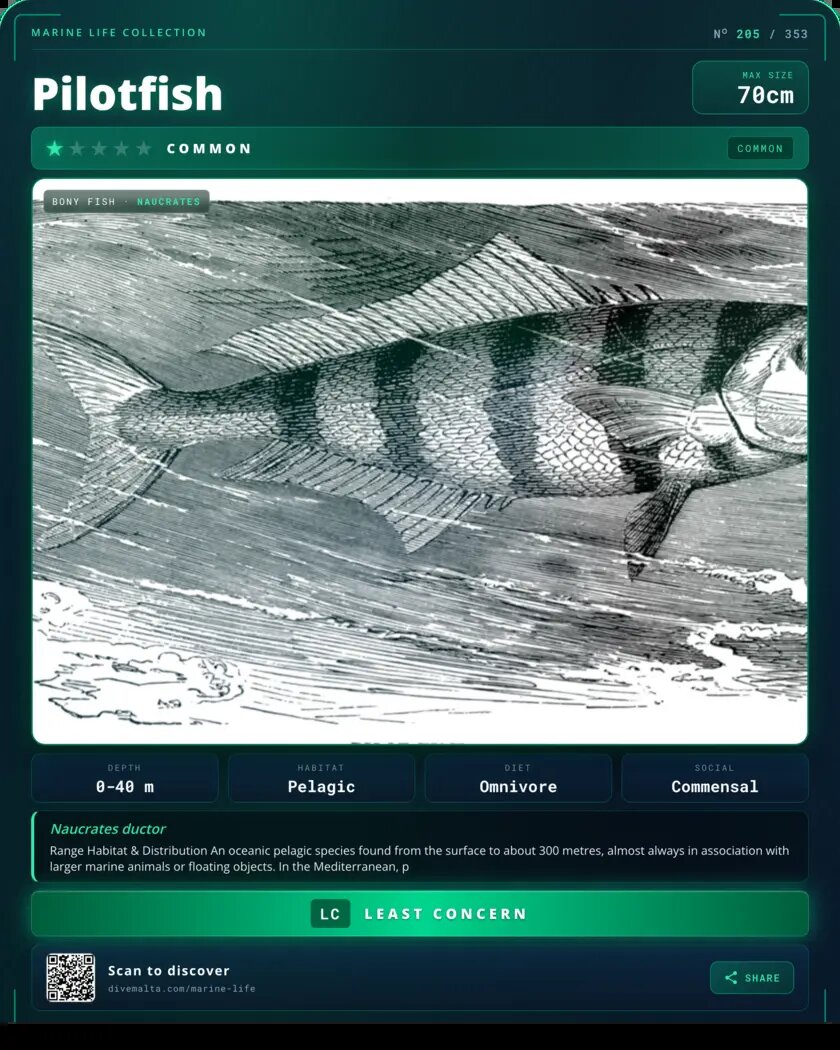
An oceanic pelagic species found from the surface to about 300 metres, almost always in association with larger marine animals or floating objects. In the Mediterranean, pilotfish are most often spotted accompanying Ocean Sunfish, turtles or large sharks.
Sightings are logged by divers using our What Did You See? dive-log tool. View the full live sightings map.
Prefers warm, clear oceanic waters where large pelagic species travel. Also associates with floating debris, boats and buoys, especially as juveniles sheltering under jellyfish.
Best approached slowly and calmly. Avoid casting shadows directly over the animal. Neutral buoyancy and patience increase encounter success significantly.
Biology
Feeds on scraps from its host's meals, ectoparasites it picks from larger animals, small fish, crustaceans and invertebrates. The relationship with large hosts provides both food access and protection.
Commensal FeederSpawns in open tropical and subtropical waters during summer. Juveniles are pelagic and often shelter beneath the bells of jellyfish before associating with larger fish or objects.
Oceanic SpawnerGains protection by swimming in close formation with sharks and other large predators, which deters would-be attackers. The banded pattern may also break up its outline in open water.
Predator AssociationDive with diveshack
Dive sites where Naucrates ductor may be encountered will be added as sighting data is collected.
This species is assessed as Least Concern on the IUCN Red List. Mediterranean populations face ongoing pressure from fishing activity, habitat degradation, and climate-driven changes.