Depth
Symphodus · Bony Fish

Ocellated Wrasse

Symphodus ocellatus

1-30m
Depth Range
Variable
Max Size
Mediterranean
Distribution
1-30m
Depth Range
Variable
Max Size
Rocky Reef
Habitat
Carnivore
Diet
Solitary
Social
LC
IUCN Status
Kingdom Animalia
Phylum Chordata
Class Actinopterygii
Genus Symphodus
Species ocellatus

Identification & Biology

  • IdentificationSmall wrasse with a moderately deep body. Males are green with red and blue markings and a distinctive dark spot (ocellus) on the gill cover. Females are brownish with a pale lateral stripe.
  • SizeUp to 13 cm total length, commonly 6 to 10 cm.
  • Social HabitMales build crescent-shaped nests from algae fragments on rock surfaces and actively court females.
  • HabitatRocky reefs, seagrass beds, and mixed substrate areas with algal cover.
  • Depth1 to 30 m, most common between 3 and 15 m.
  • Feeds OnSmall crustaceans, molluscs, and worms picked from surfaces.
  • DistributionMediterranean Sea and adjacent Atlantic coast.
  • DescriptionNamed for the dark eyespot (ocellus) on its gill cover. Males construct distinctive crescent-shaped nests from algae fragments, which they defend vigorously. One of the most commonly encountered small wrasses on Mediterranean rocky reefs. Protogynous hermaphrodite like other wrasses.

Habitat & Distribution

Found across the Mediterranean, inhabiting rocky reef environments. Active from the surface down to 30m depth.

Where Malta divers have spotted this species

Loading…

Sightings are logged by divers using our What Did You See? dive-log tool. View the full live sightings map.

Detail

Preferred Environment

Rocky Reef habitats, typically at depths of 1-30m. Most commonly encountered by divers at the shallower end of its range.

Encounter Tips

Best approached slowly and calmly. Avoid casting shadows directly over the animal. Neutral buoyancy and patience increase encounter success significantly.
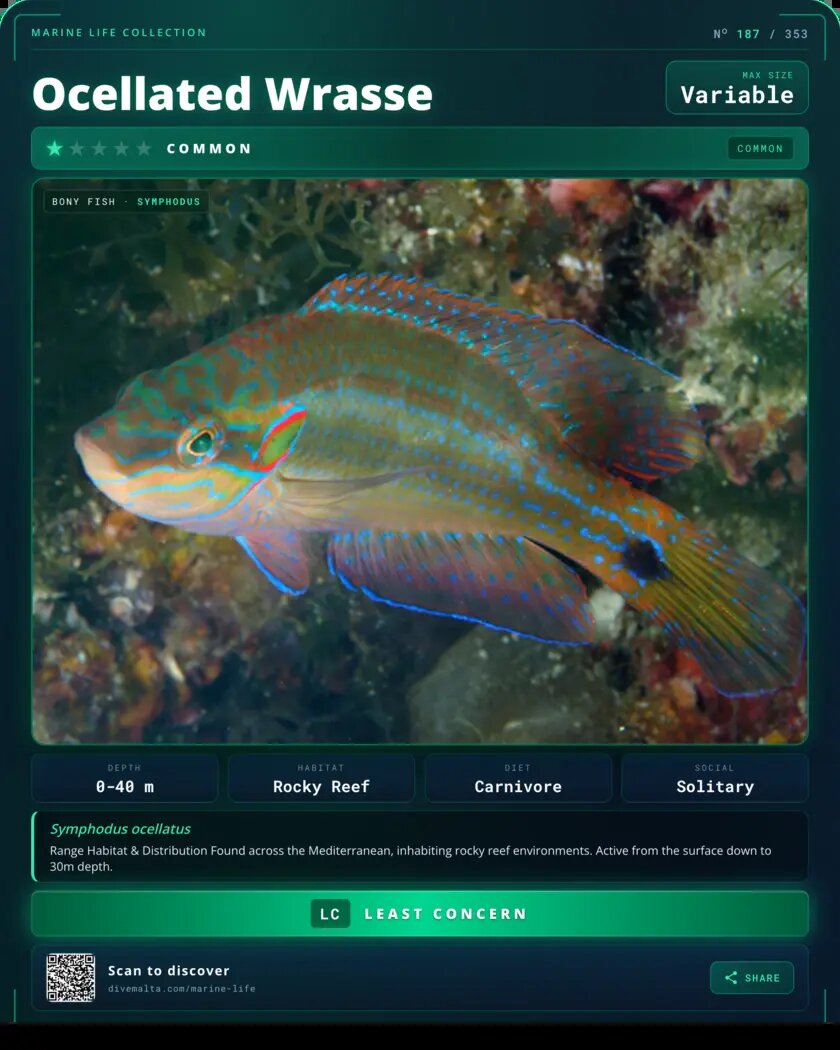
Ocellated Wrasse species card

Behaviour & Diet

Feeding Strategy

Feeds on small benthic invertebrates including worms, molluscs and crustaceans found among rocky substrates and Posidonia meadows.

Benthic forager

Reproduction

Males build elaborate nests from algae fragments, often incorporating pieces of seagrass. Females deposit eggs which the male fans and guards.

Nest builder

Behaviour & Defence

Darts into dense vegetation or rock crevices when threatened. Mottled coloration provides some camouflage among seagrass.

Shelter seeker

Where to Encounter in Malta

The following dive sites offer strong habitat match for Symphodus ocellatus. All are accessible on a guided dive with diveshack.

5-30m
North Malta

Cirkewwa

Rocky reef with caves, arches and ledges hosting a rich diversity of reef species.

View dive site ›
5-50m
Gozo

Blue Hole

One of the Med's most famous reef dive sites. Rocky walls and archways covered in life.

View dive site ›
18-36m
South Malta

Um El Faroud

The wreck lies on a sandy bottom surrounded by rocky reef -- a diverse habitat attracting reef species.

View dive site ›
IUCN Red List Least Concern

Conservation Status

This species is assessed as Least Concern on the IUCN Red List. Mediterranean populations face ongoing pressure from fishing activity, habitat degradation, and climate-driven changes to prey availability.

Source: iNaturalist Guide #888
by Lesley Clements (CC BY-SA)
diveshack Mediterranean Marine Life guide