Depth
Gymnammodytes · Bony Fish

Mediterranean Sand Eel

Gymnammodytes cicerelus

0-80m
Depth Range
17cm
Max Size
Mediterranean
Distribution
0-80m
Depth Range
17cm
Max Size
Sandy
Habitat
Planktivore
Diet
Schooling
Social
LC
IUCN Status
Moderate
Sighting Likelihood
Kingdom Animalia
Phylum Chordata
Class Actinopterygii
Genus Gymnammodytes
Species cicerelus

Identification & Biology

  • IdentificationVery slender, elongated body with a pointed snout. Silvery body with a blue-green back. Lower jaw projects beyond the upper. No pelvic fins. Buries rapidly into sand when disturbed.
  • SizeUp to 18 cm total length, commonly 10 to 15 cm.
  • Social HabitSchooling species that forms dense groups above sandy bottoms, diving into the sand collectively when threatened.
  • HabitatClean sandy bottoms in shallow coastal waters. Alternates between swimming in schools and burrowing in sand.
  • Depth1 to 50 m, most common between 3 and 20 m.
  • Feeds OnZooplankton caught in the water column above its sandy home.
  • DistributionMediterranean Sea and adjacent Atlantic coast.
  • DescriptionA small, slender fish that lives a double life: forming shimmering schools above the sand by day to feed on plankton, then vanishing instantly into the substrate when danger approaches. Sand eels are a critical prey species for many Mediterranean predators including terns, cormorants, and predatory fish.

Habitat & Distribution

Found exclusively over sandy substrates in the Mediterranean and adjacent Atlantic waters. Commonly encountered from shallow coastal zones to around 80m depth, where it burrows into sand for shelter.

Where Malta divers have spotted this species

Loading…

Sightings are logged by divers using our What Did You See? dive-log tool. View the full live sightings map.

Detail

Preferred Environment

Requires clean, fine to medium sand for burrowing. Most commonly seen in shallow sandy bays and over open sand plains between seagrass meadows.

Encounter Tips

Best approached slowly and calmly. Avoid casting shadows directly over the animal. Neutral buoyancy and patience increase encounter success significantly.
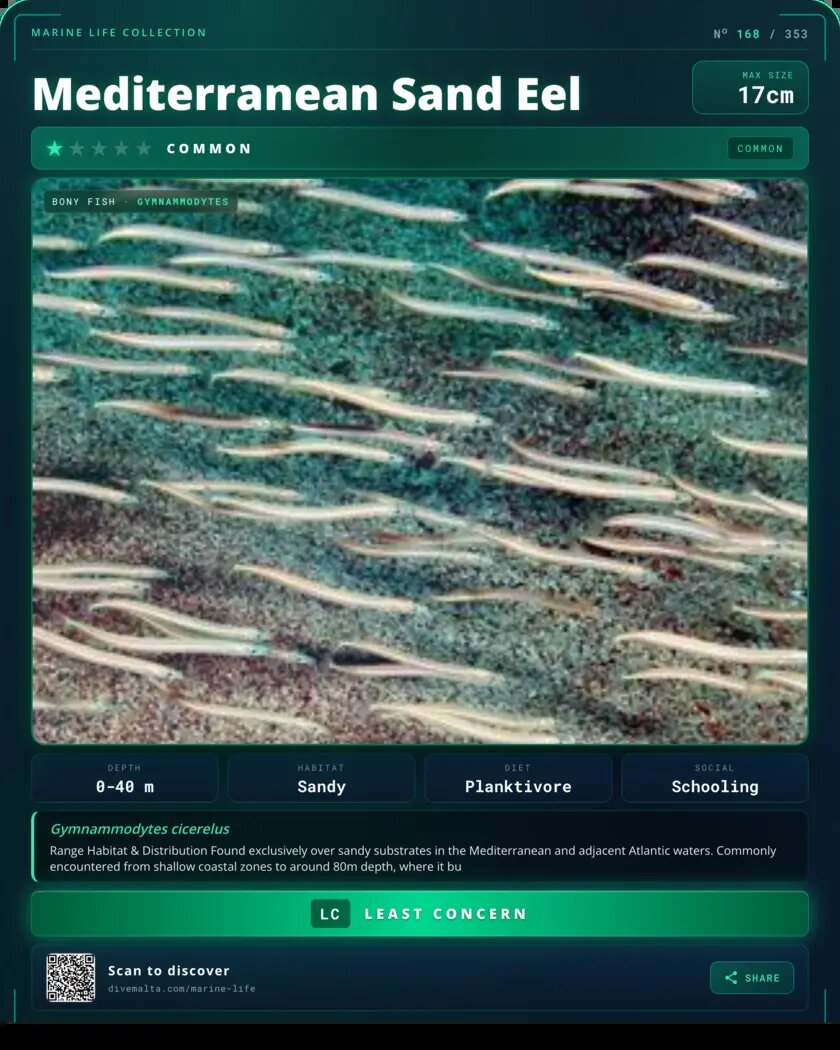
Mediterranean Sand Eel species card

Behaviour & Diet

Feeding Strategy

Feeds on zooplankton and tiny crustaceans captured in mid-water during brief foraging excursions above the seabed.

Planktivore

Reproduction

Spawns in sandy substrate during spring and summer. Eggs are adhesive and attach to sand grains near the burrow.

Sand spawner

Behaviour & Defence

Rapidly burrows tail-first into sand when threatened. Can remain buried for extended periods, making it difficult for predators to locate.

Sand burrower

Where to Encounter in Malta

Dive sites where Gymnammodytes cicerelus may be encountered will be added as sighting data is collected.

IUCN Red List Least Concern

Conservation Status

This species is assessed as Least Concern on the IUCN Red List. Mediterranean populations face ongoing pressure from fishing activity, habitat degradation, and climate-driven changes.

Source: IUCN Red List
diveshack Mediterranean Marine Life guide