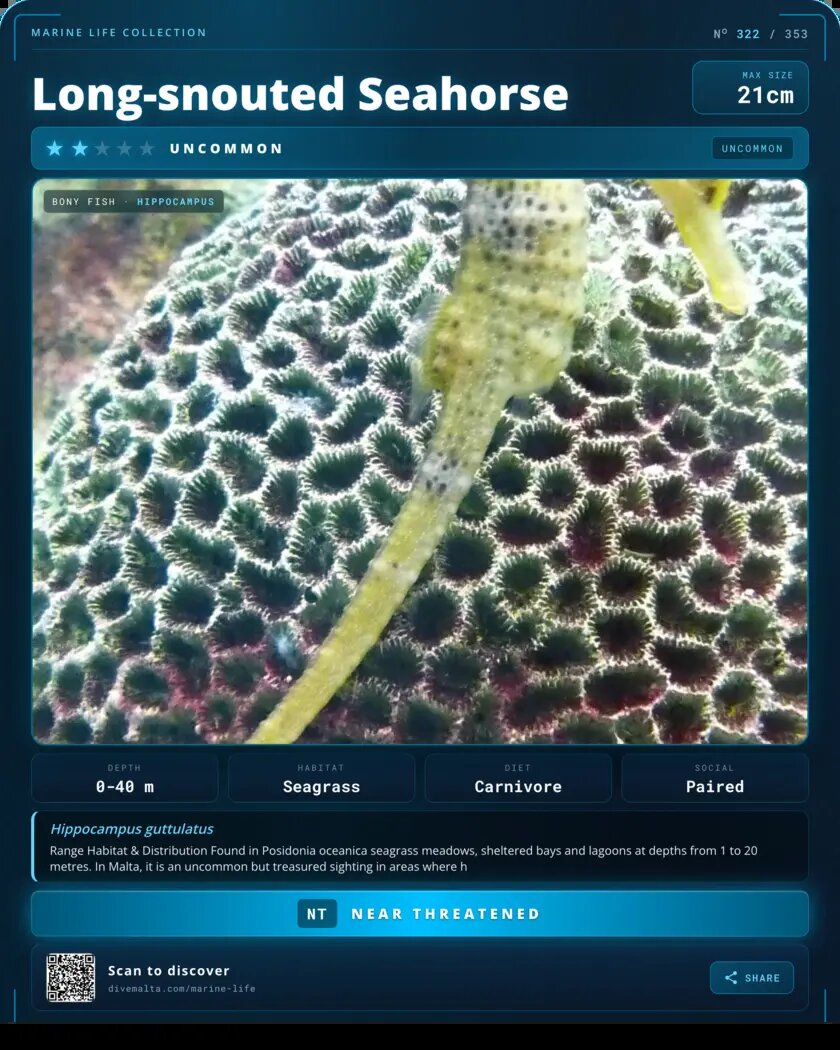
Hippocampus guttulatus
Bony Fish
Range
Found in Posidonia oceanica seagrass meadows, sheltered bays and lagoons at depths from 1 to 20 metres. In Malta, it is an uncommon but treasured sighting in areas where healthy seagrass beds persist.
Sightings are logged by divers using our What Did You See? dive-log tool. View the full live sightings map.
Prefers calm, sheltered waters with Posidonia seagrass, macroalgae or other holdfasts it can grip with its tail. Sometimes found on artificial structures, ropes and nets in harbours.
Best approached slowly and calmly. Avoid casting shadows directly over the animal. Neutral buoyancy and patience increase encounter success significantly.
Biology
A specialised suction feeder that draws in tiny crustaceans -- primarily mysid shrimp and amphipods -- through its tubular snout with a rapid snap of its jaw.
Suction FeederMales carry fertilised eggs in a specialised brood pouch, providing nutrients and oxygen until live young are released. This remarkable role reversal is unique among vertebrates.
Male PregnancyRelies almost entirely on camouflage, changing colour to match its surroundings. Its bony-plated body also makes it an unpalatable prey item for many predators.
Camouflage ExpertDive with diveshack
Dive sites where Hippocampus guttulatus may be encountered will be added as sighting data is collected.
This species is assessed as Near Threatened on the IUCN Red List. Mediterranean populations face ongoing pressure from fishing activity, habitat degradation, and climate-driven changes.