Depth
Echeneis · Bony Fish

Live Sharksucker

Echeneis naucrates

1-50m
Depth Range
110cm
Max Size
Mediterranean
Distribution
1-50m
Depth Range
110cm
Max Size
Pelagic / Reef
Habitat
Carnivore
Diet
Solitary
Social
LC
IUCN Status
Moderate
Sighting Likelihood
KingdomAnimalia
PhylumChordata
ClassActinopterygii
GenusEcheneis
Speciesnaucrates

Identification & Biology

  • IdentificationElongated, torpedo-shaped body with a large, oval suction disc on the top of the head formed from a modified dorsal fin. Grey-brown body with a distinctive dark lateral stripe bordered by white.
  • SizeUp to 110 cm total length, commonly 40 to 70 cm.
  • Social HabitAlmost always found attached to a host animal (sharks, rays, turtles, large fish, or even boats) using its head suction disc.
  • HabitatOpen water wherever its host animal travels. Detaches to feed on scraps and parasites, then reattaches.
  • DepthSurface to 50 m, following its host.
  • Feeds OnExternal parasites of the host animal, scraps from the host's meals, and small free-swimming fish and invertebrates.
  • DistributionWorldwide in tropical and warm temperate seas, including the Mediterranean Sea.
  • DescriptionA fascinating hitchhiker that attaches to larger marine animals using a powerful suction disc on the top of its head. The disc is actually a highly modified first dorsal fin with slat-like ridges that create vacuum pressure. Divers occasionally see remoras attached to turtles, rays, or large fish at Mediterranean dive sites.

Habitat & Distribution

Typically found attached to large pelagic hosts such as sharks, rays, and sea turtles in open water and around reef drop-offs. In the Mediterranean, encountered occasionally near the surface or at moderate depths when free-swimming between hosts.

Where Malta divers have spotted this species

Loading…

Sightings are logged by divers using our What Did You See? dive-log tool. View the full live sightings map.

Detail

Preferred Environment

Associates with large marine animals in open water and reef edges. Free-swimming individuals may be found near the surface or hovering around cleaning stations.

Encounter Tips

Best approached slowly and calmly. Avoid casting shadows directly over the animal. Neutral buoyancy and patience increase encounter success significantly.
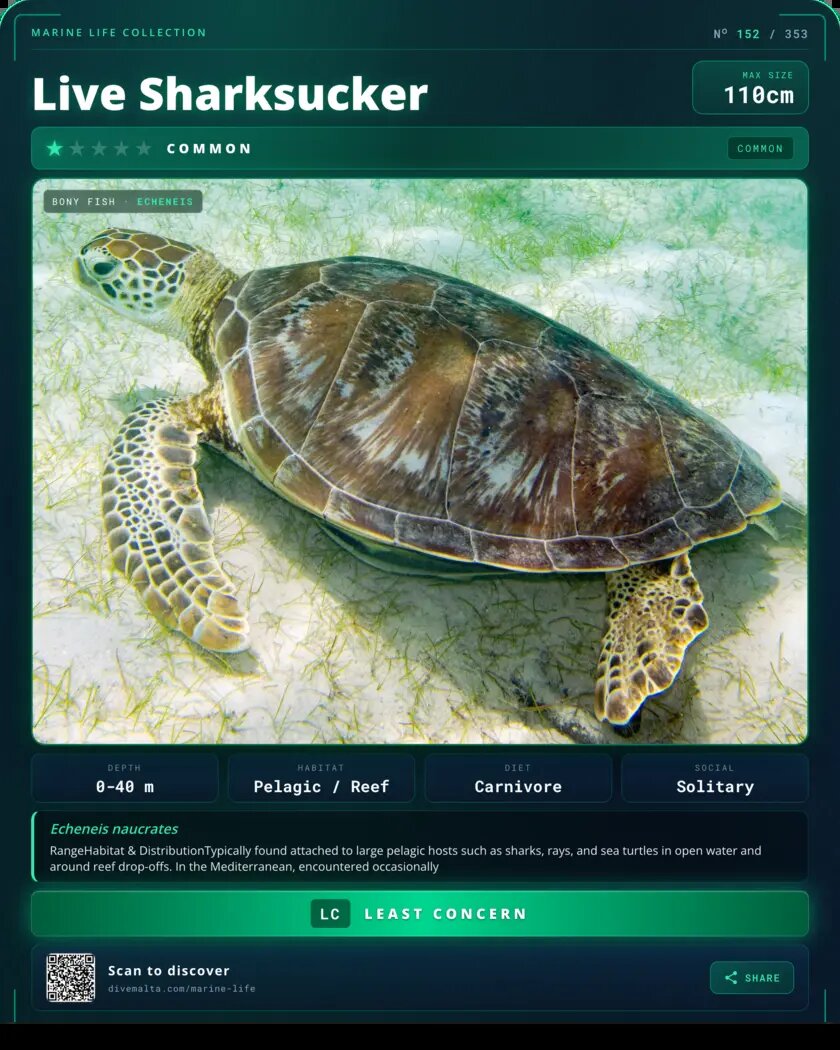
Live Sharksucker species card

Where to Encounter in Malta

Dive sites where Echeneis naucrates may be encountered will be added as sighting data is collected.

IUCN Red ListLeast Concern

Conservation Status

This species is assessed as Least Concern on the IUCN Red List. Mediterranean populations face ongoing pressure from fishing activity, habitat degradation, and climate-driven changes.

Source: IUCN Red List
diveshack Mediterranean Marine Life guide