Range
Habitat & Distribution
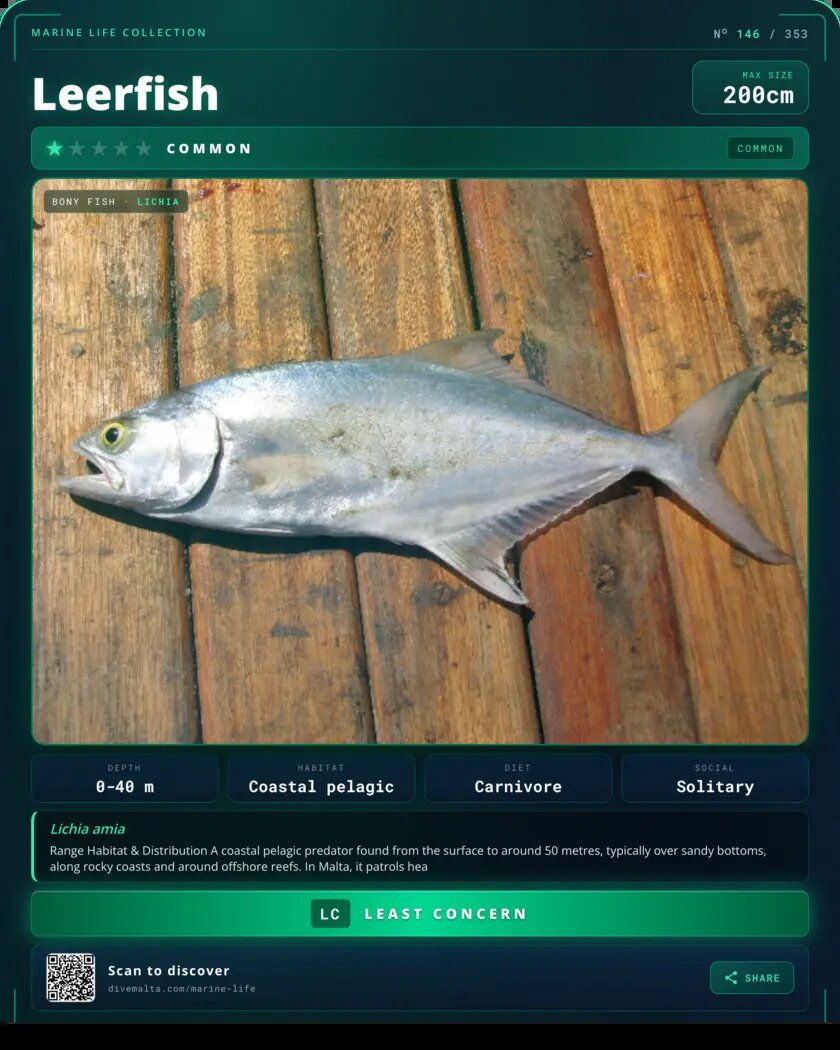
A coastal pelagic predator found from the surface to around 50 metres, typically over sandy bottoms, along rocky coasts and around offshore reefs. In Malta, it patrols headlands, reef edges and harbour entrances where smaller fish congregate.
Where Malta divers have spotted this species
Sightings are logged by divers using our What Did You See? dive-log tool. View the full live sightings map.
Detail
Preferred Environment
Prefers clear coastal waters near rocky structures, sandy bays and areas where currents concentrate baitfish. Often found near headlands, reef drop-offs and around underwater points.
Encounter Tips
Best approached slowly and calmly. Avoid casting shadows directly over the animal. Neutral buoyancy and patience increase encounter success significantly.