Depth
Chromogobius · Bony Fish

Kolombatovic's Goby

Chromogobius zebratus

0-30m
Depth Range
5cm
Max Size
Mediterranean
Distribution
0-30m
Depth Range
5cm
Max Size
Rocky / Cave
Habitat
Micro-invertivore
Diet
Solitary
Social
LC
IUCN Status
Moderate
Sighting Likelihood
KingdomAnimalia
PhylumChordata
ClassActinopterygii
GenusChromogobius
Specieszebratus

Identification & Biology

  • IdentificationVery small goby with alternating dark and pale vertical bands giving a zebra-like appearance. Body is translucent to pale grey with dark bars. Head is relatively large.
  • SizeUp to 5 cm total length, commonly 3 to 4 cm.
  • Social HabitSolitary and cryptic. Lives in dimly lit crevices and caves.
  • HabitatRocky caves, crevices, and overhangs with very low light levels. A cave-associated species.
  • Depth3 to 40 m, always in darkened habitats.
  • Feeds OnTiny cave-dwelling invertebrates.
  • DistributionMediterranean Sea. An endemic species with scattered records across the basin.
  • DescriptionA tiny, banded goby found in darkened caves and crevices throughout the Mediterranean. Named after the Croatian naturalist Kolombatovic, it is one of several small goby species that have adapted to life in the semi-darkness of underwater caves.

Habitat & Distribution

Inhabits semi-dark rocky environments including cave entrances, overhangs, and the undersides of large boulders from the shallows to about 30 metres. Recorded from rocky shores around Malta.

Where Malta divers have spotted this species

Loading…

Sightings are logged by divers using our What Did You See? dive-log tool. View the full live sightings map.

Detail

Preferred Environment

Shaded rocky crevices, cave mouths, and the underside of boulders. Avoids direct sunlight.

Encounter Tips

Best approached slowly and calmly. Avoid casting shadows directly over the animal. Neutral buoyancy and patience increase encounter success significantly.
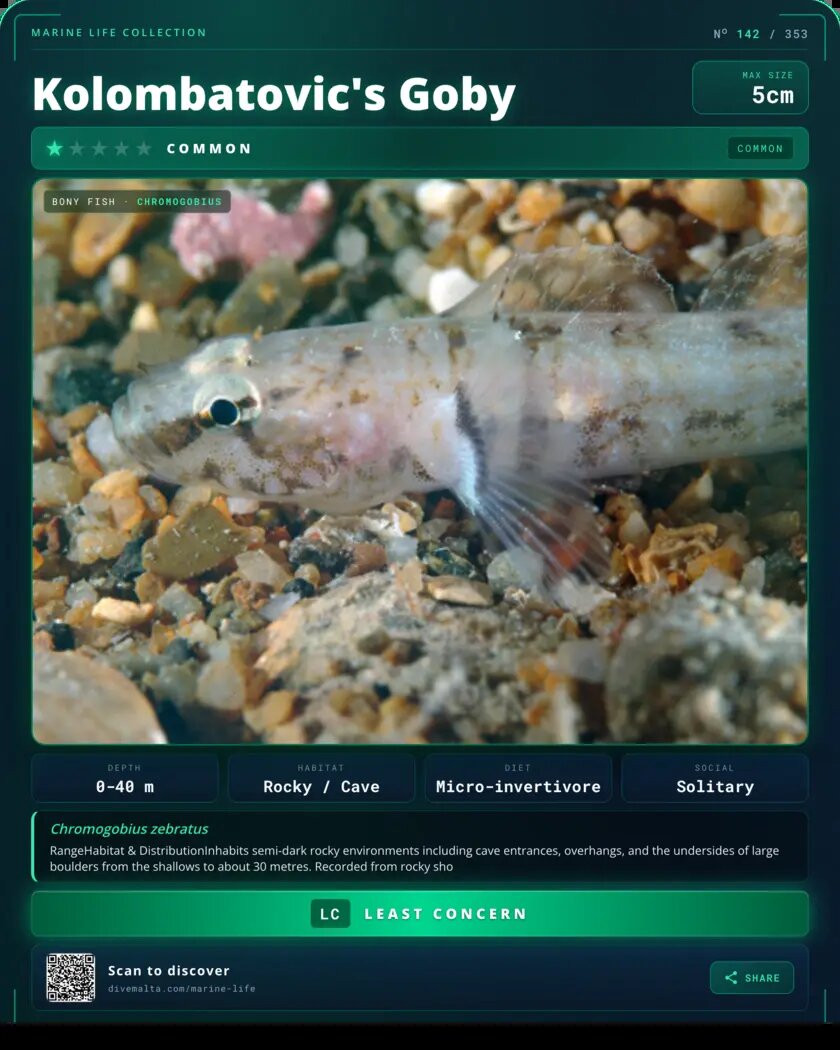
Kolombatovic's Goby species card

Where to Encounter in Malta

Dive sites where Chromogobius zebratus may be encountered will be added as sighting data is collected.

IUCN Red ListLeast Concern

Conservation Status

This species is assessed as Least Concern on the IUCN Red List. Mediterranean populations face ongoing pressure from fishing activity, habitat degradation, and climate-driven changes.

Source: IUCN Red List
diveshack Mediterranean Marine Life guide