Depth
Symphodus · Bony Fish

Grey Wrasse

Symphodus cinereus

1 - 20 m
Depth Range
16 cm
Max Size
Mediterranean
Distribution
1 - 20 m
Depth Range
16 cm
Max Size
Posidonia / Rocky
Habitat
Carnivore
Diet
Solitary
Social
LC
IUCN Status
Moderate
Sighting Likelihood
KingdomAnimalia
PhylumChordata
ClassActinopterygii
GenusSymphodus
Speciescinereus

Identification & Biology

  • IdentificationSmall wrasse with a moderately elongated body. Males show grey-green flanks with blue and orange markings during breeding. Females are plain brown to grey. Short, blunt snout.
  • SizeUp to 16 cm total length, commonly 8 to 12 cm.
  • Social HabitSolitary or in small loose groups around rocky cover. Males become territorial during spawning season.
  • HabitatRocky reefs and seagrass meadows with mixed substrate. Often found at the interface between rock and sand.
  • Depth1 to 30 m, most common between 3 and 15 m.
  • Feeds OnSmall crustaceans, molluscs, and worms foraged from rocky surfaces and among algae.
  • DistributionMediterranean Sea and adjacent eastern Atlantic from Portugal to Morocco.
  • DescriptionA plain but common small wrasse that is frequently overlooked in favour of its more colourful relatives. Females and juveniles are particularly nondescript, but breeding males develop attractive blue and orange highlights.

Habitat & Distribution

Found in shallow coastal waters from 1 to 20 m depth, typically in areas with mixed sandy and rocky substrate interspersed with Posidonia oceanica meadows. One of the most commonly encountered Symphodus wrasses in the Mediterranean.

Where Malta divers have spotted this species

Loading…

Sightings are logged by divers using our What Did You See? dive-log tool. View the full live sightings map.

Detail

Preferred Environment

Sandy and rocky bottoms adjacent to Posidonia meadows. Thrives at the interface between seagrass beds and open sandy or rocky substrate. Commonly found in sheltered bays and calm coastal environments.

Encounter Tips

Swim along the sandy margins of Posidonia beds and look for small grey-brown wrasses hovering near the bottom. This species often forages on the sand just outside seagrass edges.
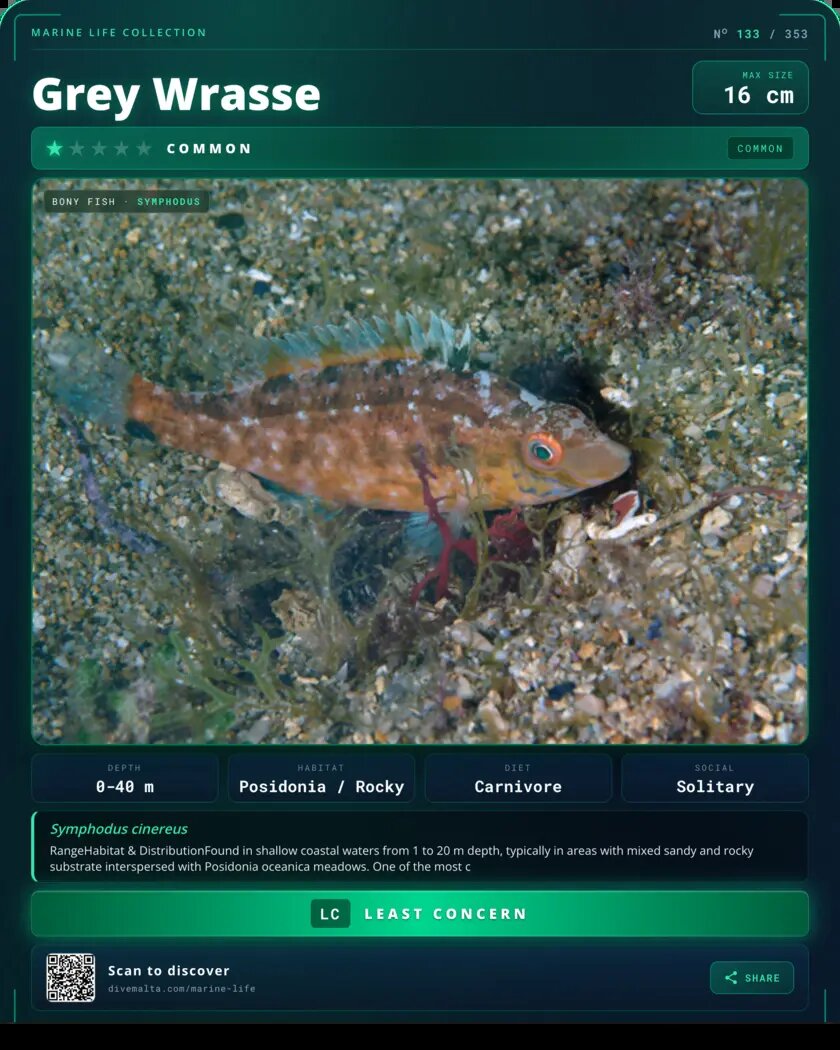
Grey Wrasse species card

Where to Encounter in Malta

Dive sites where Symphodus cinereus may be encountered will be added as sighting data is collected.

IUCN Red ListLeast Concern

Conservation Status

This species is assessed as Least Concern on the IUCN Red List. Mediterranean populations face ongoing pressure from fishing activity, habitat degradation, and climate-driven changes.

Source: IUCN Red List
diveshack Mediterranean Marine Life guide