Depth
Gobius · Bony Fish

Grass Goby

Gobius ophiocephalus

0-10m
Depth Range
18cm
Max Size
Mediterranean
Distribution
0-10m
Depth Range
18cm
Max Size
Seagrass / Lagoon
Habitat
Omnivore
Diet
Solitary
Social
LC
IUCN Status
Moderate
Sighting Likelihood
KingdomAnimalia
PhylumChordata
ClassActinopterygii
GenusGobius
Speciesophiocephalus

Identification & Biology

  • IdentificationLarge goby with a robust body. Green-brown to olive colouration with darker mottling that provides excellent camouflage among vegetation. Large head with prominent eyes.
  • SizeUp to 18 cm total length, commonly 10 to 14 cm.
  • Social HabitSolitary and territorial among dense vegetation. Males guard nests during breeding season.
  • HabitatSeagrass beds, lagoons, and sheltered areas with dense vegetation. Particularly common in Posidonia and Zostera meadows.
  • Depth0 to 10 m, predominantly in very shallow, vegetated areas.
  • Feeds OnCrustaceans, worms, molluscs, and small fish found among seagrass.
  • DistributionMediterranean Sea and Black Sea.
  • DescriptionOne of the larger Mediterranean gobies, perfectly adapted to life among seagrass. Its green-brown colouration provides superb camouflage among vegetation. It is most commonly found in Posidonia meadows and lagoons, where it sits motionless among the blades until almost stepped on.

Habitat & Distribution

Lives among Posidonia oceanica seagrass meadows and in coastal lagoons in very shallow water, typically within the first 10 metres. Found in Maltese Posidonia beds in sheltered bays.

Where Malta divers have spotted this species

Loading…

Sightings are logged by divers using our What Did You See? dive-log tool. View the full live sightings map.

Detail

Preferred Environment

Dense Posidonia seagrass meadows and vegetated sandy areas in calm, sheltered water.

Encounter Tips

Best approached slowly and calmly. Avoid casting shadows directly over the animal. Neutral buoyancy and patience increase encounter success significantly.
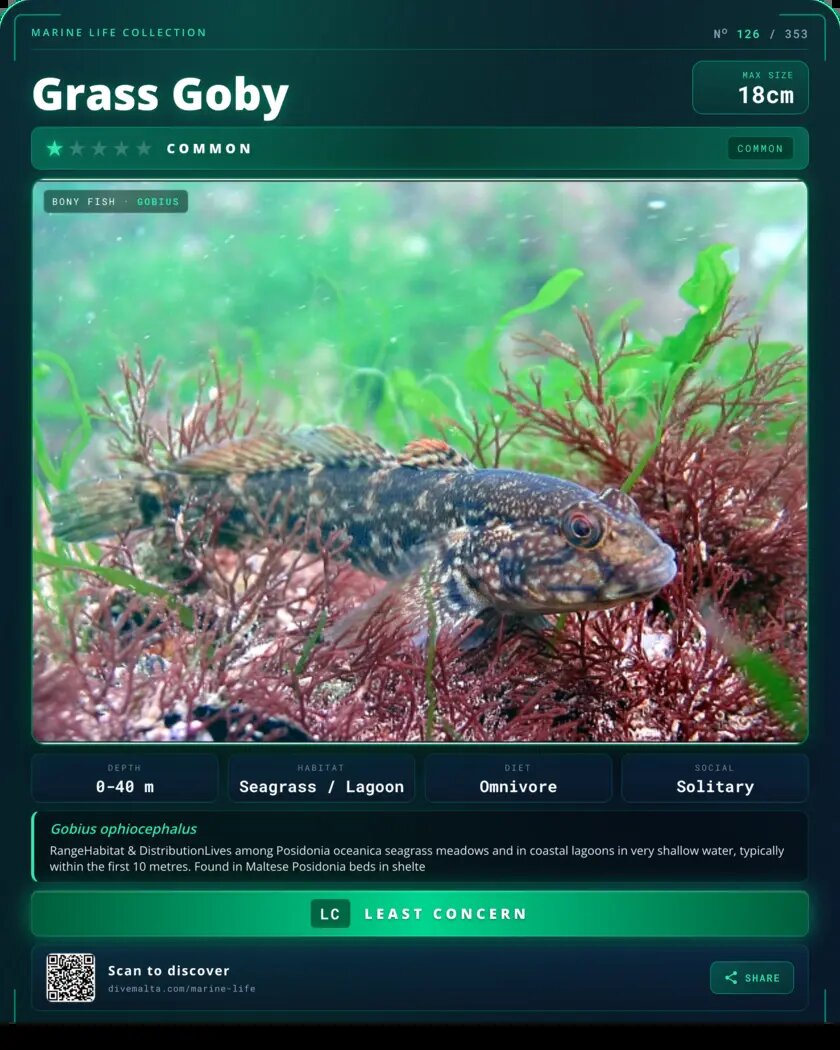
Grass Goby species card

Where to Encounter in Malta

Dive sites where Gobius ophiocephalus may be encountered will be added as sighting data is collected.

IUCN Red ListLeast Concern

Conservation Status

This species is assessed as Least Concern on the IUCN Red List. Mediterranean populations face ongoing pressure from fishing activity, habitat degradation, and climate-driven changes.

Source: IUCN Red List
diveshack Mediterranean Marine Life guide