Depth
Epinephelus · Bony Fish

Goldblotch Grouper

Epinephelus costae

5-200m
Depth Range
80cm
Max Size
Mediterranean
Distribution
5-200m
Depth Range
80cm
Max Size
Rocky reef
Habitat
Carnivore
Diet
Solitary
Social
EN
IUCN Status
Moderate
Sighting Likelihood
KingdomAnimalia
PhylumChordata
ClassActinopterygii
GenusEpinephelus
Speciescostae

Identification & Biology

  • IdentificationModerately large grouper with an elongated body. Golden-brown body covered with irregular darker blotches. A prominent golden-yellow spot or blotch on the flank below the dorsal fin.
  • SizeUp to 80 cm total length, commonly 30 to 50 cm.
  • Social HabitSolitary and territorial. Occupies caves and overhangs on rocky reefs.
  • HabitatRocky reefs, boulder fields, and sandy areas near reef structures.
  • Depth10 to 200 m, most common between 20 and 80 m.
  • Feeds OnFish, cephalopods, and crustaceans caught near the bottom.
  • DistributionEastern Atlantic from Portugal to Angola, including the Mediterranean Sea.
  • DescriptionA beautifully marked grouper distinguished by its golden flank blotch. Found on deeper reef structures, it is less commonly seen than the dusky grouper but equally impressive when encountered. A protogynous hermaphrodite that matures first as female.

Habitat & Distribution

Inhabits rocky reefs, boulder fields, and mixed substrates from shallow coastal waters to around 200 metres. In Maltese waters, encountered around reef structures and wrecks at recreational depths.

Where Malta divers have spotted this species

Loading…

Sightings are logged by divers using our What Did You See? dive-log tool. View the full live sightings map.

Detail

Preferred Environment

Rocky outcrops, overhangs, and artificial structures such as wrecks. Prefers areas with plentiful crevices for shelter.

Encounter Tips

Best approached slowly and calmly. Avoid casting shadows directly over the animal. Neutral buoyancy and patience increase encounter success significantly.
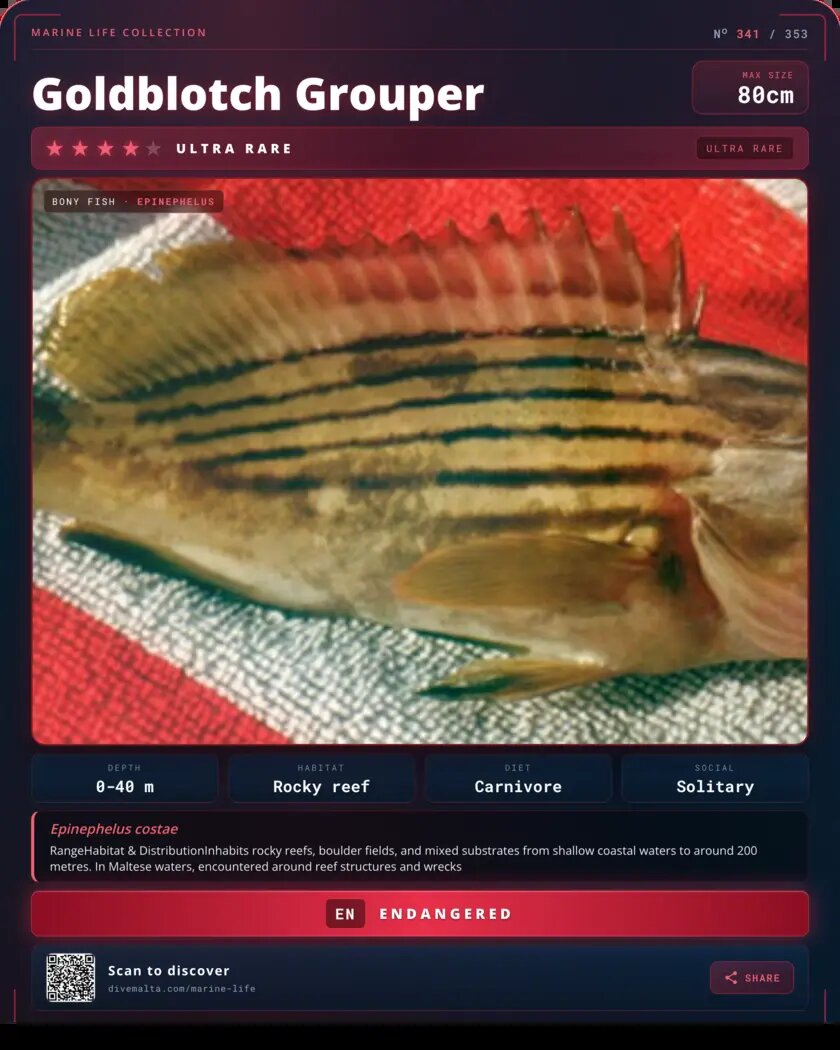
Goldblotch Grouper species card

Where to Encounter in Malta

Dive sites where Epinephelus costae may be encountered will be added as sighting data is collected.

IUCN Red ListEndangered

Conservation Status

This species is assessed as Endangered on the IUCN Red List. Mediterranean populations face ongoing pressure from fishing activity, habitat degradation, and climate-driven changes.

Source: IUCN Red List
diveshack Mediterranean Marine Life guide